
Since graduating from NIDA, Michiru Encinas (Costume, 2023) has taken her love of costume, craftsmanship and storytelling to Japan where she’s honing her tailoring skills, exploring the country’s rich textile traditions and travelling in her spare time. Working at a suit factory in Aichi with the coolest pattern cutting machine we’ve seen, Michi is developing her craft and collecting impeccably tailored suits while sharing her adventures on social media.
You graduated from NIDA’s Costume course in 2023 and now live and work in Japan, why did you decide to make this move?
I always wanted to try living in Japan one day to experience the culture and learn more about my Japanese heritage. I took up the challenge and moved to Japan to satisfy my travel bug whilst also working on my creative skills at the same time which is why I decided to work at the suit factory to better my sewing and tailoring. Ever since I spent my third year at NIDA exploring the traditional artform of kimono making for my research project, I’ve always dreamt of going back to Japan to immerse myself in the culture and learning as much as I can, and despite still working on my language skills, I’m loving it so far!
What does a typical day working at a suit factory in Japan look like?
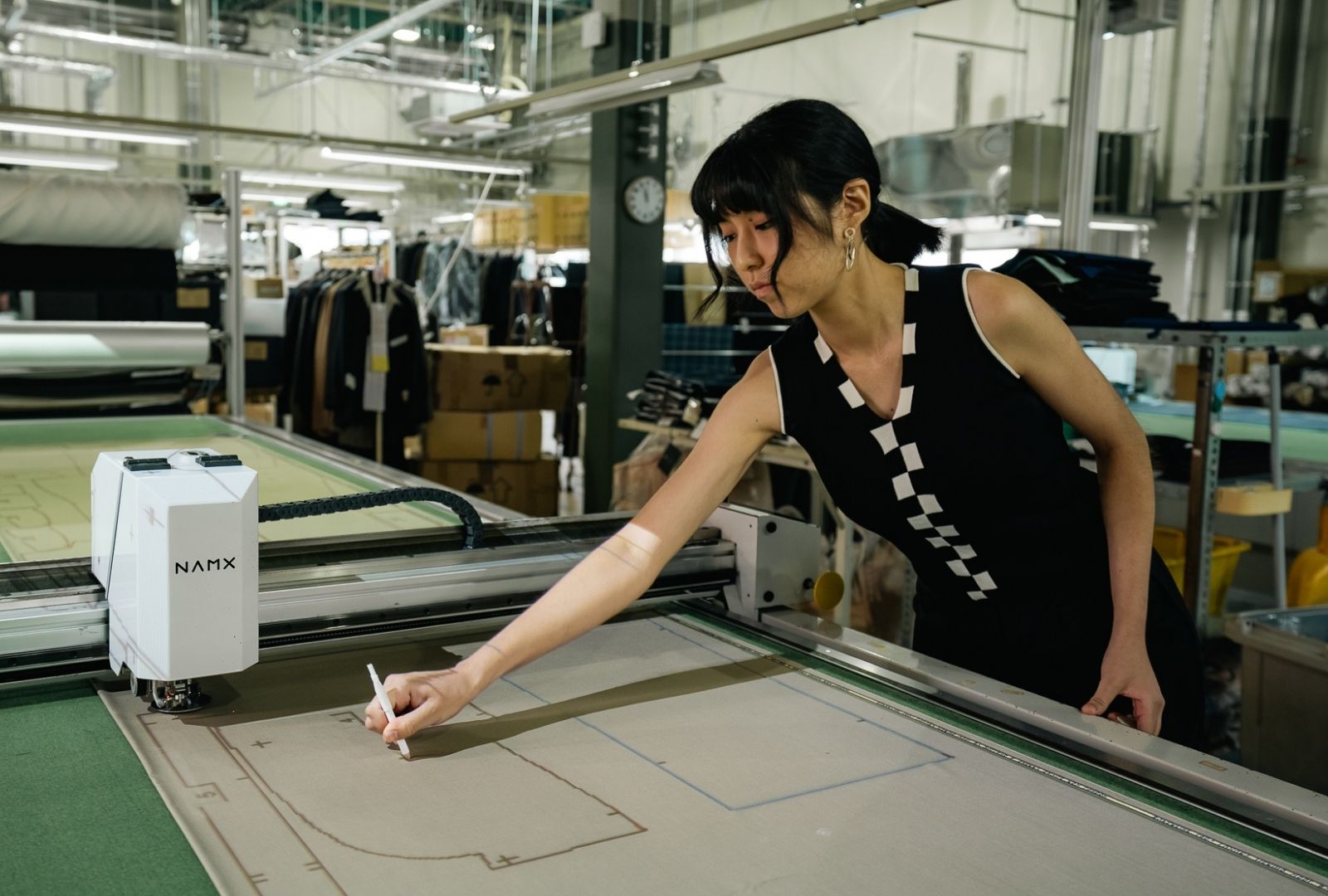
On a typical day, I work in the cutting department at the Aldex order suit factory where I operate the cutting machine. My role involves cutting the pattern pieces from the fabric for the various custom suit orders. I ensure that any imperfections in the fabric are avoided and that the pattern pieces are correctly aligned for striped or checked fabrics where accurate pattern-matching is essential. I also attend to overseas clients, giving factory tours and assisting in the fitting room and in meetings as an English interpreter. After the work day is complete, the factory stays open after hours and you can typically find me working on my own suits and learning tailoring skills from mentors in the factory.
What is your favourite thing about working in Japan’s garment industry?
I’m working in Aichi prefecture which happens to be one of Japan’s biggest textile-producing centres, particularly of wool fabrics. Through my work, I’ve had the opportunity to visit fabric mills such as Yamaei Keori in Bishū, the birthplace of Japanese woolen textiles, and see first-hand how they weave the fabric. It really helped me to gain a deeper appreciation for the suit-making process as a whole, from weaving to garment construction. Seeing all the different stages one single jacket passes through in our factory, it really opened my eyes to the sheer number of people who are involved in creating the final product and it made me appreciate being a small part of that process, and also of the long-established textile and garment industry here in Aichi.
How does working in Japan compare with your experiences of the Australian creative industries?
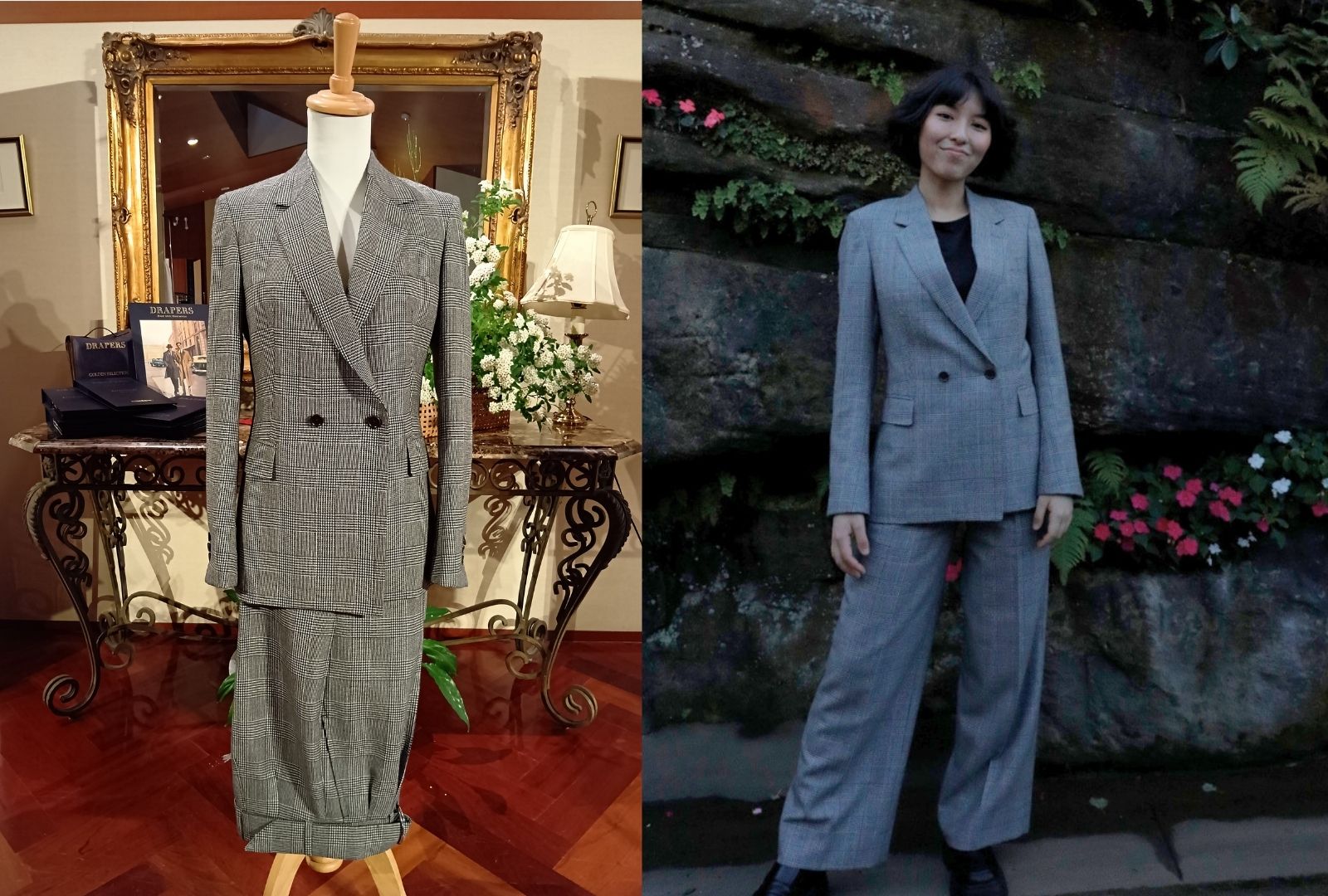
I loved every minute of my experiences in the Australian theatre industry from dressing backstage on musicals in Sydney to gaining work experience at Opera Australia and the Australian Ballet through secondments at NIDA. Although it’s difficult to draw a direct comparison, I would say that one of the biggest things would be that the digital pattern making technologies and automatic cutting machines were all very new to me! Even though each custom order is designed and cut one by one, it still makes things a lot quicker and I’ve always wanted to try digital pattern making myself so it was fascinating to give it a try when making my own suit pattern.
Other than that, the factory setting is not too dissimilar from a costume workroom; however, instead of someone being assigned to a specific costume or garment, each worker here has their own specialised skill in the production line such as the sewing of pockets, sleeves, collars, canvas, or the hand-sewn finishings of the linings or the buttons, just to name a few!
What skills from your BFA, Costume do you use most in your work today?
Well, tailoring for sure! The very first suit I ever made was at NIDA, so everything we learnt in our tailoring classes helped build the foundation for all of the skills I use when making suits today. From taking accurate measurements for the most custom fit to sewing a jacket with the perfect lapel roll, I credit all of our tailoring classes with incredible industry professionals to helping me appreciate the artform and want to keep developing my skills in the future. There were also so many other elements of the course – from pattern-making to draping, fitting room practices, to collaborating and problem-solving with people across all disciplines – all of which have helped me as a developing tailor but also as a member of a team working together towards one shared final product.
What does work-life balance look like for you and what do you do to unwind?
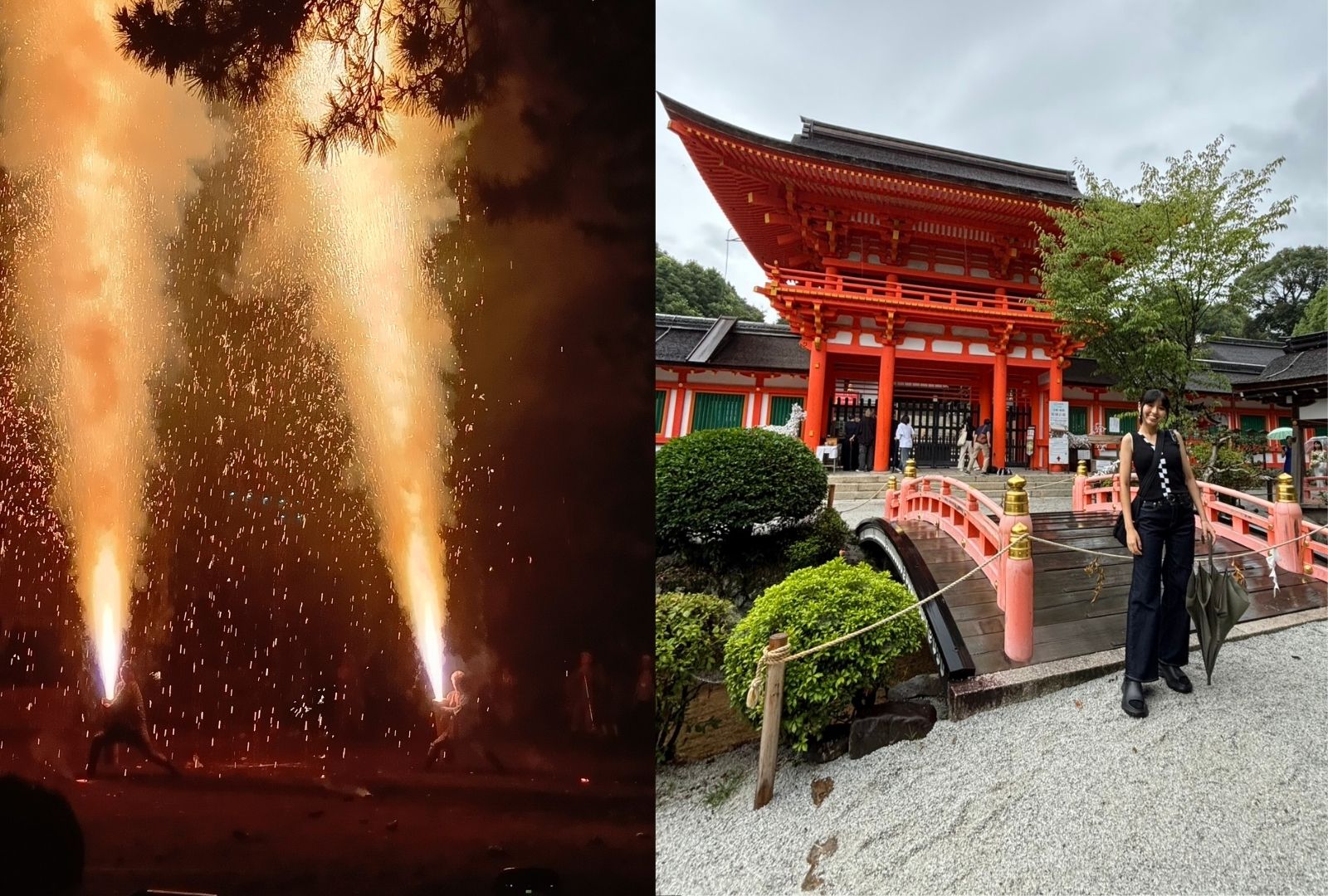
Whenever I get the chance, I like to travel since there’s so much of Japan that I’m yet to explore! I am loving Japan’s many traditional festivals; my local town Toyohashi has some very cool ones like the Gion Festival with its spectacular hand-held fireworks, and also the Demon Festival – Aldex actually made the costume for the Aka-oni (red demon) that was used in the festival!
I’ve also always enjoyed filming and editing videos as a creative outlet and have been making YouTube videos to document my adventures abroad! On my days off, I’m probably tinkering away at a new behind the scenes video of my suit-making or a day-in-the-life working in Japan!
Other than that, you might find me training for my next 20K, trying new restaurants with my friends or going to catch a movie at the cinema!
Is there anything that has surprised you about working in Japan?
I was initially surprised at how many young employees there are at the factory, many in their 20s and recently graduated. There is a huge emphasis here on passing down the skills of suit-making to the younger generation whilst constantly evolving to redefine the modern suit. I think it’s great, because there are so many passionate, like-minded individuals who are eager to learn, and equally so many mentors willing to share their knowledge. It sometimes feels like being back at NIDA; there’s so many passionate young creatives learning new skills and it’s always fun to wander through the factory and see all the fun projects they’re working on of their own once the work hours are complete.
I also can’t forget to mention the fact that we do radio calisthenics every morning to get our blood flowing before a busy day at work – that was new to me!
What advice do you have for someone that wants to study Costume at NIDA?
Go for it! If you’re passionate about creating and story-telling through costume, then NIDA is the right place for you. Whether you have a lot of experience or a little, what’s most important is your passion and curiosity, so let that shine through in your application. I certainly didn’t have the most experience going into the course, having only just switched from a veterinary degree before completely redirecting my whole career into the creative arts! Having grown up as a competitive artistic roller skater for 10 years, I always had a love of performance, dance, and costume, so I knew NIDA was the best place to nurture that passion and I never looked back.
I spent the months leading up to NIDA volunteering at local theatres in costume alterations, taking a millinery short course at TAFE, and basically rekindling my love for sewing and creativity. I can only speak from my experience, but my advice would be to not worry about having the perfect portfolio, but be eager to learn and unafraid to step out of your comfort zone. You will never know what you’re capable of unless you take a leap and try!
Follow Michiru’s adventures on YouTube and Instagram.
Find out more about NIDA’s Bachelor of Fine Arts, Costume degree and apply before 28 September.