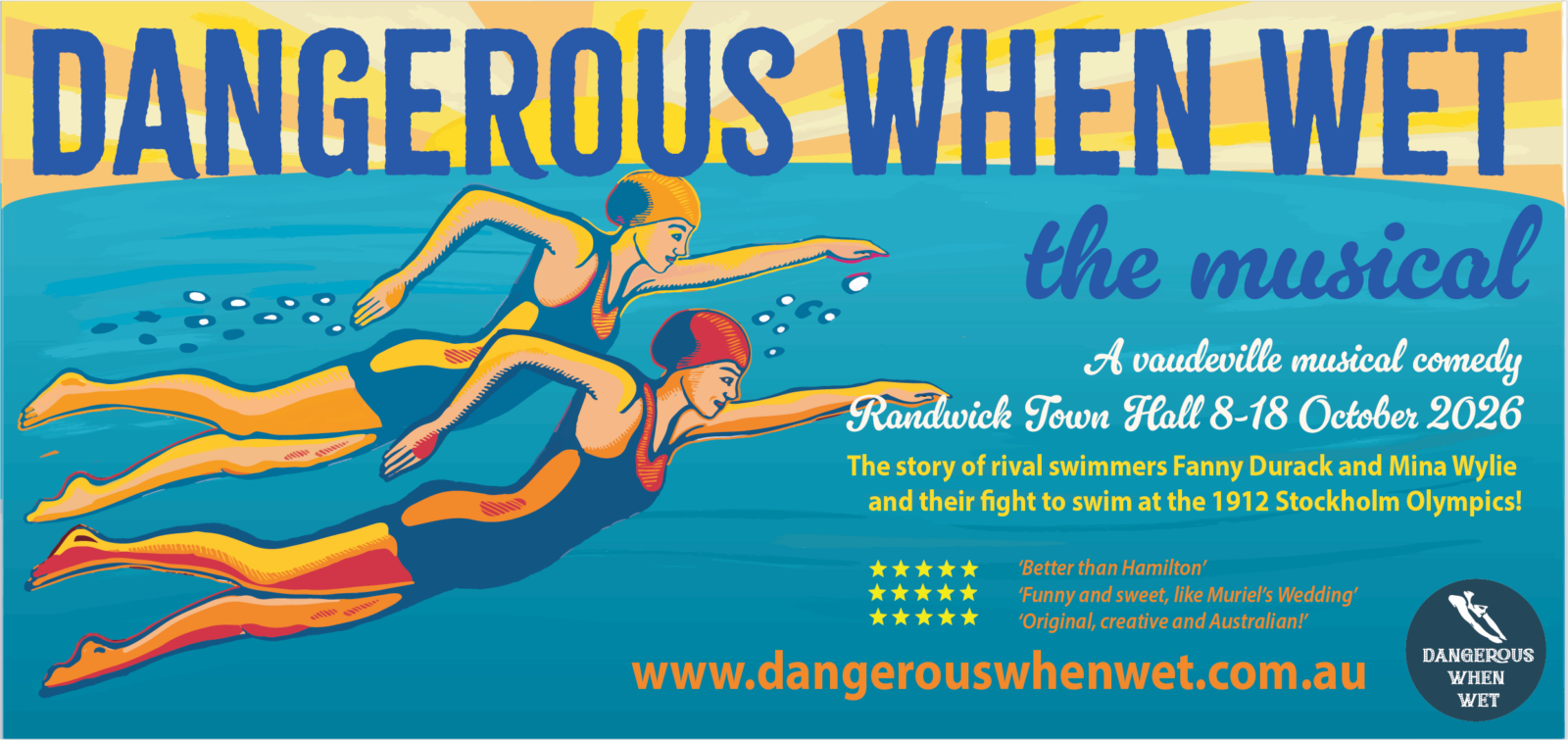
A century old Olympic story floats to the surface at last in the new vaudeville style musical, Dangerous When Wet, on stage at Randwick Town Hall in October. NIDA alum Eliane Morel (Playwriting, 1992) has co-written the story of Fanny Durack and Mina Wylie and included all of the saucy drama, rivalry and incredible achievements of Australia’s first female Olympians. We caught up with Eliane to talk about uncovering this extraordinary piece of Sydney sporting history, making these pioneering women household names and working alongside emerging NIDA talent.
What first drew you to the story of Fanny Durack and Mina Wylie?
Merran Hughes, my fellow writer (and champion swimmer herself!) told me about Fanny and Mina and I was just blown away by how local the story is, how important it is and how unknown it is. Here we have the first two women to represent Australia at the Olympics, training and competing in pools we still use today – Wylie’s Baths, Bondi Baths, Bronte Baths – and coming back from Stockholm in 1912 with the Gold and Silver to boot. Yet so few people even know who they are! Merran and I decided we wanted to make these women household names.
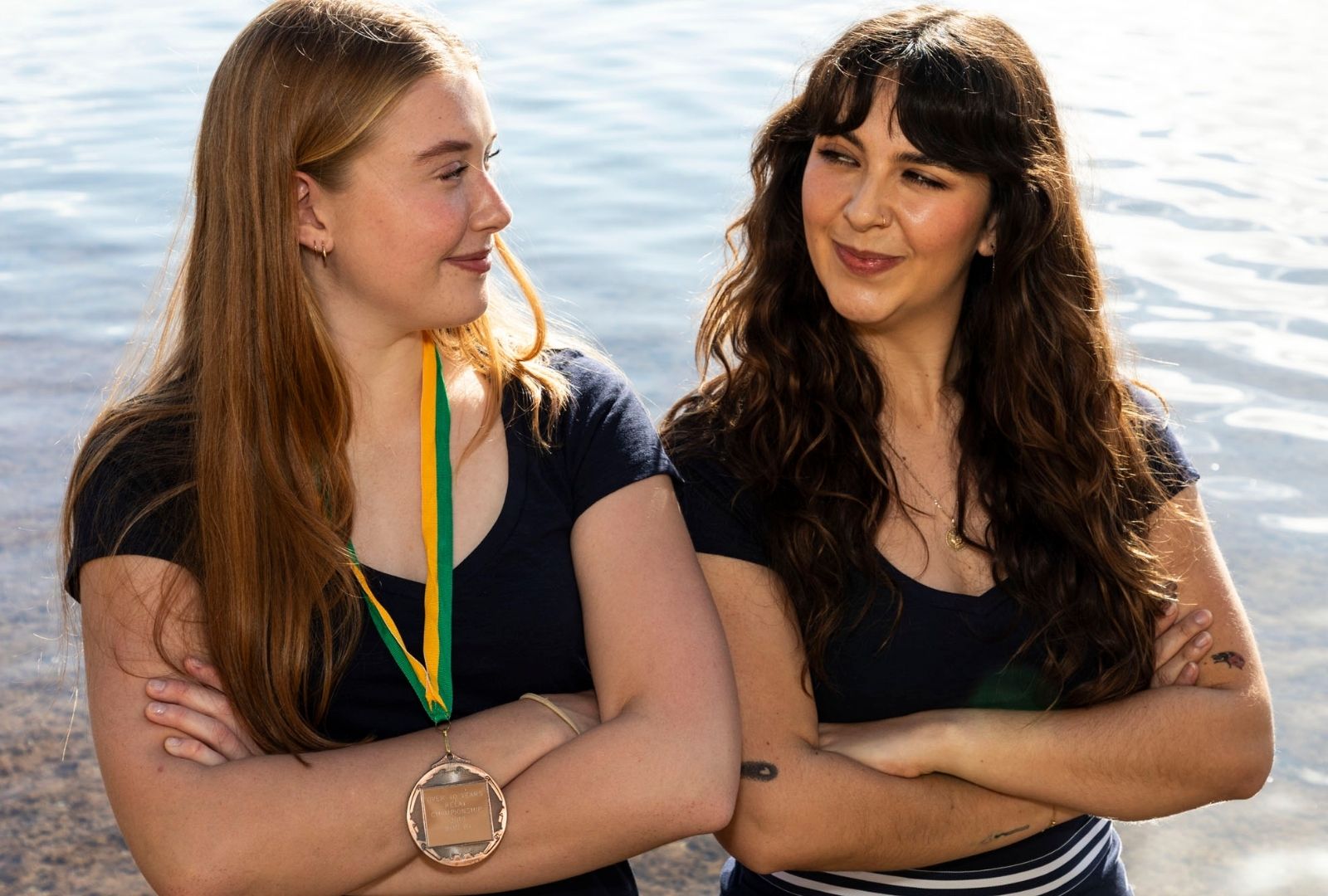
What can audiences expect from Dangerous When Wet and how much fun is it to tell this story as a vaudeville musical?
Audiences can expect a show about real local history that’s going to make them laugh, cry and sing along to dangerously memorable tunes. When Joanna Weinberg came on board as composer, she proposed making ‘Dangerous’ vaudeville style because a) it was the most popular live entertainment genre of the era and b) it’s larger than life and has audiences engaged from the get-go. So, audiences can expect: the most fabulous burlesque star Meg Walshe (playing Annette Kellerman, Australia’s first Hollywood Superstar and originator of the women’s one-piece swimsuit) as narrator and audience’s guide to the show, signs telling them when to ‘Boo’ ‘Cheer!’ ‘Gasp!’ etc.; drag (women playing men); audience singalongs and larger-than-life props, costumes and hats.
What is so interesting about Fanny and Mina’s relationship?
The push and pull of their relationship – they’re best friends, but they’re also rivals; they’re from different classes (Mina went to a private school and learned French – and her Dad owned the pool, while Fanny worked in her Dad’s pub) but they train together; they’re on the same team, but ultimately only one can win. There’s deep love but there’s also deep competitiveness.
Did anything surprise you about the story of these 1912 Olympian athletes?
We discovered that the girls were meant to dive as well as swim at the Olympics, but for some reason only Sweden and England competed in that event. No history book has ever explored that fact, so we decided to make it a pivotal plot point.
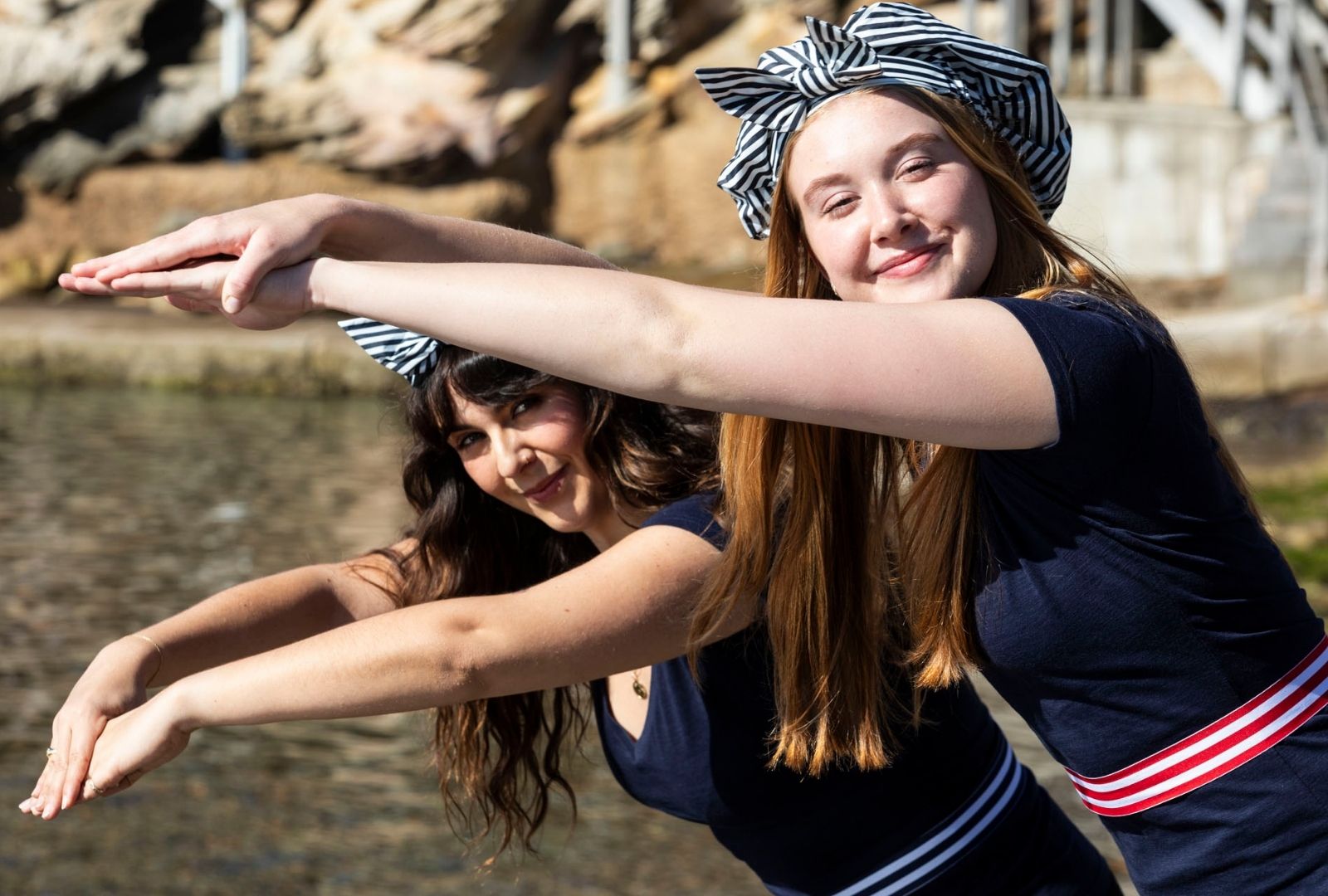
The show tackles the very real sexism of the era while being funny and joyful. How did you balance the serious history with levity?
The early 1900s were a pivotal time for Australian women: they had just won the vote; they were starting to move out of corsets and bloomers into one-piece swimsuits; they were fighting to swim at mixed pools with men; they were finding a voice and a way to express themselves intellectually and physically. And at every step of the way people tried to squash that freedom. We use vaudeville to poke fun at those attitudes – having women in drag, for example, singing ‘Put them back in their bathing machines’. Ironically, one of Fanny and Mina biggest opponents was Rose Scott, a suffragist and President of their swim club, who objected to them going to the Olympics because they’d be swimming in tight fitting costumes – in front of men! Her song ‘Your Preposterous Olympic Fantasy’, sung in faux-operatic style, allows the audience to laugh at the absurdity of those attitudes.
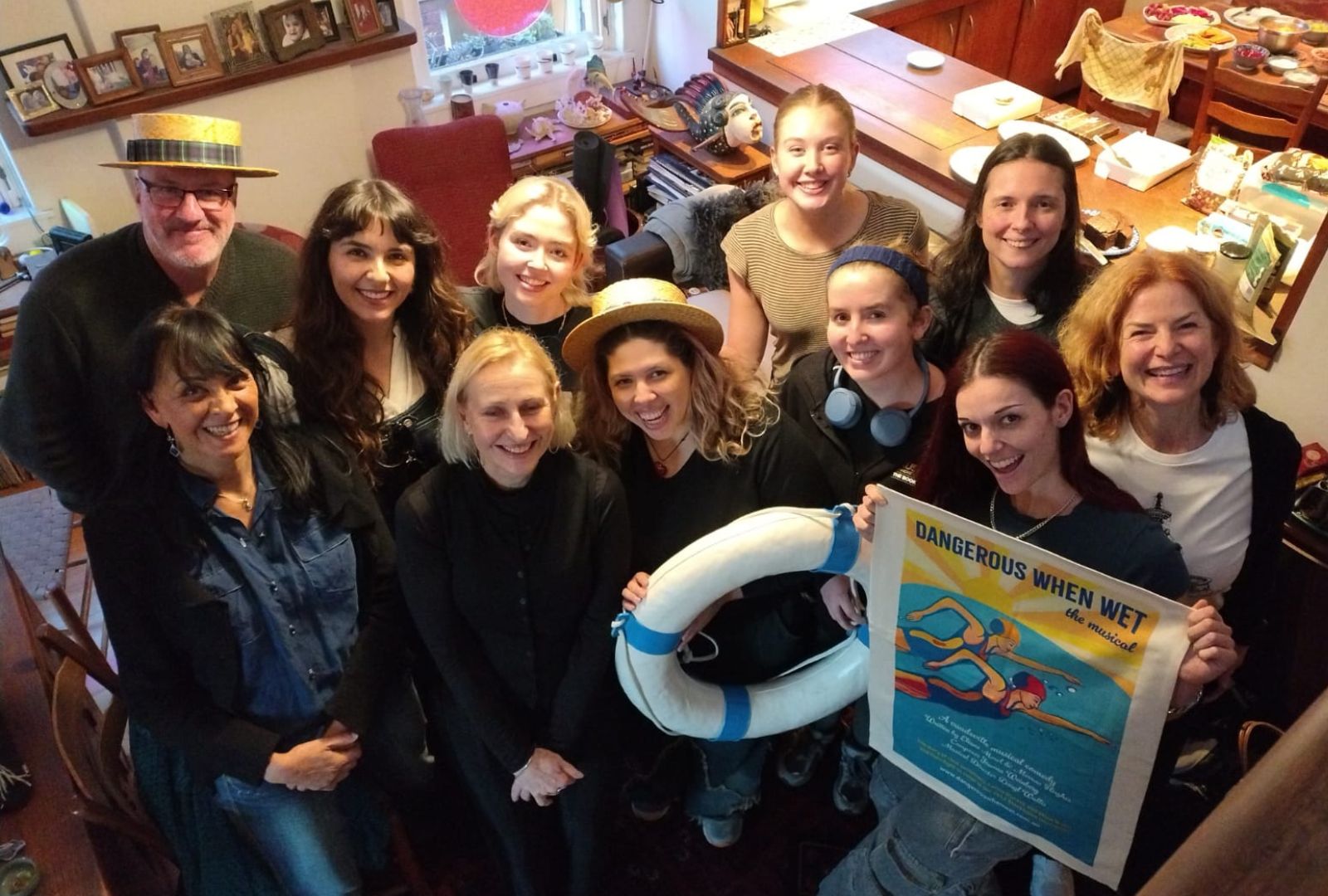
You’ve co-written a play with an all-female cast and some dangerously catchy tunes. What made you decide that it would flourish as a musical?
Musical theatre can shamelessly express emotions and tug at your heartstrings, and there are some fantastic highs and lows in this story, that are so perfectly expressed in song. But also, our secret weapon is Joanna Weinberg, who is the absolute mistress of memorable tunes and brilliant lyrics. When we asked her to write a song about a gay athlete coming out at the Stockholm Olympics, for example, she came up with “I’ve always wanted to plunge myself deep into a fjord, crunch knackelbrot and partake of a lavish smorgasbord.” Also, we have Daryl Wallis Musical Director, Arranger and pianist, whose incredible breadth of musical knowledge and musical theatre experience allows him to expand and enrich all the music.
Why do you think Fanny and Mina’s story still feels relevant to Sydney audiences today?
So much of this story happened in places we can still visit today – Wylie’s Baths, Bondi Baths, the Domain Baths. One of the pivotal scenes took place in Randwick Town Hall where we’re performing. In fact, that’s one of the main reasons we chose it as our venue – plus, it has a glorious gold proscenium arch, which is perfect for Vaudeville. And in publicising this show, there have been so many people who’ve said, ‘Mina Wylie taught me/my mum/dad/grandma/grandpa/aunt’. The story still has resonance. But also, at the same time as women’s sport is becoming really popular, it seems like some people are just really keen to deride it. The more we make women like Fanny, Mina and Annette household names, the more we can build on their legacy.
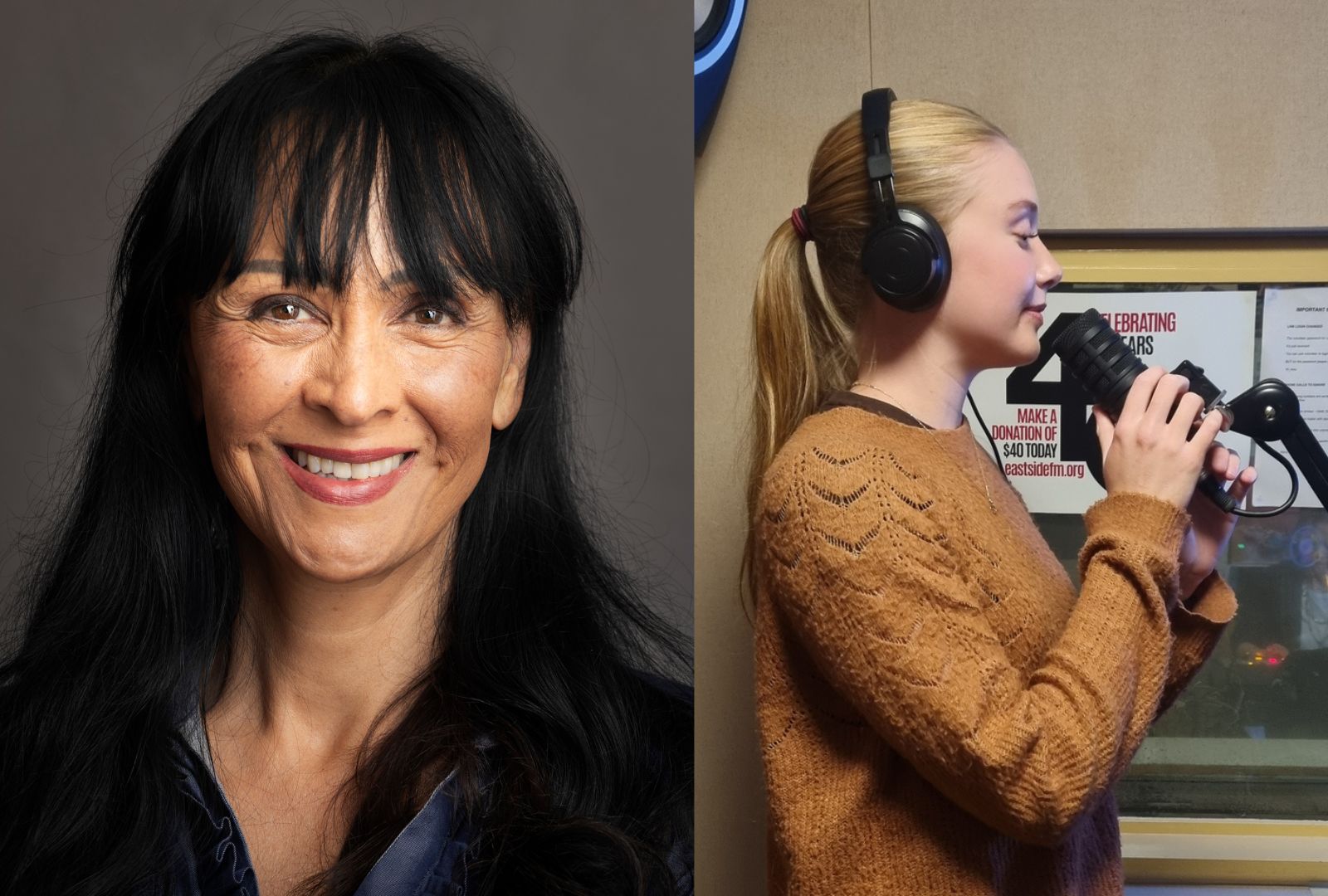
You’re joined by 2025 Musical Theatre alum Grace Trainor. What has it been like working in with emerging NIDA talent on this show?
Grace is amazing. She has a beautiful vulnerability, but can also be tough, cheeky and sporty, so she was so perfect to play Mina Wylie, who has quite an emotional journey. At one point in the show, when she believes she isn’t going to go the Olympics, and Fanny has already left without her, Mina sings ‘Bright Bondi Moon’, which expresses how bereft she feels. It’s absolutely heartbreaking, and when Grace sang it at her audition I had tears running down my face. She’s a joy to work with – amazingly musical, a fantastic work ethic and, on top of that, she plays jazz trumpet and has her own band, the Gracenotes.
What advice do you have for anyone considering studying Dramatic Writing at NIDA?
I’m really excited by the support and mentorship that NIDA gives young playwrights these days, and the opportunities to work with actors and directors. So, go for it!
Dangerous When Wet is on stage from 8 – 18 October at Randwick Town Hall. Book tickets here.
Find out more about NIDA’s Masters of Dramatic Writing.