
Actor, Josh D. Hammond ( Stage and Screen Performance, 2019) and Director, Kurtis Laing (Directing, 2024), have reunited for Selkie, a striking two-hander that modernises a classic Celtic myth with dark and urgent themes. They discuss the demands of stripped-back storytelling in theatre, creating a safe space to navigate complex and heavy topics, and how a shared foundation from their NIDA training provides a shorthand to their collaborative process.
Josh D. Hammond (Stage and Screen Performance, 2019)
What are some of the challenges and rewards of working on a two-hander play like Selkie?
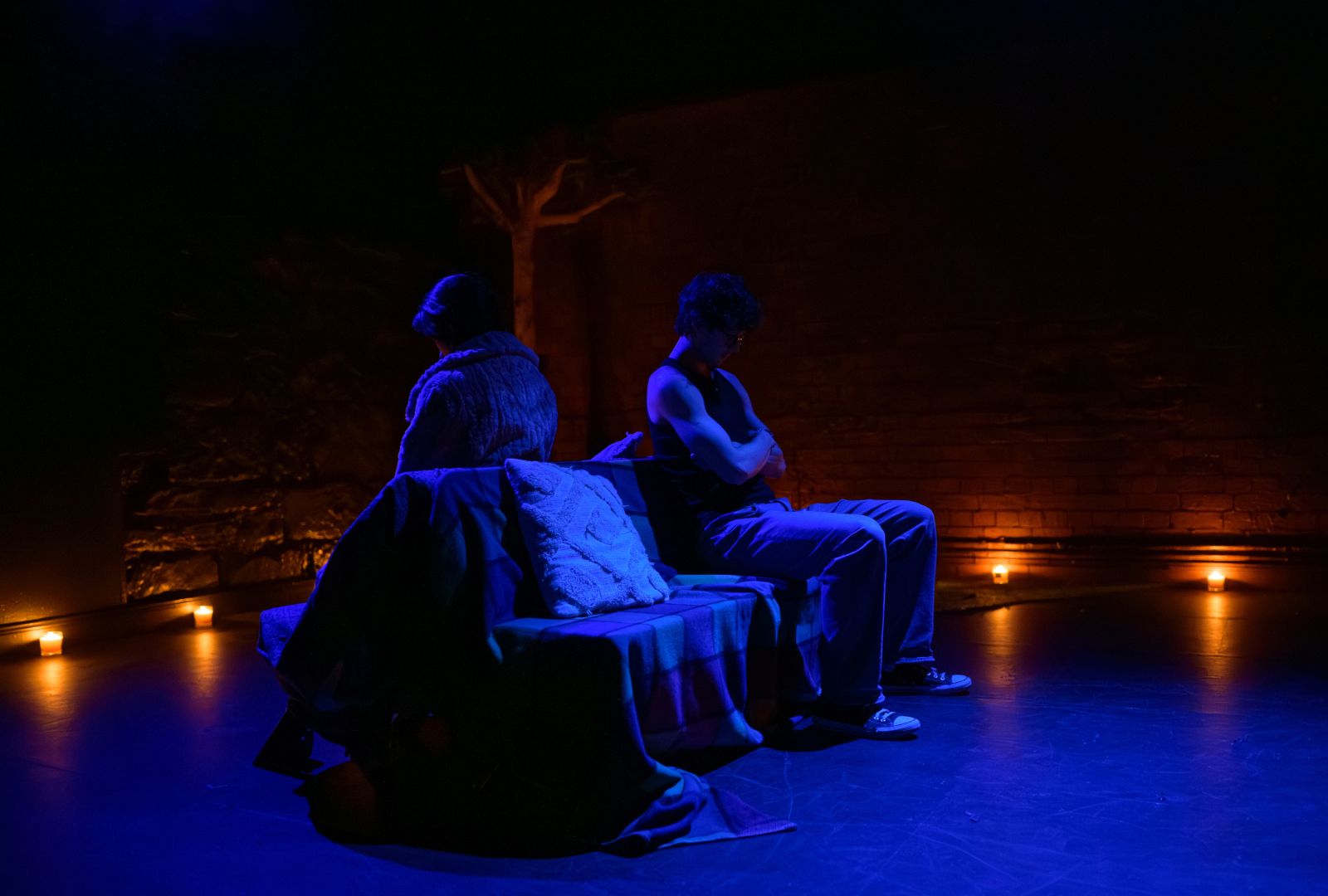
Two-handers are such an exceptionally wonderful structure to work in creatively. They both stretch and challenge your skillset as an actor, whilst simultaneously allowing oneself to settle into the character and story in a unique way when compared to an ensemble piece. I have learned so much specifically from two-handers like Selkie due to the level of focus and vulnerability it demands to weave a story onstage with just yourself and your scene partner. My co-star, Sage Chihiro Kikui, is a terrific actor and wonderful person, thus making that process such a joy!
Selkie draws on Celtic mythology while tackling contemporary issues. What drew you to this story?
My family has strong Celtic roots in both Ireland and Scotland. Thus, I have always felt connected culturally through my mother’s side to Celtic folklore and traditions and I was ecstatic at the prospect of exploring the mythology on-stage. Our writer, Finn O’Branagaín, has so articulately weaved an ancient story through the web of a toxic, contemporary relationship that I believe many people will see all too familiar signs of abuse and co-dependency. With incredible empathy for both sides of the relationship, she has spotlighted the persistent, vile problem of domestic violence and abuse in Australia in an extremely heartfelt hour of theatre.
The play blends lyrical storytelling, dark humour and confronting themes. How have you found the balance between myth, humour and the play’s more brutal subjects?
It’s a process, and it’s all about the people around you. Our team is so wonderful and warm; our producer Laila Chesterman, our choreographers Josie Stanger-Jones and Xander Sullivan, our intimacy coordinator Rhiannon Bryan, our composer Matthew Forbes, and my scene partner who portrays our title Selkie (Rónnad), Sage Chihiro Kikui. Special mention to the wonderful Celesté Cortes-Davis (Acting, 2024) who portrayed Rónnad in our 2025 Sydney season and is an absolute joy to work with.
Portraying the highs and lows one experiences in a passionate but fundamentally unhealthy relationship can be intense, and the play morphs between these feelings, often, staggeringly quickly. There is a kinetic energy to this text which demands focus and diligence, but also a group of people who you feel safe and supported by and can spend two hysterical hours playing Mario Kart with after opening night to recalibrate and wind down.
Looking back on your time at NIDA, are there particular skills, lessons or influences that have shaped the way you are approaching this performance?
I still use the tools I learned at NIDA on every production, both stage and screen. The incredible Garth Holcombe (Acting, 2006) is a national treasure and instilled a respect for the text and diligence in preparation that has been totally influential in how I approach each role. Sean is a complicated character. He exhibits the characteristics of someone who can be totally charismatic, loving, and selfless in one moment and then articulately cruel, insecure, and broken in the next. He has the capacity for both warmth and hostility, and I think anyone who has been in an unhealthy relationship will sympathise with why Rónnad could love and become co-dependent with such an unpredictable person. To portray such complexity demands diligence and vulnerability, and the warm-ups I learned in the Diploma of Stage and Screen Performance (DSSP) still get me in the right physicality and headspace before every 2PM, 6PM, 9:30PM show.
Selkie is directed by fellow alum, Kurtis Laing. What has the collaborative process been like and has your shared NIDA training helped to shape this performance?
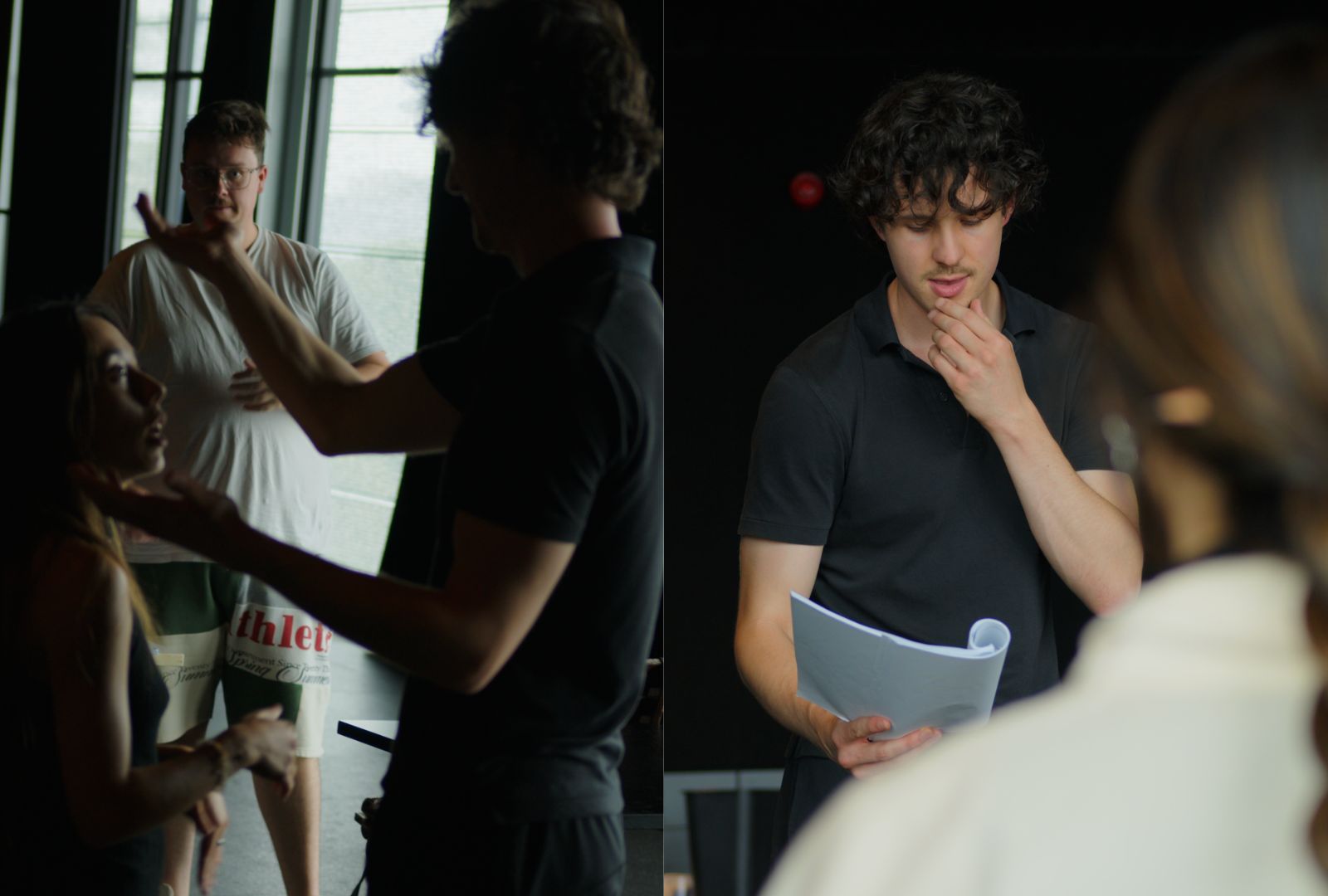
Kurtis is such a delight to work with. We both came through NIDA and left with a strong affinity for making your own work, as has been the advice given to me by so many working artists in our industry. He has such a keen understanding of atmosphere and how to sustain a feeling over the course of the story, through both production design and performance. He is a true actor’s director in that sense, having had extensive experience in live performance himself prior to attending NIDA. Sage has given so many intelligent and articulate offers throughout rehearsals that have informed my understanding of the play and sparked new discoveries, supported by the environment which Kurtis fosters which is collaborative, open, and empathetic. He says he calls it Good Time Theatrics because he believes in every member of the company having a good time, and that is the kind of creative partner you want as an artist. Very much looking forward to returning to Sydney for another season of Selkie come April!
Kurtis Laing (Directing, 2024)
What has been your favourite part about directing Selkie with fellow alum, Josh, and has your shared NIDA training been useful in rehearsals?
One of the great joys of working on Selkie has been collaborating with Josh again. There is something really special about returning to the room with someone who shares the same creative language as you. We share a common language from our time at NIDA, which means we can move quite quickly between big conceptual conversations and practical problem solving. There is also a great level of trust there. We both know how the other works, which allows rehearsals to be very open, curious spaces. At the same time, we are very different artists now than we were at drama school, so it has been exciting to see how our individual practices have evolved and how those differences enrich the work. Coupling that with the different training of our other team members – ACA for Laila Chesterman and Sage Kikui, Musical Theatre for Josie Stanger-Jones and even wrestling for Xander Sullivan – you get a real melting pot of creativity.
Selkie reimagines an ancient Celtic myth through a contemporary, feminist lens. As a director, how did you approach balancing the mythic elements with its darker themes?
For me, the key was treating the myth seriously rather than as something decorative. Tone and atmosphere are really important and this is helped by the amazing work of our composer and sound designer Matthew Forbes. The folklore gives the story a sense of inevitability and scale, but the emotional stakes are very human and immediate. I approached it by grounding the performances in truth and letting the mythic elements emerge through atmosphere, rhythm and language rather than spectacle. The darker themes are always present in the story, so the task was to hold space for them honestly while still allowing the poetic and folkloric qualities of the piece to breathe.
Working with a two-person cast places enormous focus on performance and rhythm. How do you help shape the dynamics between the actors to sustain tension and intimacy?
With a two-hander, rhythm becomes almost musical. A lot of the rehearsal process involved listening closely to the language and finding the tempo of scenes. Sometimes tension comes from silence or restraint rather than speed, so we spent time exploring when to let moments land and when to push forward. Because there are only two performers, their connection is everything. We worked on building a strong sense of trust between them so that the intimacy and the conflict both feel immediate and alive in the room.
How do you stage the tonal shift between lyrical language, dark humour and confronting subject matters so that the production can be funny, engaging and emotional?
I think the tonal shifts are actually one of the great strengths of the script. Life rarely sits in a single emotional register, and this play reflects that. My approach has been to let those shifts happen organically rather than forcing them. If the actors commit fully to the truth of the moment, humour can arise naturally even in darker scenes. The key is ensuring that the humour never undercuts the emotional reality of the story but instead gives the audience moments to breathe before the play moves into more confronting territory.
Selkie engages with themes of consent, ownership and control. How did you create a rehearsal environment that was safe and supportive to explore complex and sensitive material?
Creating a safe and supportive rehearsal environment was essential for a piece like this. The themes in the play are quite heavy, so it was important to balance that with a rehearsal room that still felt dynamic, warm and enjoyable to be in. I have always believed that people do their best work when the energy in the room is good and when they actually look forward to coming into rehearsal.
Practically, that meant allowing space to step out of the intensity when we needed to. We would take time to breathe between scenes, share a funny anecdote, a meme or a video, have a quick reset and then jump straight back into the work. That kind of code-switching helps keep the process sustainable when you are dealing with challenging material.
At the same time, we always maintained a deep respect for the themes of the play, the text and the work itself. Creating a positive rehearsal environment does not mean avoiding the difficult conversations. It simply means building a room where people feel supported enough to engage with them honestly, while still keeping the energy buoyant and collaborative.
Selkie will be on stage for a limited season at NIDA from 22 April – 24 April. Book tickets here.