
NIDA researchers are at the forefront of a crucial moment of change for the performing arts industry. From exploring sustainable materials for the stage in response to the climate crisis, to combining live cinema with directing in new ways, to challenging traditional Western approaches to storytelling, NIDA staff are rethinking how performance is created and taught. Their work is opening up new possibilities for what performance can be, and who gets to be part of making it. Publishing in peer-reviewed collections, presenting at international conferences, and building networks across Asia-Pacific and beyond – just some of the ways NIDA staff are demonstrating that rigorous scholarship, creativity and artistic integrity are essential partners in shaping the future of the industry. NIDA is seizing this moment of transformation, positioning the institution as a serious contributor to the conversations that will define theatre-making for generations to come.
Directing at the Edge: NIDA Research Bridging Stage and Screen
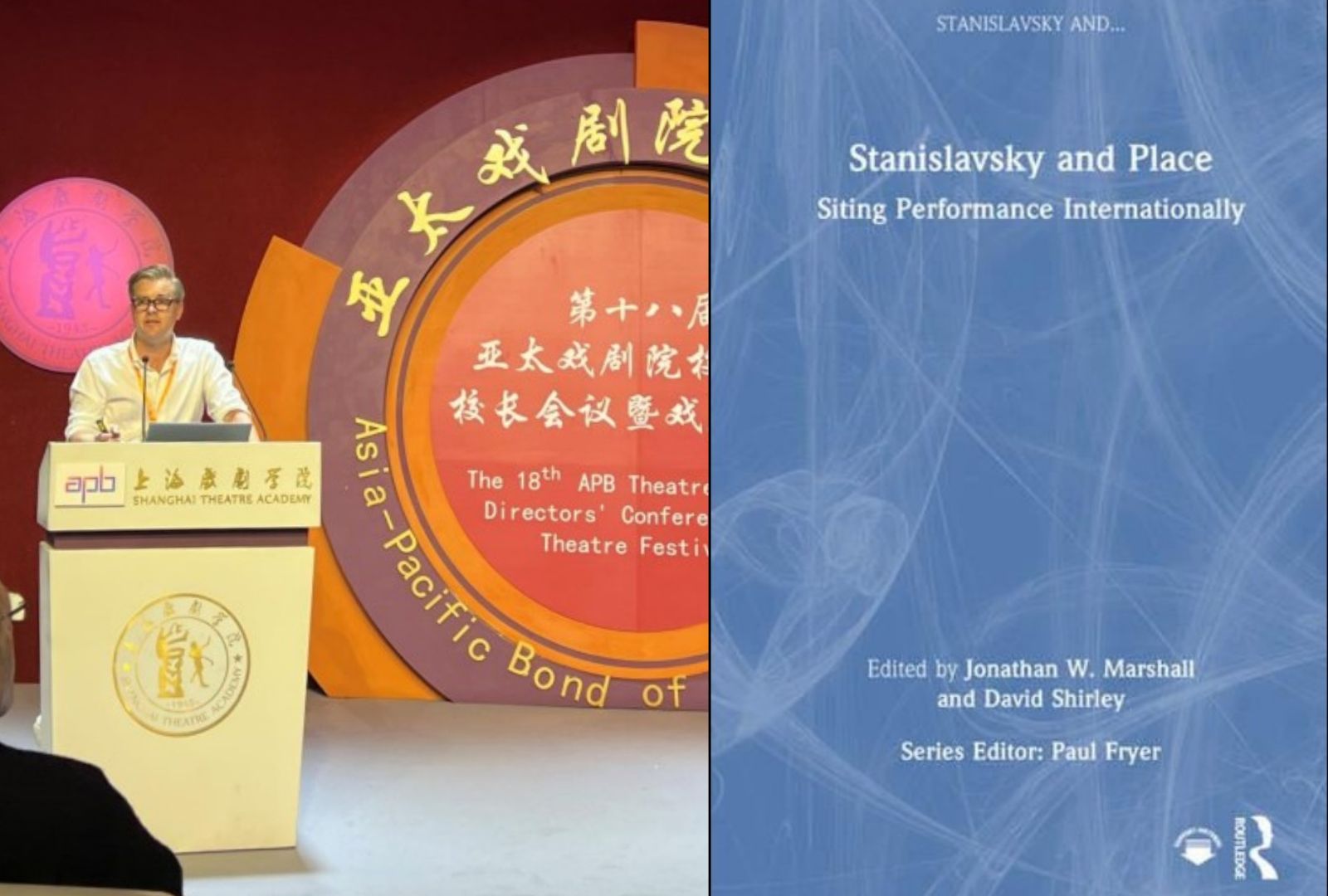
Course Leader for the Master of Fine Arts in Directing, Dr. Benjamin Schostakowski’s research examines the intersection of directing practice and emerging technologies through the lens of live cinema production. His recently launched book chapter in a peer-reviewed edited collection called Stanislavski and Place (Routledge) analyses how NIDA staged a production of Metamorphosis in 2021, directed by Ben – documenting the rehearsal and production processes that integrate live performance with cinematic techniques. This publication frames NIDA’s pedagogical approaches to working with screen technology in live performance within international scholarly discourse and demonstrates the institution’s capacity to produce rigorous practice-led research that contributes to theoretical understanding.
Late last year, Ben shared his research at the Asia Pacific Bond of Theatre Schools Alliance conference in Shanghai. He conducted two directing masterclasses during his research trip—one with students at the conference from multiple countries, another with directing students from the Shanghai Theatre Academy—exploring how his pedagogical approaches translate across cultural contexts. He also initiated conversations with Theatre Works Singapore about artistic director training initiatives, important steps towards international opportunities, extending NIDA’s leadership development beyond traditional performance training.
NIDA’s engagement with Asia-Pacific scholarship continues to develop with this research, establishing an ongoing research and dissemination cycle. This progress will continue with fresh research based on his recent direction of a NIDA production of Peter Pan, continuing practice-led research that documents directing processes while contributing to theoretical understanding.
Rethinking What Theatre Is Made Of
NIDA’s Sustainability Manager, Imogen Ross’s research questions fundamental assumptions about the materials we use to make theatre. After thirty years of designing shows, teaching and advocating for sustainable practices in the arts, her research explores the scenographic creative potential of a living material – microbial cellulose. Known as SCOBY, this material is bacteria and yeast that grows on and creates kombucha. Her thesis asks a radical question: what if designers worked with living materials to co-create stories, rather than manipulating inert substances to impose predetermined narratives? Imogen is positioning herself within an emerging international network of designers working with bio-based materials: creating immersive environments with biomaterials. This creative network represents a significant shift in scenographic practice, one that responds directly to climate crisis by reimagining the materials and methods of theatre-making.
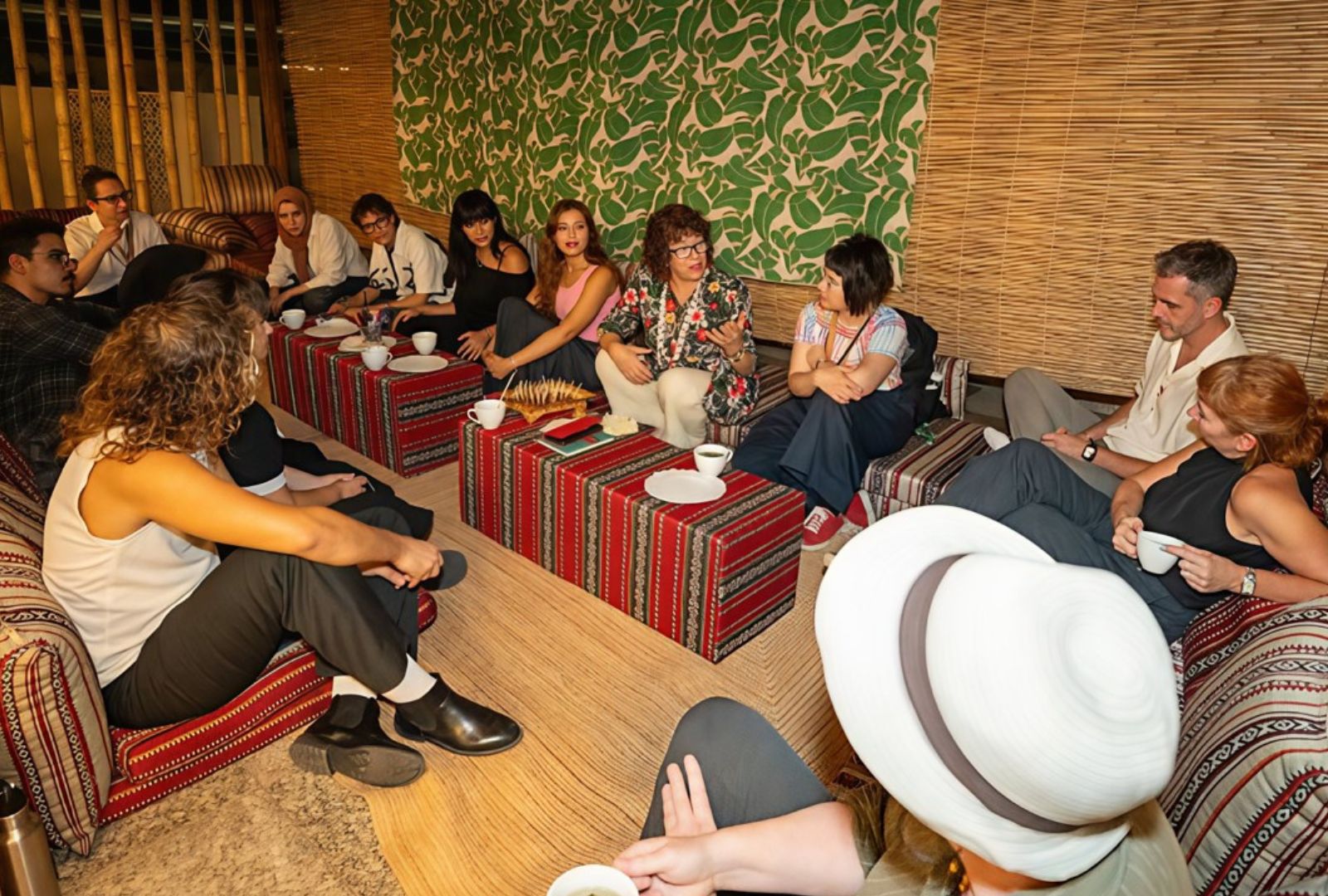
Her research outputs include a conference paper presented at World Stage Design in Sharjah, United Arab Emirates, where she also presented NIDA case studies as part of the Theatre Green Book launch into Arabic, positioning NIDA’s pioneering sustainability work within international discourse. At the conference held at the Sharjah Performing Arts Academy (SPAA) she established, the Green Conversations Café as part of the conference —an intimate, safe space of exchange that has evolved into an ongoing international network of over thirty scenographers and technicians who continue conversations internationally. She introduced the Theatre Green Book Australia, on behalf of NIDA-connected practitioners Grace Nye Butler and Chris Mercer. The substantial feedback received on the Australian edition will inform future international iterations with its strongly connected to country approach.
Imogen’s research extends beyond biomaterials to sustainability infrastructure. Visiting the Finnish National Opera and Ballet, Helsinki City Theatre, and London’s Victoria & Albert Museum and the National Theatre’s Green Store. Imogen explored storage systems and circular economy models for large-scale theatre companies, investigating how institutions maintain materials for reuse. She examined how the Central School of Speech and Drama embeds the Theatre Green Book and eco-creativity into design curricula, particularly around second-use materials. These investigations inform how NIDA might further develop its own sustainability practices. Most significantly, Imogen’s work demonstrates that environmental sustainability at NIDA involves challenging what theatre is made from, how it’s made, and who (or what) participates in making it.
Cultural Diplomacy as Practice: Rewriting the Rules of Exchange
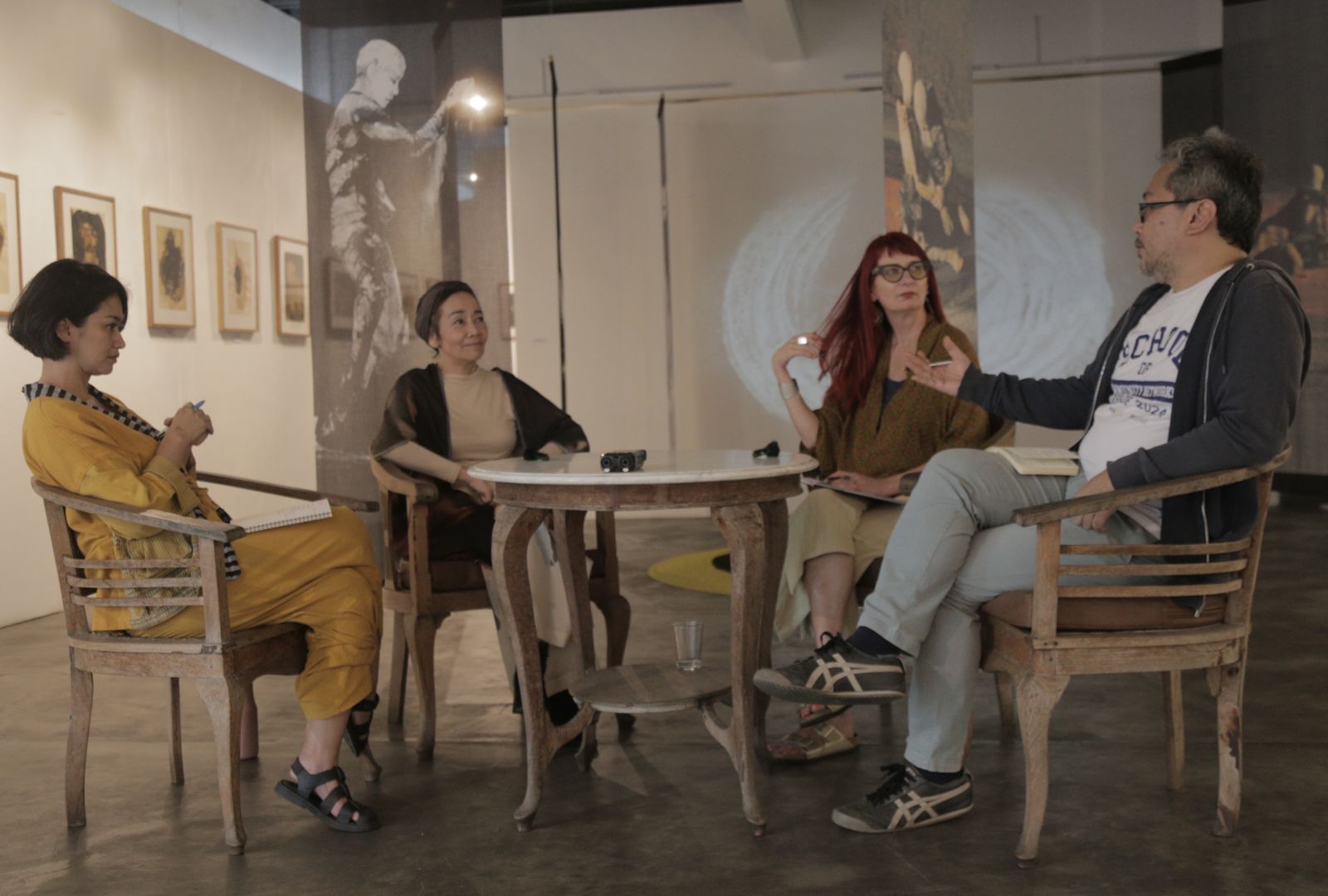
Amanda McDonald Crowley, Course Leader for the Master of Fine Arts in Cultural Leadership, is researching cultural diplomacy as scholarly practice. Her Indonesia project, funded by the Australia Indonesia Institute, Department of Foreign Affairs & Trade, employed “Think Circles”—structured conversations adapted from Marrugeku’s methodologies. Her three “Think Circle” conversations, facilitated and convened by Performing Arts Producer, Curator and Researcher Keni Soeriaatmadja and Common Room Director Gustaff H. Iskandar, created substantial research data: hour-long recorded dialogues with eco-feminist performance artist Marintan Sirait at Orbital Dago Gallery, philosopher Dr. Bambang Sugiharto at Parahyangan Catholic University, and astrophysicist Dr. Premana Premadi. The final conversation took place at the site of the 1955 Bandung Conference, the first major gathering of developing countries—a location heavy with postcolonial significance that underscores the research’s decolonising intentions.
This methodology positions cultural exchange not as one-way knowledge transfer but as reciprocal learning that challenges Western-centric paradigms. Amanda created spaces where different knowledge systems—artistic, philosophical, scientific—could inform each other. The “Think Circle” format, borrowed from Indigenous intercultural Australian practice and adapted for Indonesian context, demonstrates how research methodologies themselves can embody decolonising principles.
The project established foundations for ongoing Southeast Asian partnerships, particularly with the Common Room Foundation in Bandung (which has maintained a twenty-year relationship with Australian practitioners) and La Salle College of the Arts in Singapore. Amanda is actively encouraging students to consider international placements in Southeast Asia, recognising the value of regional cultural exchange.
Her research has built relationships with potential cultural partners. including La Salle’s MA Arts and Cultural Leadership program leader, Audrey Wang and others exploring potential exchange revivals. She met with Esplanade Theatres, and T:>Works, discussing potential triangular partnerships linking Bandung, Singapore and Sydney in regional exchange models.
Uncovering the Stories That Shaped Multicultural Performance
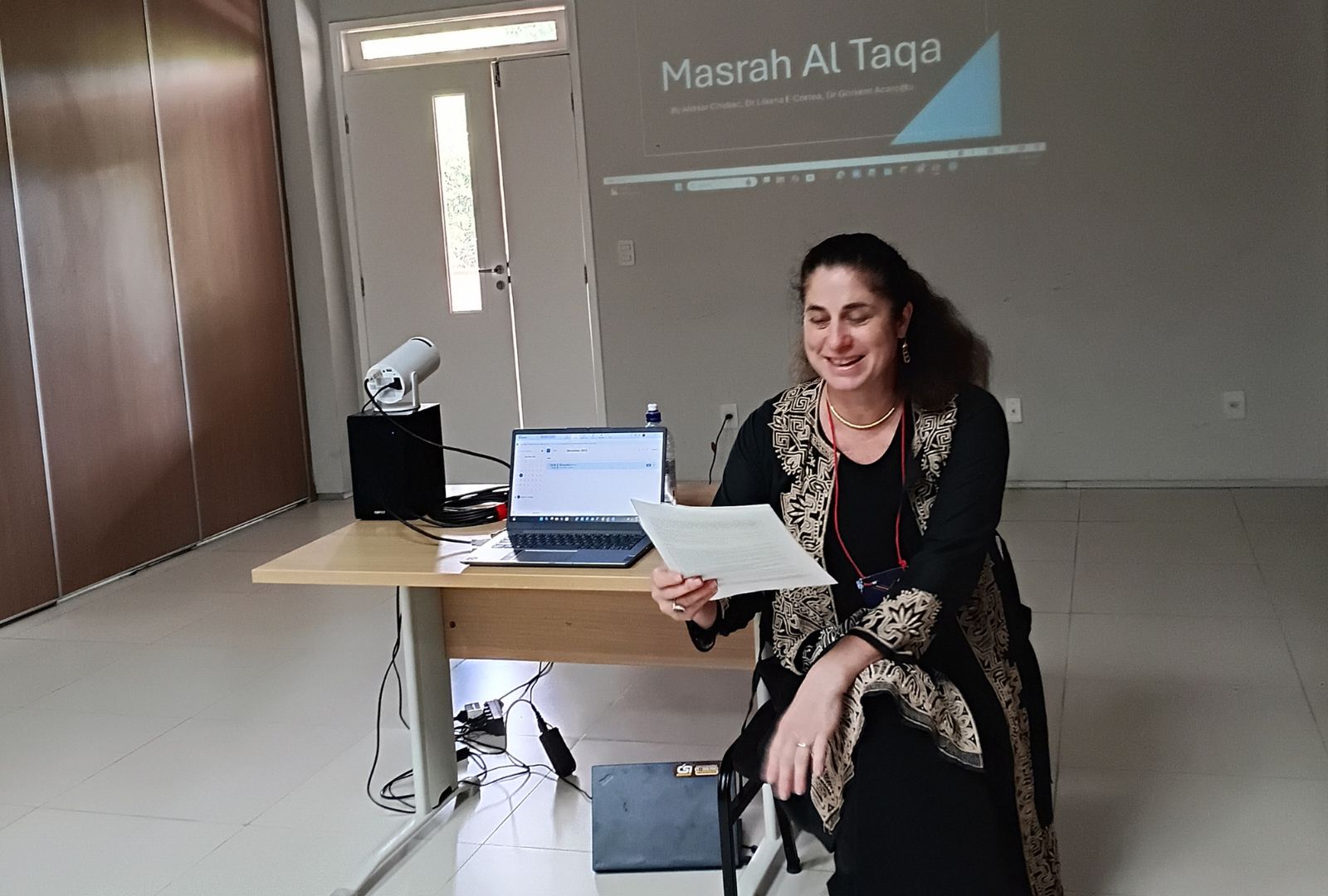
Senior Lecturer in Cultural Leadership, Dr Görkem Acaroglu’s research project, “Masah al Taqa: Recovering the Little Known History of Australia’s Only Contemporary Arab Theatre Company,” represents a significant contribution to documenting and preserving Australia’s diverse cultural heritage. This initiative is strategically aligned with NIDA’s Equity and Inclusion initiative, working to generate new knowledge and develop comprehensive teaching resources that centre diverse cultural industry narratives often marginalised in mainstream academic discourse. The project focuses on Taqa Theatre, a pioneering Sydney-based company that operated from 1991 to 1999 and served as a founding member of the Multicultural Theatre Alliance, making it a crucial but understudied player in Australia’s multicultural performance landscape. By recovering and analysing the history of this significant cultural institution, Gorkem’s research addresses a critical gap in contemporary performance scholarship and cultural studies. The findings from this research were presented at the prestigious Performance Studies International conference, PSi#30 CRUZO, CRUISING, CROSSROADS, which took place in Brazil in December 2025. Beyond its contribution to academic discourse, the project has direct pedagogical impact, generating innovative teaching materials designed for the Cultural Transformation and Sustainability subject within NIDA’s MFA Cultural Leadership program, ensuring that students engaged in cultural leadership studies have access to resources that authentically represent Australia’s Arab theatre heritage and contribute to a more inclusive understanding of the nation’s performance history.
Collectively, these research outputs reveal NIDA’s rigorous practice-led research addressing environmental crisis, technological transformation, decolonising knowledge production whilst maintaining artistic integrity. NIDA staff are publishing, presenting and building international networks as a serious contributor to the industry and its future.
Last year, NIDA’s Head of Music, Dr Nicole Stinton was awarded her doctorate from WAAPA at Edith Cowan University for her research entitled ‘Acting as song: A holistic pedagogy for sung characterisation in music theatre’. This research directly informs the innovative ways in which music and song are taught at NIDA. Last year Nicole shared her research at the Music Theatre Educators Alliance Conference on Broadway, New York. She also recently published a chapter called ‘Monologuing the Music (Not Just the Lyrics!)’ in the edited volume Crisis and Creativity in Performing Arts Training (Routledge).
The research our staff are doing is transforming how NIDA thinks, teaches, and creates, weaving urgent contemporary inquiry into the fabric of curriculum, pedagogy, and institutional identity.
*Header image: Cultural Diplomacy in Action conversation with Amanda McDonald Crowley & Gustaff Iskandar, moderated by Keni Soeriaatmadja. Cultural Entrepreneurship class, Department of Philosophy, UNPAR.
By Dr Suzanne Osmond
Head of Academic Development and Research, NIDA