
Light, sound, video, stage, production management, there’s a lot to juggle in Technical Theatre and Stage Management (TTSM), but third-year student Darcy Duncan knows that getting a production over the line is about more than technical know-how. During his time studying TTSM at NIDA, Darcy has embraced every opportunity to take on sustainability initiatives, hunted for creative solutions to practical challenges and developed an unexpected set of soft skills that have become vital tools in his kit. Behind every great production is a team making a massive number of unseen things happen, so before he steps into the industry, Darcy is stepping into the spotlight to talk about what he’s learned.
What first drew you to Technical Theatre and Stage Management (TTSM) and what made you want to study TTSM at NIDA?
What initially drew me to the Technical Theatre and Stage Management course was the student productions. Before starting at NIDA, I already had quite a few of the practical skills, particularly around lighting systems and operating shows. Most of that experience came through community theatre, though, so I hadn’t really had exposure to using these skills in a professional theatre environment.
What attracted me to TTSM at NIDA was the opportunity to learn by actually doing. Technical theatre is something you can only take so far in a classroom. Whether it’s lighting, sound, video, stage management or production management, there’s so much you learn by being in the venue/rehearsal room and working on a production with other people.
At NIDA, the student productions are treated with the same attention to detail and production values that you’d expect from professional productions, and that was a really big part of why I wanted to study here.
Tell us about a project or production you particularly enjoyed working on.
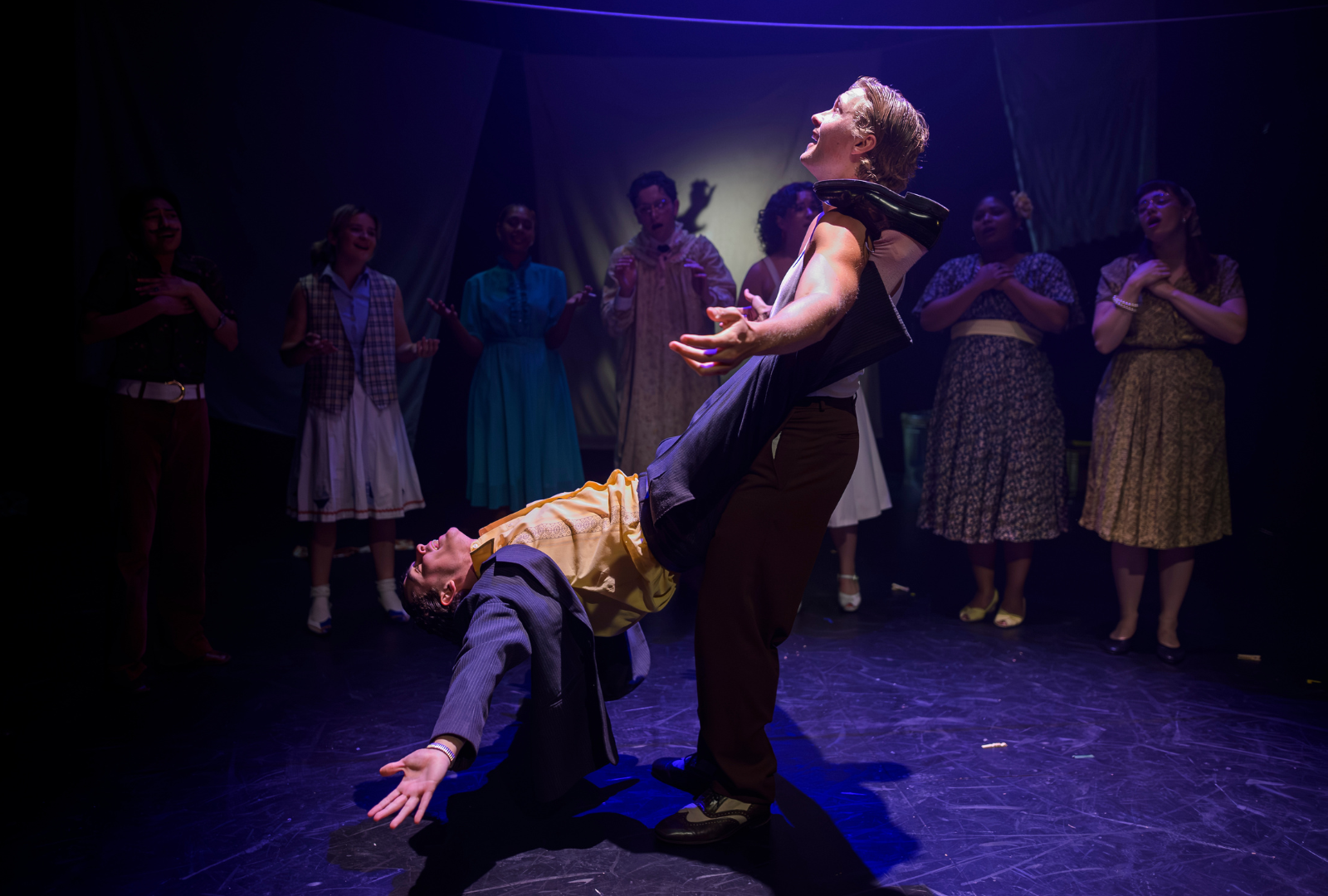
My favourite production that I’ve worked on at NIDA was Tony Tales of New York. It was a fully devised piece of theatre, so we essentially built the show from the ground up over four weeks of rehearsals. This was created with the second-year Acting students.
It was particularly interesting because it was the second-year actors’ first opportunity to collaborate directly with the TTSM, Costume, Set Construction, Props and Effects and Design students.
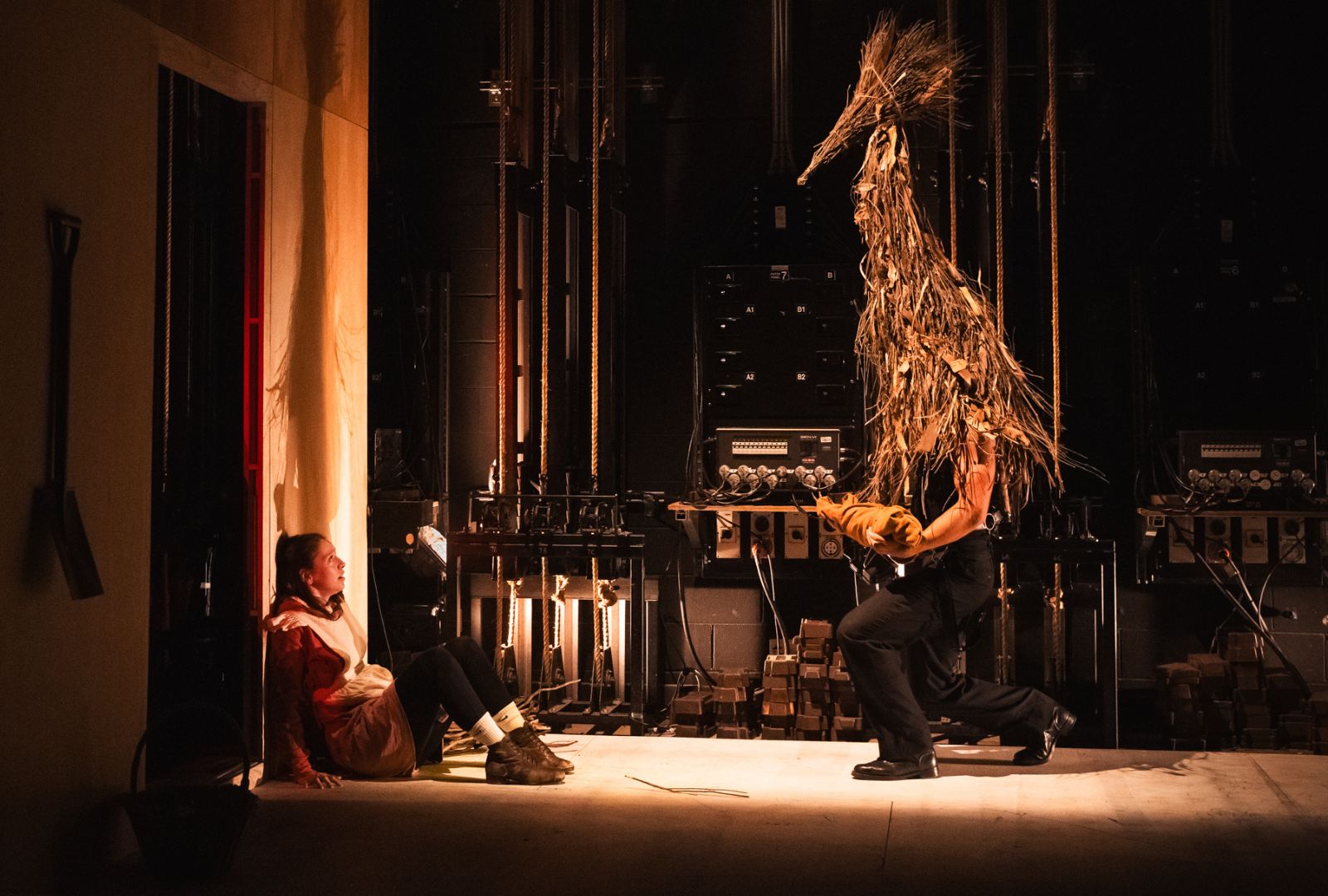
This year I’m production managing these shows again, where two shows operate in rep*, which has been a really valuable experience because it’s given me a much broader understanding of what goes into managing multiple productions and teams with limited crew, budget, time and space.
On top of your roles as a TTSM student, you’ve also put your hand up to be the sustainability coordinator across a number of productions. What are some of the sustainable practices you’ve implemented?
I’ve taken on the sustainability coordinator role across seven productions at NIDA. One of the main things we’ve implemented is a waste tracker, which was originally set up by Chris Milburn (Technical Theatre and Stage Management, 2023), so we can actually start understanding where waste is being generated rather than just dealing with it at the end of a production.
Additionally, I purchased 1000’s of toggles which are used as a direct replacement for securing cables onto bars. Previously, we used to use single use PVC tape which was expensive, wasteful, and made of plastic.
A big part of sustainability for me is looking at what we already have before deciding what we need to buy. That might mean reusing stock from our costume, props or technical stores, hiring something rather than purchasing it, or designing something so it can be reused in another production.
It’s really about making sustainability part of the production process rather than treating it as an afterthought.
Has thinking about sustainability changed the way you approach technical decisions or problem-solving on a production?
Definitely. Budgets are becoming tighter, so sustainability actually gives you another way to approach problem-solving. It makes you stop and ask, ‘What is actually essential to this show?’
I don’t think sustainability has to be a restriction. Often, it can actually be the solution. Reusing materials, hiring equipment, or using existing stock can reduce both the cost of a production and the amount of waste associated with it.
I’ve transitioned to thinking about sustainability much earlier in the decision-making process, rather than treating it as something you consider once the production is already designed.
What have you learned about collaboration at NIDA, working within your team and with other departments?
Probably the biggest thing I’ve learned at NIDA is that technical theatre is fundamentally collaborative. You can have an excellent technical solution, but if you haven’t communicated it properly to the director, other creatives or departments, it’s not necessarily going to work.
I’ve learned a lot about communicating with people who have very different ways of working and different priorities. Sometimes that’s about solving a conflict, and sometimes it’s as simple as making sure meeting minutes are objective and neutral so everyone leaves with the facts they need to solve challenges being faced by the production.
You’re approaching the end of your time at NIDA, what skills are you most excited to take into the industry?
It sounds a little strange, but I think the skills I’m most excited to take into the industry are actually the soft skills.
We spend a lot of time at NIDA talking about collaboration and communication, and those weren’t necessarily the things I thought I was coming into the course to learn. I had a lot of those skills coming into first year, but over the past year I’ve really come to understand how important they are.
Because at the end of the day, you can have all the technical knowledge in the world, but without good communication and collaboration, you can’t make a production happen.
What advice would you give someone thinking about applying for this course?
Don’t be afraid. I think everyone is nervous about taking the next step in their life, and applying for a course like this can feel like a really big deal.
NIDA is a really recognised institution for Technical Production, so it’s completely understandable to feel nervous about the interview.
My biggest advice would be to relax and breathe. If you get asked a question and you don’t immediately know the answer, don’t panic. Take a breath, have a sip of water, give yourself a moment to think, and then answer it.
*repertory theatre – one show is performed followed by a changeover of props, set, costume, lighting, sound and video, and then totally different show is performered using the same performers.
NIDA is currently accepting applications to study Technical Production (previously Technical Theatre and Stage Management) in 2027.