
NIDA recently hosted the Australian Theatre Live premiere screening of Queensland Theatre’s acclaimed production Drizzle Boy, supported by NIDA’s neurodivergent peer-led group, Neurokin.
Winner of the Queensland Premier’s Drama Award, Drizzle Boy is the first Australian mainstage play written by an autistic playwright about an autistic protagonist. Written by NIDA alum and award-winning playwright Ryan Enniss (Acting, 2021), and starring neurodivergent actor Daniel R. Nixon, the production has been praised for its authentic portrayal of autism and its fresh theatrical voice. Told through magical realism, it offers a moving, funny and deeply human coming-of-age story.
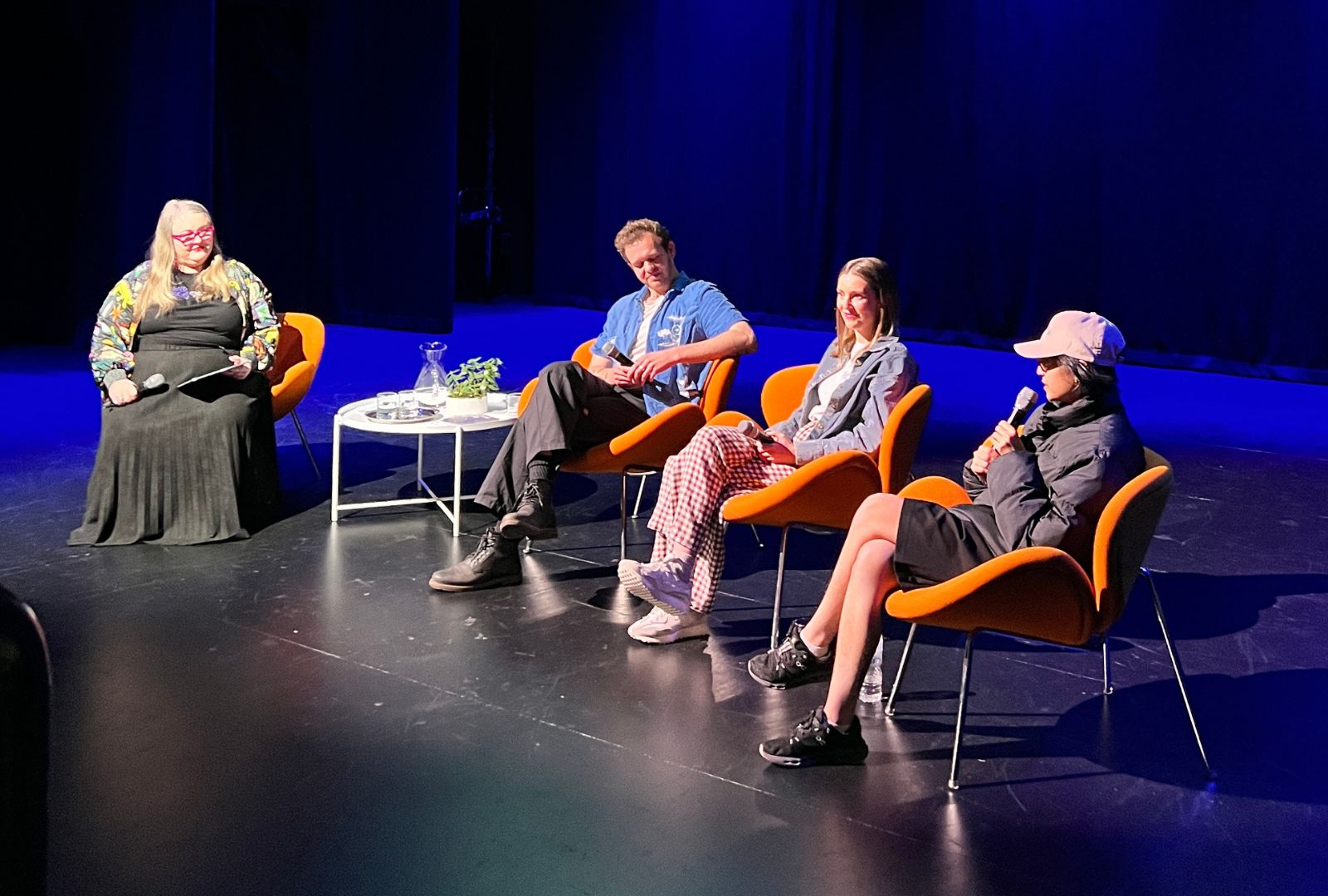
Following the screening, Ryan Enniss joined Elise Mather, Client Relationship Manager at Bus Stop Films and NIDA third-year Acting student Rashie Kase for a panel discussion moderated by Madeleine Jaine Lobsey from Wondiverse. The conversation explored the creative process behind the work, authentic representation and the importance of inclusion across the screen and stage industries.
Discussing his choice to tell the story through magical realism, Ryan said the genre reflects the way he experiences life.
“I’m drawn to magical realism because it captures the feeling of life, which is often bigger, grander and more magical than everyday reality. I go to the theatre and cinema to experience that, and magical realism is simply more fun.”
Ryan also reflected on the expectations that can come with representation as an autistic writer. While he felt significant pressure when first writing Drizzle Boy in 2021, his perspective has shifted over time.
“These days, I believe that if you’re kind, generous, curious and doing your best, that’s all you can really do. That’s the approach I take to representation and storytelling.”
Looking back on the play’s journey from stage to ATL’s screen version, Ryan said the adaptation process gave him fresh insight into his own work.
“It was fascinating to dissect the play by pausing, rewinding and analysing it in ways you can’t with live theatre,” he said. The experience also sparked an interest in screenwriting, leading him to adapt Drizzle Boy into a television pilot script.
For Rashie Kase, studying at NIDA played a key role in understanding their own neurodivergence. Through conversations with fellow students and support services, they recognised that many of their experiences were shared by others.
“The quiet room at NIDA has been incredibly helpful, especially during busy production periods. Having a dedicated space to step away from the noise, lights and sensory input makes a real difference.”
Rashie said access to both practical support and a community of neurodivergent peers had been invaluable.
“It’s helped me understand my reactions to different situations and realise I’m not alone. That sense of connection and belonging has been really valuable.”
As they prepare to enter the industry, Rashie hopes to carry forward strong self-advocacy skills and the confidence to communicate their needs.
“NIDA has shown me that people don’t need to share the same experiences to be understanding and adaptable. Simply having conversations about what I need has helped people understand where I’m coming from.”
Elise Mather highlighted the growing appetite for authentic stories and the role audiences play in driving industry change.
“Audiences want authentic, diverse stories. As conversations around neurodiversity and disability become more common, more people are discovering perspectives they haven’t been exposed to before. That growing interest and demand for representation will continue to drive change.”
Asked what productions can do to better support neurodivergent artists, Elise emphasised that there is no single solution.
“Every neurodivergent person has different needs, so the most important thing is approaching people with kindness, curiosity and an open mind,” she said. “Simple adjustments, like providing a quiet space to retreat to, can make a big difference. Just as important is being open to training and learning from people with lived experience.”
The screening and panel highlighted the value of authentic storytelling, meaningful representation and creating environments where neurodivergent artists can thrive, both during training and throughout their professional careers.
Header image L-R: Elise Mather, Madeleine Jaine Lobsey, Ryan Enniss and Rashie Kase.