
Ahead of his upcoming masterclass Fighting For The Stage, we caught up with NIDA educator Tim Dashwood to get his insights into the craft of stage combat and physical storytelling. Tim has worked with some of Australia’s biggest live entertainment companies including Bell Shakespeare, Sydney Theatre Company and Opera Australia, bringing a rigorous expertise to training performers to be both safe and compelling.
Your upcoming masterclass is called Fighting For The Stage, what can participants expect from this course?
My approach to this type of training is establishing the fundamental building blocks of movement with a martial understanding and logic. People with past experience can come to this two-day course and either learn new concepts or build and develop a deeper understanding, and continue their training in these physical practices. It will explore the biomechanics between safely performing basic violence and moments of physical risk onstage, not just necessarily ‘fighting’ but also falling, tripping, fainting and everything in between.
What do you think makes NIDA such a unique environment for training performers in stage combat and physical storytelling?
NIDA is Australia’s centre-point for training for performance on stage and screen. The physical environment and culture encourage dedication, focus and high level approaches to performance. The performing arts expects performers, especially in Australia, to have a range of diverse skills and abilities. NIDA’s training offers diverse skills, as well as the opportunity to focus on specific skills and training practices.
Stage combat and physical storytelling enhance all levels of performance and teach performers to engage fully with material. Learning more about how to use the body efficiently and economically allows for a more dynamic and expressive performer.
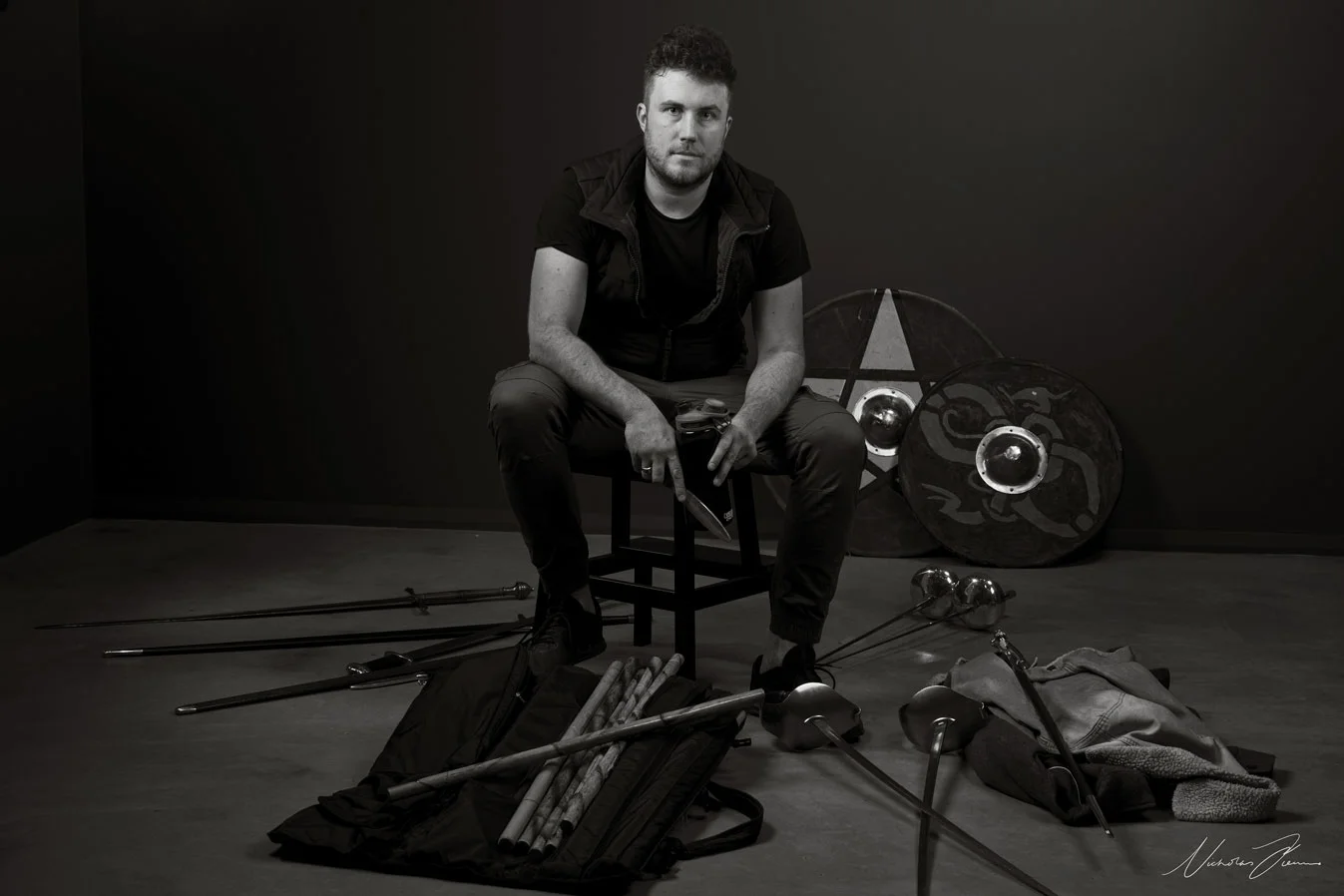
How does your approach to fight and movement training reflect what actors will be asked to do in the industry?
In a nutshell, this work is to make performers safe but look ‘dangerous’ while doing it. The basis of the training is developing bodies that have the capabilities to perform all the needs of any performance in Australia. Teaching actors how to use their bodies in diverse ways and building concepts that can be used in multiple circumstances. While many people are concerned about ‘looking good’, they often lack the skills to do something simply. Without those skills, they can never completely embody a physical action that is not habitual to them and this makes it hard to be convincing outside their own body. This training looks at breaking down movement, to make all actions controllable which eventually allows performers to add their own characterisation.
Safety is such a crucial part of stage combat. How do you teach performers to balance risk, trust and storytelling in high-stakes scenes?
Training! Understanding principles and concepts, not just the tricks of how it is done. We rehearse something until it feels natural. By physically dissecting the scenes and physicality of moments of high-risk, we can help actors feel safe inside the violence of the actions. Understanding and developing a deep understanding of our own bodies and capabilities allow performers to find safety inside their actions.
Do you have a favourite choreographed fight scene from a film or TV show and what makes it stand out to you?
So many to mention. Old school fencing is on display in the 1940’s Mark of Zorro. This sees Basil Rathbone and Tyron Power show incredible skill. Basil Rathbone in so many films with Errol Flynn.
The Duellists opens with a great, realistic duel. Even though it’s quick, it shows the danger and tells a very interesting story.
You can’t go past The Princess Bride. One of the most memorable sword fights on film and a great example of two actors spending a LOT of time with their fight choreographer.
The Daredevil TV series has a fantastic hallway scene. Ip Man depicts Wing Chun in a very cinematic way. Early Jackie Chan films show his incredible skill in the Arts. Bruce Lee. The Bourne Identity. The Raid. Atomic Blonde. Kingsmen. The list is endless!
What skills do you think directors and casting teams notice immediately when an actor has strong physical and combat training?
Strong physical and combat training not only makes you a good mover but makes you a strong listener and grounds a performer in a way that is very noticeable. Ironically, you can tell a good mover by the way they are still; how they hold their body and show a physical presence without trying.
It is very exciting to watch a performer, comfortable in their own skin take time before needing to open their mouth. These performers tell stories by deliberate adjustments in their physicality, mesmerising without doing much.
For performers who may feel intimidated by combat or movement work, what would you say to encourage them?
This work is designed to help each individual run their own race and find development in themselves. The simplest exercise or movement is often the most important. The training also allows performers to understand that anything is possible and there is always another approach if something doesn’t feel right. This work is to empower performers to make safe choices. It gives them language, understanding and awareness in how to approach this work and give them a voice.
Find out more about NIDA Open’s Fighting for the Stage Masterclass and enrol ASAP to secure your spot.
Header image: NIDA Production 2025, Acting Showcase. Photography by Phil Erbacher.