
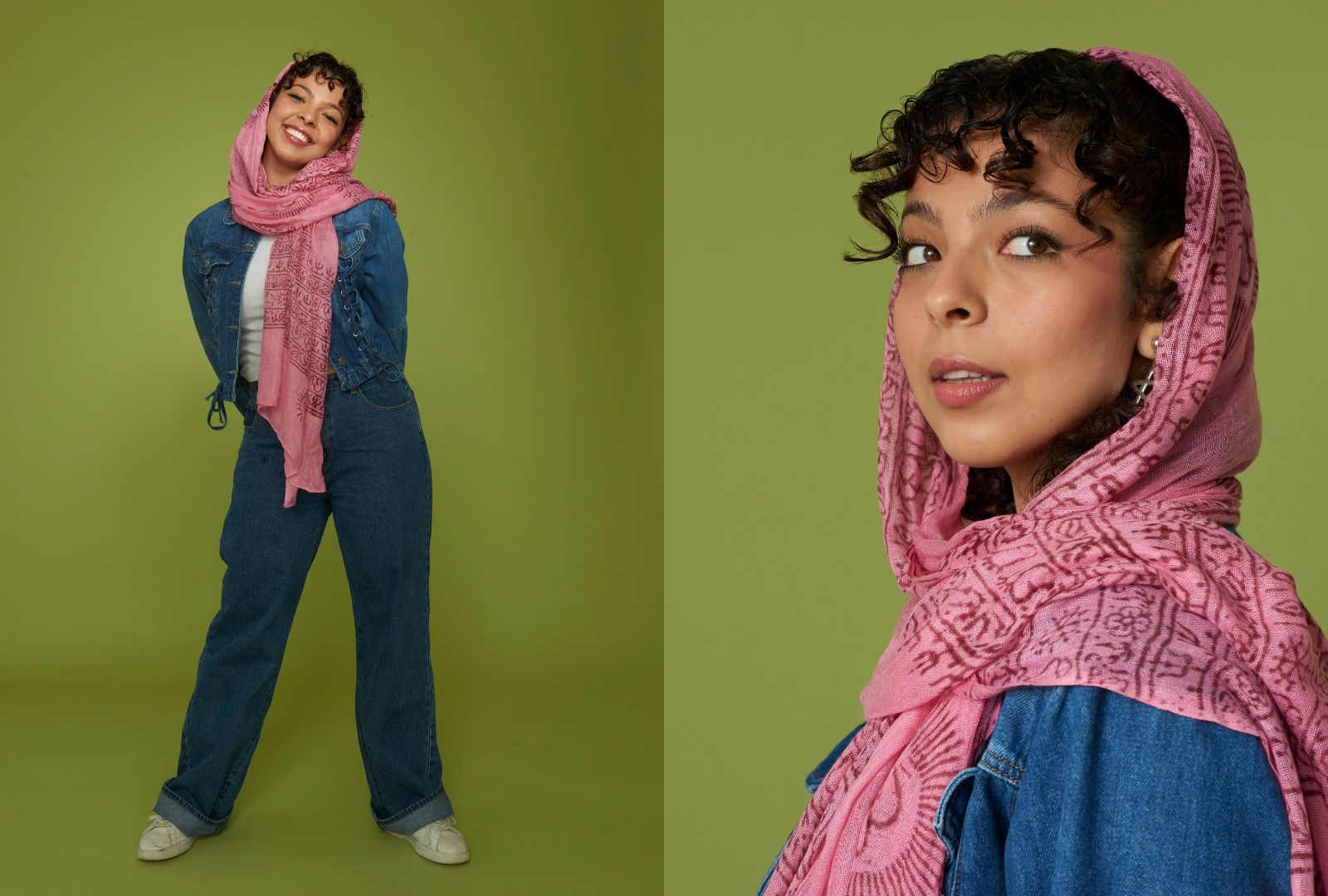
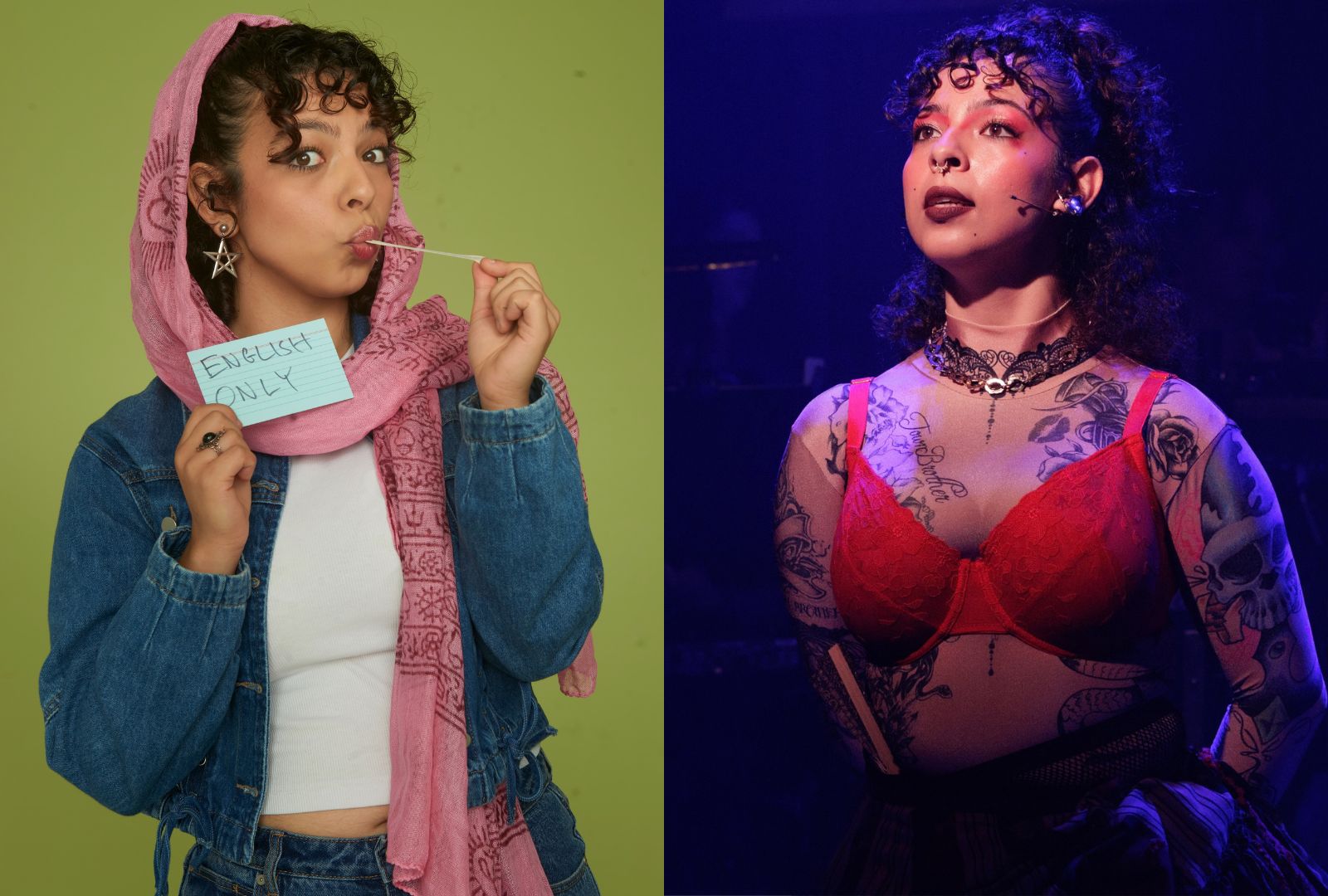
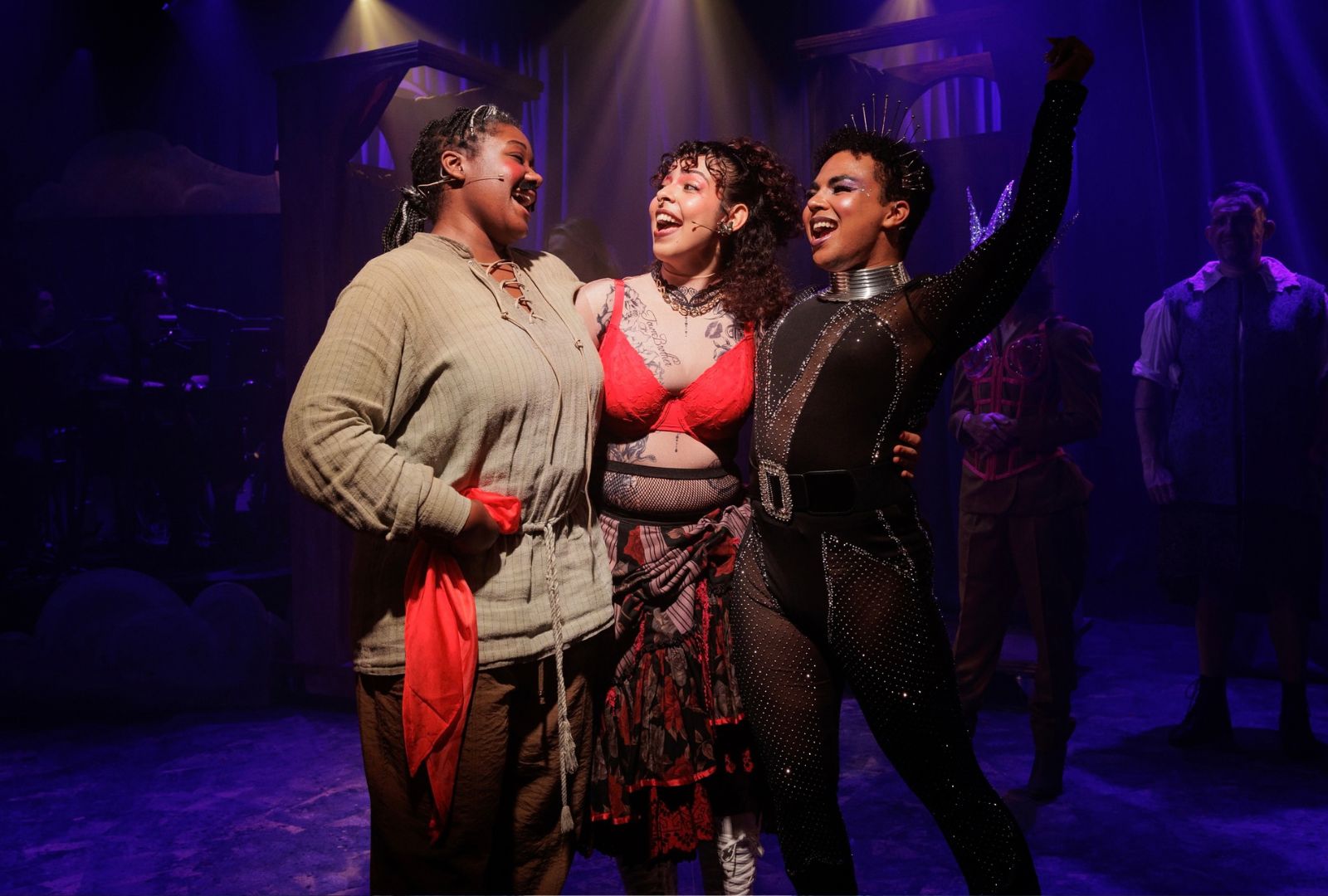
NIDA alum Minerva Khodabande (Acting, 2025) is demonstrating her range, starring in two strikingly different productions that showcase some of the most exciting storytelling currently on Sydney’s stages. Fresh from starring in Hayes Theatre Co’s gloriously camp production of Head Over Heels, she is preparing to step into the intimate and powerful world of English presented by the Seymour Centre and Outhouse Theatre Co. We caught up with Minerva to discuss representing Iranian stories on stage, how she shifts between theatrical styles and the lessons from NIDA that inform her work.
You’re currently starring in the hilariously camp Head Over Heels and will soon move onto the more intimate and layered English. How do you shift between such distinct theatrical styles?
That is the joy of what I do, to be honest. Being able to tackle such different projects back-to-back is not only a privilege, but also exactly how I would like my career to look.
In terms of approach, I think it mostly comes down to being present in each room. Your body often understands the world you are in before your brain does, so I try to listen to my instincts as much as possible, based on the atmosphere in the room, the text, and the fellow actor in front of me.
In some ways, the two also complement one another in a beautiful way. Head Over Heels allows me to keep a sense of playfulness and fun in English, especially as I am playing a younger character (Goli). In turn, English helps me keep the storyline within Head Over Heels real and grounded, despite the camp nature of the show.
What is it that drew you to these two different performances and what are you most excited about for each?
With Head Over Heels, I was really excited about the prospect of making my Hayes Theatre debut, but with the added challenge of a rock-jukebox musical. I don’t think I had done anything like that before, which really drew me in.
I also felt that the story brings so much joy with it, and considering the world we live in, it feels nice to be part of something that carries an important message about acceptance and love, while also allowing audiences the space to come in and simply escape for two hours.
English is one of my favourite plays of all time. As an Iranian, having the opportunity to be part of this play is actually a dream come true. Sanaz Toossi, the playwright, is an absolute genius at capturing everyday life with humour but also incredible depth. It was honestly a no-brainer for me. I had to be part of this one.
What do you hope audiences take away from both productions?
For Head Over Heels, I hope audiences leave feeling empowered, joyful and hopeful, but also reflective of what the world could look like if we simply accepted and loved one another.
For English, I hope audiences get a glimpse into what it means to be Iranian — the joy, the silliness, the hardships, the impossible choices and the pride. Each character in the play is so different from one another, so I hope people are able to see us as three-dimensional individuals rather than stereotypes.
I’m also excited for audiences to see our everyday world, not just our traumas. For the Iranian community, who I’m sure will come to see the show, I hope it brings a smile to their faces, in fact, I hope they cackle as loudly as possible. With everything going on, they deserve a space to laugh. I also hope they feel proud of the show.
Looking back at your time at NIDA, was there a particular class, mentor, or moment that you now see influencing the work you’re doing?
Honestly, different classes have come in handy at different times. Accent breakdown classes with Simon Masterton and Laura Farrell have been incredibly helpful in English, as we tackle rapid transitions between a Persian accent and an Australian accent.
Our Shakespeare work with John Bashford has guided me through the text for Head Over Heels.
Our scene-to-song workshops with Dr Nicole Stinton have been my saving grace in finding specificity within a jukebox musical, where the transition between scene and song isn’t always seamless.
Finally, our movement work with Gavin Robins gave me autonomy over how I use my body to distinguish between my characters in each show.
For current NIDA students hoping to work in theatre, what’s one lesson that has proven invaluable in the industry?
Treat every audition as an opportunity to act, play and workshop with creatives who are just as passionate. Have an opinion. Read the play, know the character, and come in with a point of view.
For me, the most rewarding part of theatre is the discussion — talking about the circumstances of the play, your character, and their relationships to the other characters. That’s where the real juice is. So do your homework and get the most out of the experience.
And finally, take care of your health, both physically and mentally. Don’t be afraid to communicate honestly with the team about where you’re at, because you are your instrument. Working yourself to death won’t help anyone. Find a routine that keeps you healthy while doing what you love.
What kind of stories are you most excited to tell next?
This is a hard question to answer because it changes on a daily basis. But, generally speaking, I’m drawn to stories that either challenge my perspective or have the potential to make a real impact on audiences. More often than not, those kinds of stories tend to find me organically.
So whatever project I have the opportunity to be part of next, I just hope I can have fun with it and, in turn, invite the audience to come along on the journey.
Head over Heels is playing now at Hayes Theatre Co until 22 March, book tickets here.
English is coming to the Seymour Centre from 9 April – 2 May, book tickets here.