
The path to NIDA for Luke D’Alessandro (Properties and Objects, 2018 & Master of Design for Performance, 2020) was unconventional, strenuous, gratifying and fruitful. Now the award-winning Costume Designer for The Masked Singer (USA), Luke has carved out an international reputation for creativity and adaptability, working on large-scale movies, Dancing with the Stars, and leading teams of up to 50 people. Whether he’s helping celebrities step into dazzlingly complex costumes or collaborating with independent artists to bring their visions to life, Luke brings warmth, humour and a deep respect for his craft to every project. Get to know Luke:
You’re from the USA, why did you choose to study at NIDA and work in Australia?
I was born and raised in Maine in the United States. I grew up a theatre kid and ended up spending a lot of time with a relative of mine who lived in New York and was going to school in Boston for lighting and sound design. One Thanksgiving her roommate from college came to dinner and told me about this boarding school for high school students that had theatre, film and writing. It was highly competitive, and I thought, “I should go there.”
I ended up applying to Interlochen Centre for the Arts without my parents knowing and I was accepted into the design and production department. Even though I was accepted my single mum said, “There’s no way we can afford this.” Then another letter came in the mail and that was the financial aid packet with 99% of the tuition covered. I had two suitcases and a few boxes; I was dropped off in Northern Michigan and was living on my own. And it was great.
I’d do summer stock theatre in the summers back in Maine, and that’s where I’d make my money, and if I didn’t make enough money I couldn’t come home for Christmas.
It really pushed me to work hard and get positions that normally you’d have to be in university to get. But a local summer stock theatre was supportive of me and I’m very grateful. I also got a job in Italy doing an opera festival, and I did that for three summers. So, I’d be in Tuscany for about two months doing props, speaking Italian and doing outdoor shows and traveling with these international opera people.
While I was at Interlochen, a NIDA alum, Dane Laffrey (Design, 2004), taught us a masterclass and I really latched on, he became someone I could confide in because I initially wanted to study abroad. I put it off and I ended up getting accepted into a few schools in the States; Carnegie Mellon, DePaul, these big schools, and then one school was trying to reel me in, SUNY Purchase New York, which I now call SUNY Poor Choice, because going there and having a bad experience is when I reached out to Dane like, “What should I do?” And he said, “You should go to NIDA.”
There were some financial hurdles during my time at NIDA, so in my first year I had to start making money working in the evening and weekends. It nearly killed me. It was a struggle, but I enjoyed every minute of it and, to be honest, it was 50% about being NIDA and studying and then 50% about having this cultural experience overseas. For eight years I never came back to the States. I really lived it. I loved it. I love Australia.
What is it about Sydney or Australia that you love so much?
The way of life is relaxed compared to America. In America, if you’re rich you live a great life, whereas I think things are fairer in Australia and what I’ve noticed in the arts community is that people are given opportunities when they’re due. I’ve observed lots of different instances where someone who’s up and coming was given an opportunity to design something or work on a project, not just because they’ve done their time, but because they’ve proven themselves.
That’s something that I feel I received that I would never have received in the United States. The US from a university perspective onwards, is very much like; “You’re a freshman, and you’re gonna do your time. I’m a senior and I’m the boss.” You’re going to be an assistant for 14 years, and then you’re going to get the opportunity. Whereas I’ve been able to bypass that, I still did my time in Australia and worked my way up in different roles. I think it’s important to have a diverse understanding of what the PA does and the supervisor and the coordinator; but it’s much more friendly and the Sydney scene is so small. You go to a theatre event and everybody from NIDA is there and everyone’s welcoming and friendly.
I’m so grateful for the NIDA experience.
The theatre scene in Sydney is great too, and it’s heavily supported by NIDA. Every show that goes on somebody, whether you’re an actor or a designer or lighting, they reach back out to NIDA , “Can we rent a rehearsal room? Can we borrow this truss?” The independent theatre scene would not be able to produce what they’re producing if it wasn’t for this indirect support. The fact that NIDA does that, whether they want to acknowledge it or not, they’re still supporting students and alumni, especially when they’re just starting off. Which I see personally as a positive.
Since graduating I couldn’t rely on independent theatre because I need a more consistent income. While I was at NIDA as a student, I would work on a lot of independent projects, so I’ve had the experience of doing the independent theatre scene without taking on the entire workload because I don’t think they get paid properly.
You’ve worked on some major Marvel movies, can you tell us a bit about your experiences on those productions?
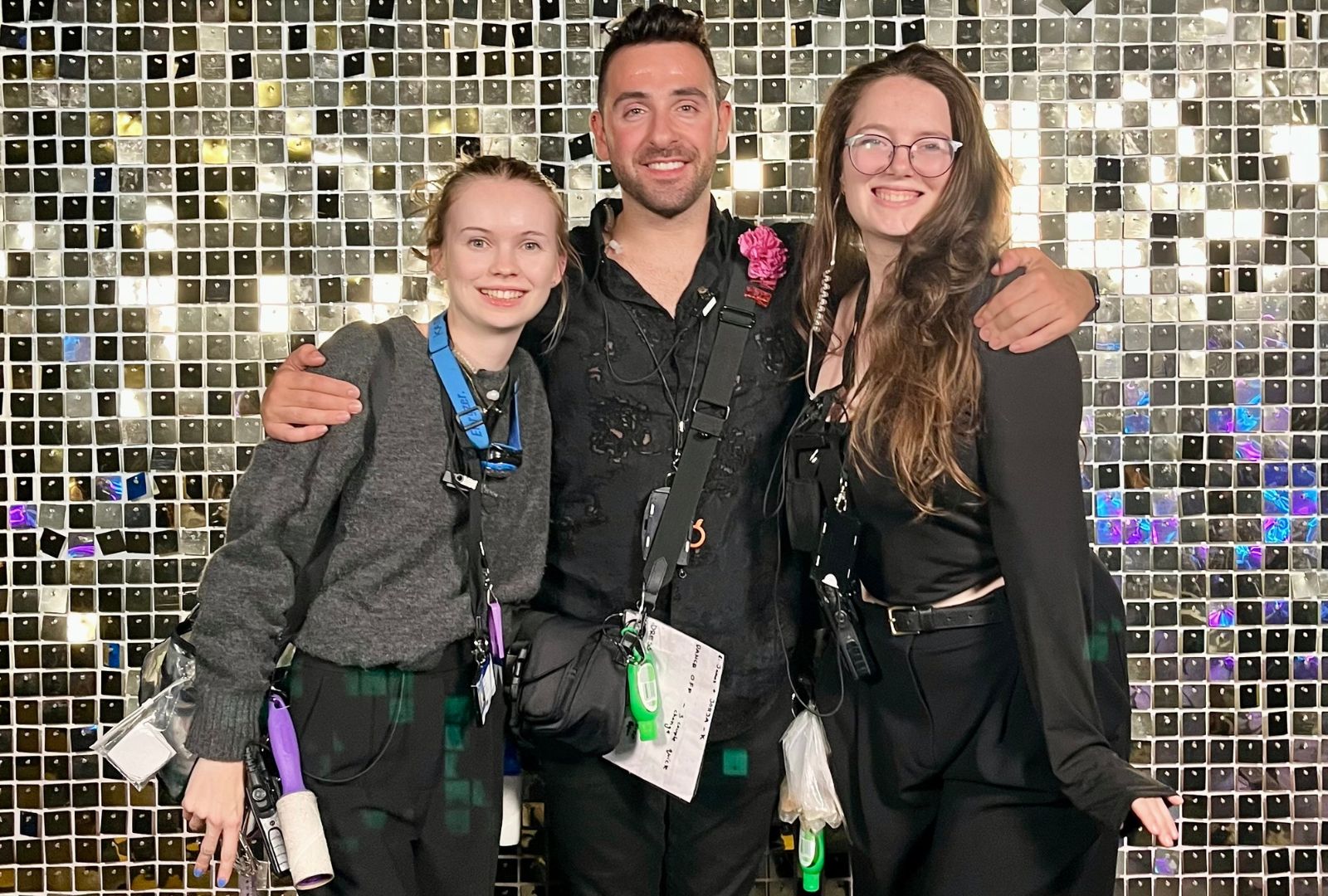
I joined Shang-Chi and the Legend of the Ten Rings after the pandemic started, I was a costume assistant for main unit and supporting the trailer costumer; that was a really good experience. Since then, I’ve been on the Fox Studios lot numerous times on other TV productions when the Marvel movies have been going on and you bump into everybody at the cafe.
On Thor: Love and Thunder, another NIDA grad was away, and I filled in for her. So, I worked with the specialty costume head of department, Meg Ashforth (Production Crafts, 2005). I was there for two weeks helping out in the specialty department and it was so much fun.
One of my classmates worked on these productions too, Brittany Worboys (Properties and Objects, 2018) who does some amazing work, and there are these interesting through lines with what she did. There are certain things that we did at NIDA that we can see in our work now, which is really funny and we’ve all gotten together and commented on that.
I was always obsessed with food and mascots and over-the-top costuming and Brittany is really good at molding, casting and miniatures. Bella Bowman (Properties and Objects, 2018) does everything, she’s such an experimental person. Jack Pope (Properties and Objects, 2018) is now working in SFX on movies, and he did that stuff when we were at NIDA.
How do you adapt your design process to different creative teams in Australia and the US?
I notice that my ‘isms’ as a designer or collaborator in any role have been heavily influenced by the Australian workforce. I would say that I sometimes join teams and I’m working differently. I catch myself and go, “OK, well, this is how the Americans like to work,” whereas I adapted to working with Australians.
There’s a much more positive atmosphere in an Australian setting. Sometimes Americans come across as a bit brassy and loud, and that’s something that I’ve tried to dial back certain settings.
The Australian experience I’ve had, people have been more straightforward, which I think is not a bad thing. But I just read the room.
An experience that I can speak on was when I first came over to work on The Masked Singer in America after working on The Masked Singer in Australia, they were completely different. Night and day in terms of the scale of the production.
The first thing I asked the American team was, “How do you like to work?” You could come barging in and being like, “This is how I work rah rah rah.” And that can be a bit confronting, so by asking them how they’ve worked in the past, I was able to adapt my process to help them.
The Masked Singer team have dealt with a different designer for six seasons and then there were new designers coming in. That transition is hard, and I wanted to support them, and the only way I could support them was to adapt myself. If they preferred meetings every morning and talking through the day’s achievements and they had a particular way of tackling something, I would listen. Sometimes taking the back seat and just listening is the strongest advice you can give.
I like to try things on and make my team laugh and be goofy too. I have a tendency to try on everything. If I put it on and it’s uncomfortable then I at least know to change, like whether it’s a women’s costumes, a man’s costume, big/small, I usually try it on.
What are some of your career highlights?
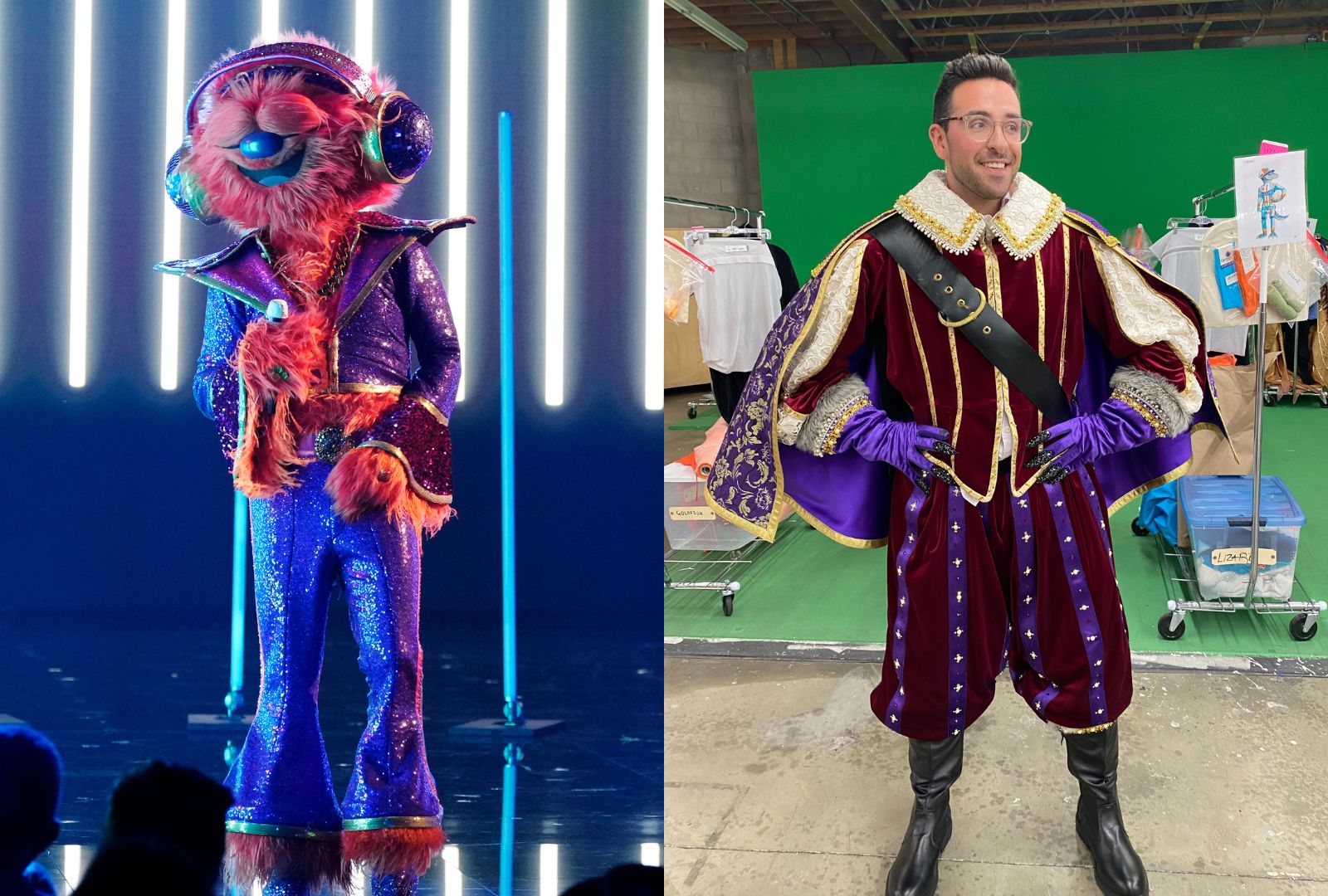
There are the published career highlights, for example, I’ve done eight seasons of The Masked Singer, US. I’ve done three seasons of The Masked Singer in Australia and worked on a movie Tim Chappel designed, Seriously Red; a movie that we filmed up in the Northern Rivers about a Dolly Parton impersonator, and Rose Byrne and Bobby Cannavale made an appearance. These titles that speak for themselves and those are external highlight.
Internal highlights for me would be the things that have touched me. There’ve been some people I’ve worked with who have been role models and have taught me a lot. Those highlights you couldn’t publish in a book; they’re memories that I cherish – working with some amazing artists and the invaluable skills I’ve learned from different people around the world is more important than what’s on IMDB.
With those career highlights, yes, I worked with X celeb, but I only worked with them for a week. Working with a team of people for 6 – 12 weeks who have taught me different processes or ways to look at things is way more important. So, I really cherish the different people I’ve met and how they’ve taught me new things.
For example, I worked with Katrina Henley when she was the head cutter for Mortal Kombat. She worked at Channel 9 when she graduated from TAFE (Fashion Design) and she became the Head of Wardrobe and Make-up in the 90s and worked with all the artists who did D Generation, Fast Forward, Big Girl’s Blouse. All those Australian Kath and Kim type comedy troupes. And she can RUN a workroom. A lot of NIDA’s costume graduates have worked with her on big jobs. She’s someone who I really value what she taught me.
The NIDA faculty also have a special place in my heart. In particular, I worked two seasons with Karen Scribbens as an employee helping her paint for some of the shows and that scenic painting was really fun. She’s another person I cherish, the head scenic artist at NIDA. She’s a fantastic woman and teacher.
Are there any productions that have challenged you as a designer and a maker?
The most challenging part sometimes is being a salesperson. Selling ideas is something I’m still working on, especially on these bigger shows where you’ve got a lot of producers wanting you to justify certain decisions. Because I come from a making background rooted in reality, I find it challenging to sell things without getting too stuck in the terminology.
Understanding materials and being a strong fabricator helps me when I’m designing. Some designers who are very creative struggle to tackle the actual execution. It’s helped that I can build a reasonable prototype, whether it’s a mechanism or a sample of how to dye or paint a fabric. It’s a great communication tool when I work with builders or makers, and they take it to the next level. That’s an amazing process.
Do you have a project that you consider to be your ‘big break’?
I’m a little shy when it comes to this stuff because, to be honest, how I got onto The Masked Singer and Dancing With the Stars; I worked consistently with Tim Chappel who guest lectures at NIDA. He designed The Adventures of Priscilla, Queen of the Desert and he’s the one who brought me onto Dancing With The Stars.
Over the last five years it’s been big project, big project, big project and I’ve done a lot with him, assisting him and learning. He’s a wonderful man and very creative, and he’s let me dabble in the management side of things, like on Dancing With The Stars, I’m an assistant costume designer, but I also run the workroom and manage builds. I’ve had some experience doing costume coordinating; doing the technical drawings, and that’s where I play with some of my Props background. When he came to do The Masked Singer in the US, I came along. He did three seasons that I was assistant costume designing with before I continued on my own. That would be a ‘big break’.
Also, I feel like my initial plan of studying overseas, getting a better education and jumping that queue has progressed my career in ways I wouldn’t have imagined.
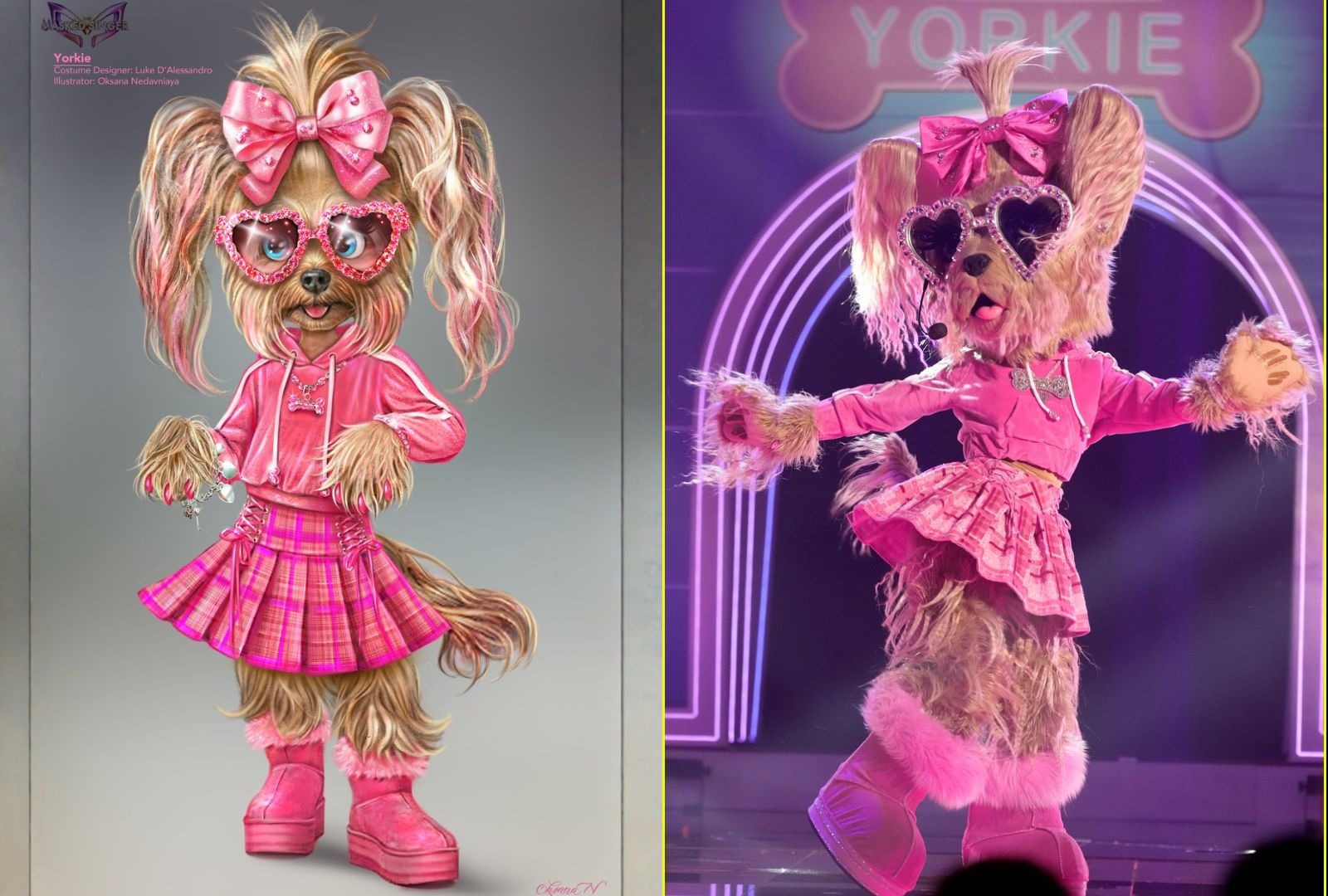
I’m a member of the Costume Designers Guild where we won a very prestigious award, very hard to win that, especially in our category. I’ve entered for the Emmys every year, nominations but no win yet. It’s hard, especially when you’re working on a show that’s been around so long. I’m in production for the 14th season of The Masked Singer. Even though our work is constantly getting better and we’re pushing the limits with very insane circumstances and working environments. But it’s an honour to just be nominated sometimes because it’s not just for me. I’ve got 50+ artists behind me who make what I present possible and sometimes winning those things is not for the designers, it’s for everybody else.
We get certificates and things for the wardrobe team because without all the creative people working with us, we wouldn’t be able to win any awards. I think giving credit where credits due is so important.
You have experience in both costume and set design. What is it you love about each of these, and do you have a preference?
I have experience doing set design; unfortunately, the last five years has been non-stop costume work, and I’m slowly trying to get back into set design. So, I’m trying to get back into production design and do some set and prop work. That portfolio side of me is a little rusty at the moment, but I have a design journal where I keep ideas. I’m a big fan of seeing stage shows, theatres, straight plays, operas, and I think of ways I would stage them and write that down. I still practice drawing and CAD, doing the drafting and such.
Costume, I feel a lot more comfortable in and my roots have been in that, but because I do a lot of specialty costume, it sometimes involves prop or scenic techniques. I’ve done a few costumes that were on wheels or housing a wheelchair or something, that it basically is a set piece, you’re not really wearing it. So, I’ve gotten some of that experience and need to get back into set design.
That’s why the Props course drew me in, because everything I learned doing props can be either a costume or a set component.
At NIDA, for one of my first projects I made three foam wigs that resembled food, and ever since then people at NIDA think, “Luke does sculptural wigs.” But I’m not a beautician, I just know how to make a cheap wig look good.
There was a director’s showcase (The Festival of Emerging Artists) and Nick Fry (Design for Performance, 2016 & Masters of Design for Performance, 2018) was the designer on There Will Be a Climax. He had these really out-there wigs and there was one wig that stood straight up. They were struggling to make the shapes, and I helped him do that one. I hung it upside down, and I remember Marcelo, the Props teacher, was like, “What are you doing?” And I was like, “Gravity is fighting against me. Might as well turn it upside down and style it.” So, when I turned it back up, it was fine. That show got picked up by the Old Fitz Theatre, and I did the wigs for all the characters that time around. That was a great mix of sculptural prop work. That show was directed by Alex Berlage (Production, 2013 & Directing, 2017), and designed by Nick Fry. So, I often get people reached out for my wig services, but I’m not trained, its just good fun.
What memories or lessons do you still lean on from your time at NIDA?
There were lots of times where the Design students would want to stay past the 11:00 pm curfew. There is a bit of a generational thing where people would hear stories of NIDA students prior to us who’d try to hide in rubbish bins and stay. I know NIDA has locked down the rules and whatnot, but to me, I look back on that and go, “Wow, if you wanted to attempt that, you must have really enjoyed being there.”
When I was working evenings, I probably only had one night a week that I could stay late at NIDA and get a week’s worth of coursework done. My methodology while at school was treating every project as if it was work. So, it wasn’t my teacher telling me to do the assignment. It was my teacher commissioning me to do a project or a design. I would look at it as if it was work, meaning, “OK, there’s this deadline, you have X amount of hours and you’re getting paid X amount.” That’s the only way I could get things done.
What advice do you have for aspiring NIDA students?
Follow the brief. Your assignment is the brief, and whether you’re at NIDA or working for a production company. There is always going to be somebody above you telling you what to do. For live television, often there’s a Creative Director who creates these documents that outline, “The set is going to be a mountain and we’re going to have haze and lightning bolts and the dancers are in purple raincoats.” You take it and put your spin on it, but you have to follow the brief.
In some practices that dynamic doesn’t change, whether it’s your teacher or a network executive telling you what to do or questioning you being like, “That’s an interesting decision – justify it.” Some people think when they leave NIDA that they’re going to go away. No, it’s often the same thing, amplified.
We’re all artists and, luckily, I’m young, and I always try to ground myself. I’ve got great people around me for support. Your idea might not be the best idea, so listen to others. I just try and keep that as a portion of my practice – just be open and embrace the processes.
Do you have any upcoming projects you can share with us?
The most recent season of Dancing with the Stars in Australia finished airing in August and there was a great line-up of contestants. Working again with such great performers and artisans was fantastic.
Season 14 of The Masked Singer will be airing in January 2026 by FOX in the USA. In Australia recently I worked with a photographer named Matthew Taylor who collaborated with a performance artist that I’ve worked with named Tom Christofferson, and they do a lot of drag and avant-garde performances. I’ve made outfits numerous times and I production designed their series of photos for a Tori Amos tribute with a recreated Raspberry Swirl music video in a series of stills. That was me getting back into production design and handling the venue, props and costumes.