
Few costume designers work at the intergalactic scale and ambition of Costume Designer, Michael Wilkinson (Design, 1993). His work threads through some of the most recognisable on-screen worlds of the past two decades including, 300, The Twilight Saga, Man of Steel, Aladdin and many, many more. Recently, his designs for the Star Wars spinoff Andor have earned both a Creative Arts Emmy and a Costume Designers Guild Award, the pinnacle of a career defined by bold visual world-building and a deep understanding of storytelling through costume.
The world of Star Wars is full of diverse cultures and clothing on an interplanetary scale. What was your creative process for building these costumes?
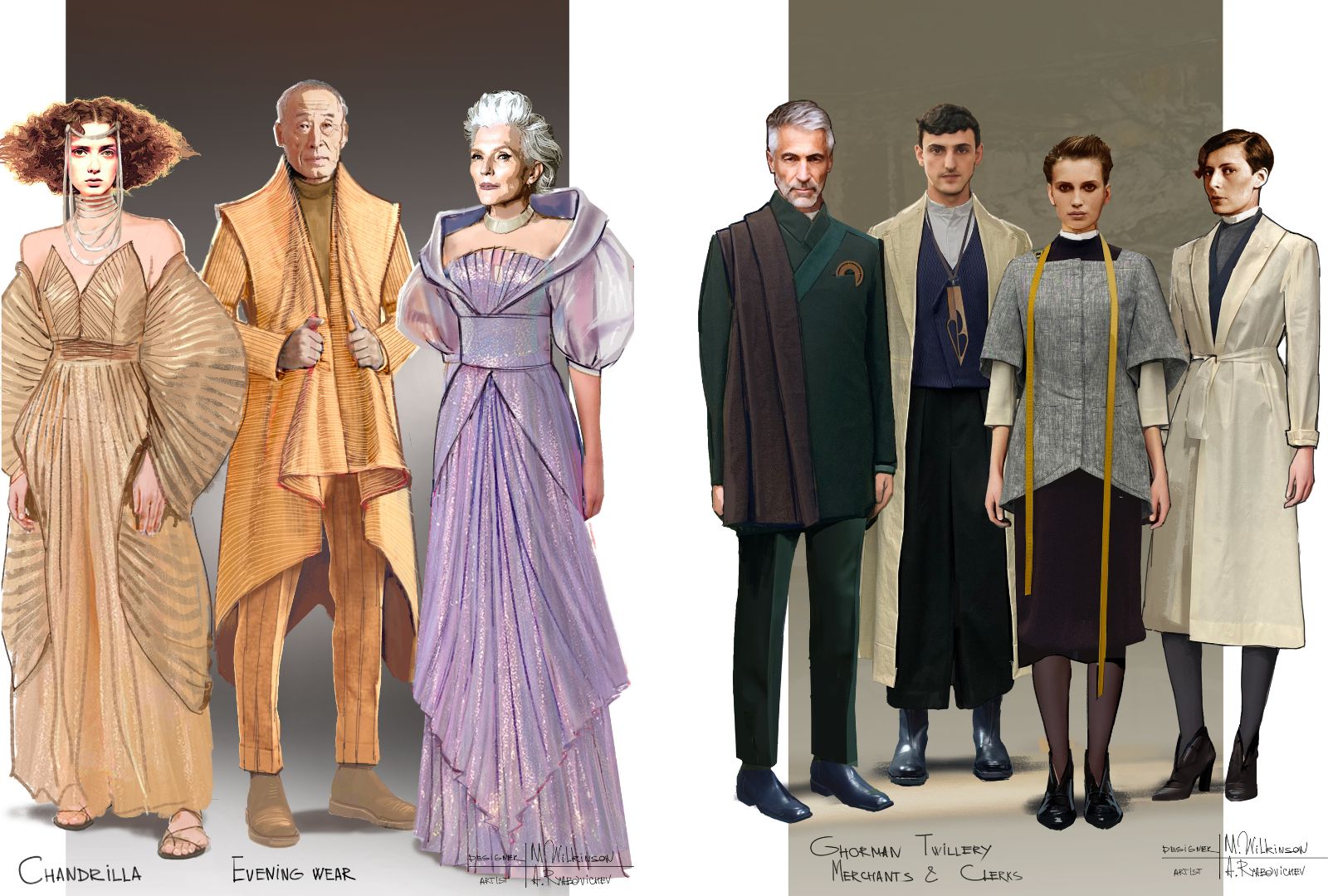
When designing the costumes on such an epic scale, I concentrate at first on what each culture represents – are they an ancient culture that represents a primal wisdom? An industrious, down-to-earth community that represents the best of humankind? An urbane, sophisticated society showcasing our ability to lead and inspire? I then gather images and references that resonate with me when thinking about these different worlds. I think about the beliefs and aspirations of each world, as well as more practical thoughts about their climate and what materials they have to work with. It’s a wholistic deep-dive that takes a long time to flesh out. When the costume illustrations start, I’m careful to put the “tribes” of each world up on the wall to make sure that they are all clearly defined, that there is a clear palette for each world.
Andor is a politically and emotionally layered story. How did you approach designing costumes that reflect those tensions such as between Cassian and Syril?
It really helps the designs come alive when there is so much drama in the writing – in Andor there was a constant tension derived from the fact that characters were often in disguise, concealing their true nature, or presenting themselves as something other than they were. So, as well as using costume to express the contrast between all of the characters’ world views, I also needed to express contrast within each character’s costume arc! And so, Cassian not only contrasted with Syril in silhouette, texture and colour palette, but also within his 18 changes for Season Two, he himself showed a wide variety of clothing, from the black and white hard-edge tailoring of his fashion designer alias, Varian Skye, to the layered, worn muted warm tones of his war reporter alias, Ronni Googe. It was certainly a lot for me to keep track of!
What are some of the key visuals you used in these scenes to explore Chandrillan society as a whole and central characters like Mon Mothma and Davo Sculdun?
When developing the costumes of a new culture, I like to cast the net wide for visual references. For Chandrillan, the sense of complex ritual and restraint led me to explore Japanese and Korean culture as well as Scandinavian influences – all countries share a reverence of nature and aesthetic refinement. I landed on the idea of intricate, layered costumes, made from rich, ornate fabrics – interspersing stiff geometric shapes with fabrics that moved and shimmered. I wanted to create a unique language of fabric, so we sourced very special materials and then had them pleated using unusual pleating patterns. The wedding allowed me to explore ritualised elements like headpieces and jewelry that spoke of an ancient tradition, pieces that had specific meaning in the scenes. Also, the dancing was very important to the sequence – both the slow, formal nuptial dance for the bride and groom, and then the very spirited dancing at the end go the night, where the Chandrillans let loose from all decorum. I was really happy with how the movement of the pleated fabrics reflected this chaotic sense of abandonment.
Andor’s world-building involves production design, hair and make-up, creatures FX and more. How do you balance your own creative vision with the collaborative storytelling across departments?
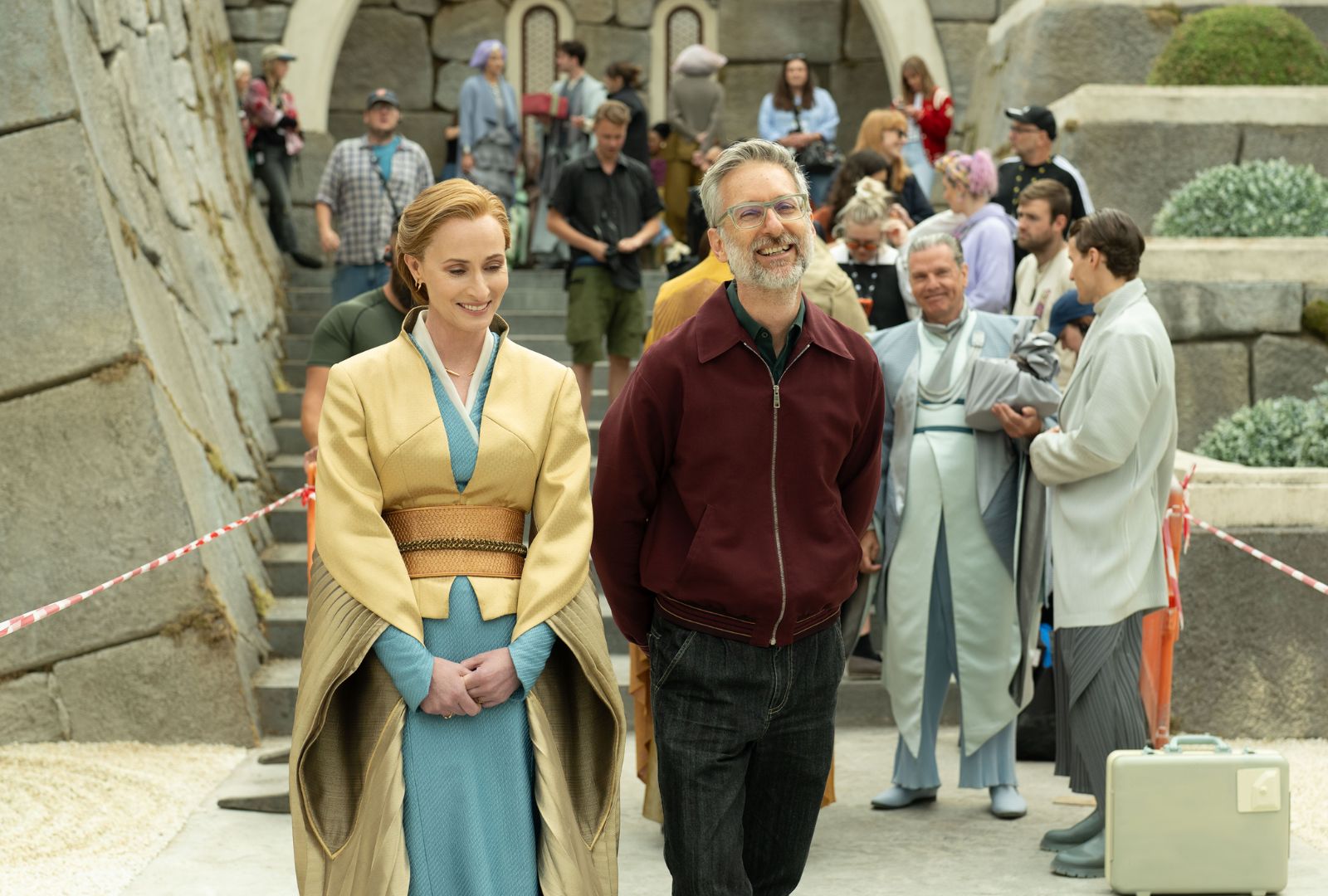
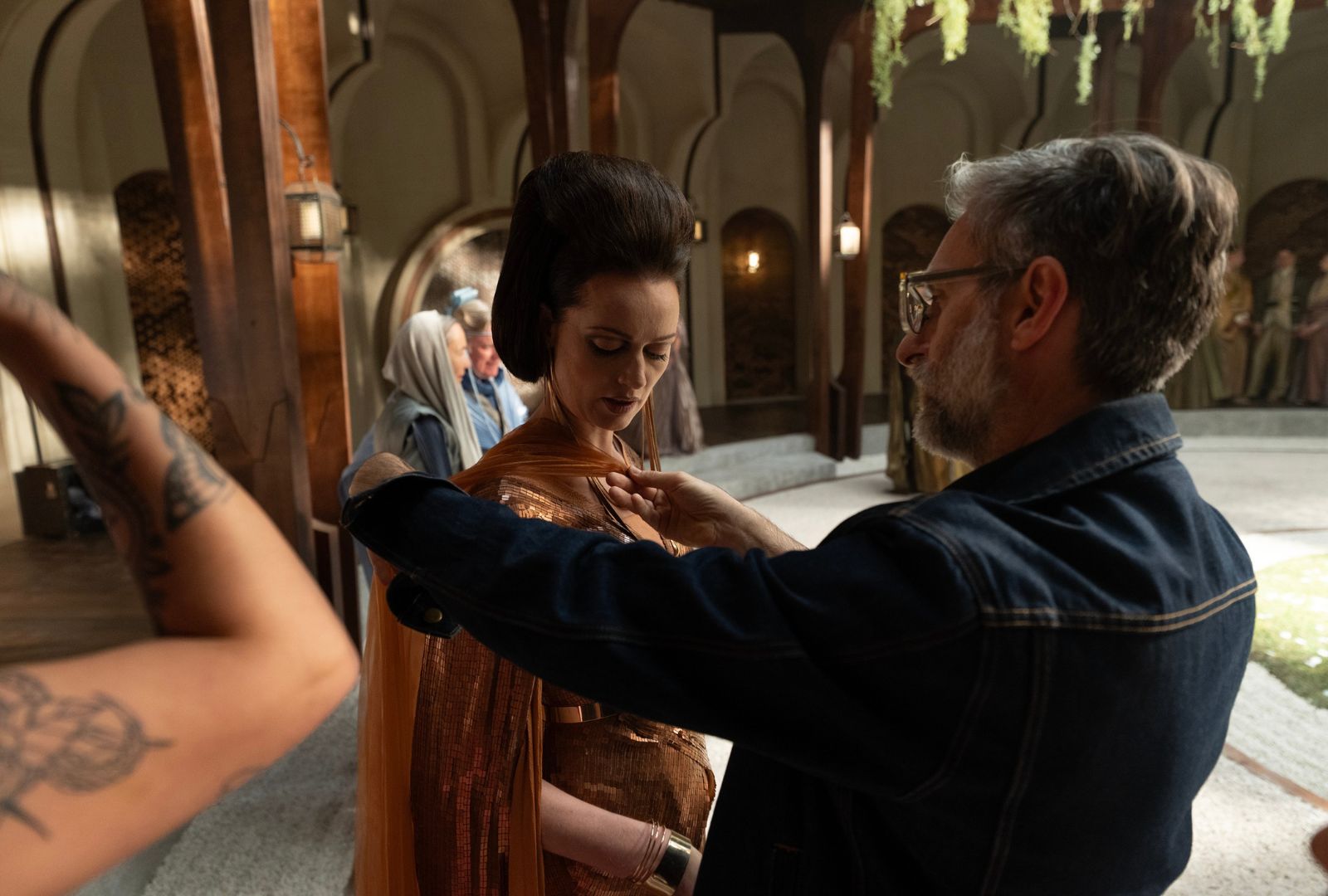
To me, collaboration is what makes Costume Design so wonderful, so energised. When you’re working with the caliber of Creatives that surrounded me on Andor, the discussions were lively and intelligent, and the outcome more original and fresher than any of us could have created by ourselves. Before I meet with my fellow creatives, I like to do a lot of preparation so that there is a solid basis to the creative vision that I bring to the table, but I’m always open to fresh perspectives and love weaving in different approaches to enrich the storytelling.
Congratulations on Winning the 2025 Creative Arts Emmy Award for Outstanding Sci-Fi Costumes for Andor! What does this recognition mean to you and the team you share it with?
It’s incredibly gratifying for all of the costume team to think that it was all worth it – the months and months of hard work, focusing on hundreds of creative decisions every day, the care and love that was poured into each costume, the hours spent away from family and friends, the intensity of the project, where very single detail mattered. It’s an incredible feeling that the work has been appreciated and valued by my fellow costume designers across the world that voted for the Emmy.
What are some of the unsung contributions that go into a project of this scale?
It of course takes a whole village of costumers to create something as epic as the Andor costumes. There are so many jobs in the costume department that are so crucial but rarely get much attention – like the team that work through the night to launder and maintain the costumes after the shoot day, or the people that source all of the things that a costume department needs, from state of the art coat hangers to industrial wire used to embroider details onto the workwear, from the person who does all of the digital costume breakdowns of the 204 principal cast over 12 episodes and 44 script days!
Looking back to your time studying at NIDA, are there any lessons that have stayed with you through your career?
So many come to mind – learning to articulate and defend my designs, experiencing the creative process from sketch to stage, in so many different paths (not only set and costumes, but props, acting, lighting, stage management etc, etc). You truly need to understand what all of your colleagues do in order to fully appreciate their contribution and get a sense of the process in its entirety. The intensity of the course prepared me for a life in film and TV, where the hours are long and demanding, and the pressures can be rather huge. Having experienced the sense of collaboration and having a close creative tribe that you get at NIDA, I could immediately find my place in creative teams that I came across in the industry.
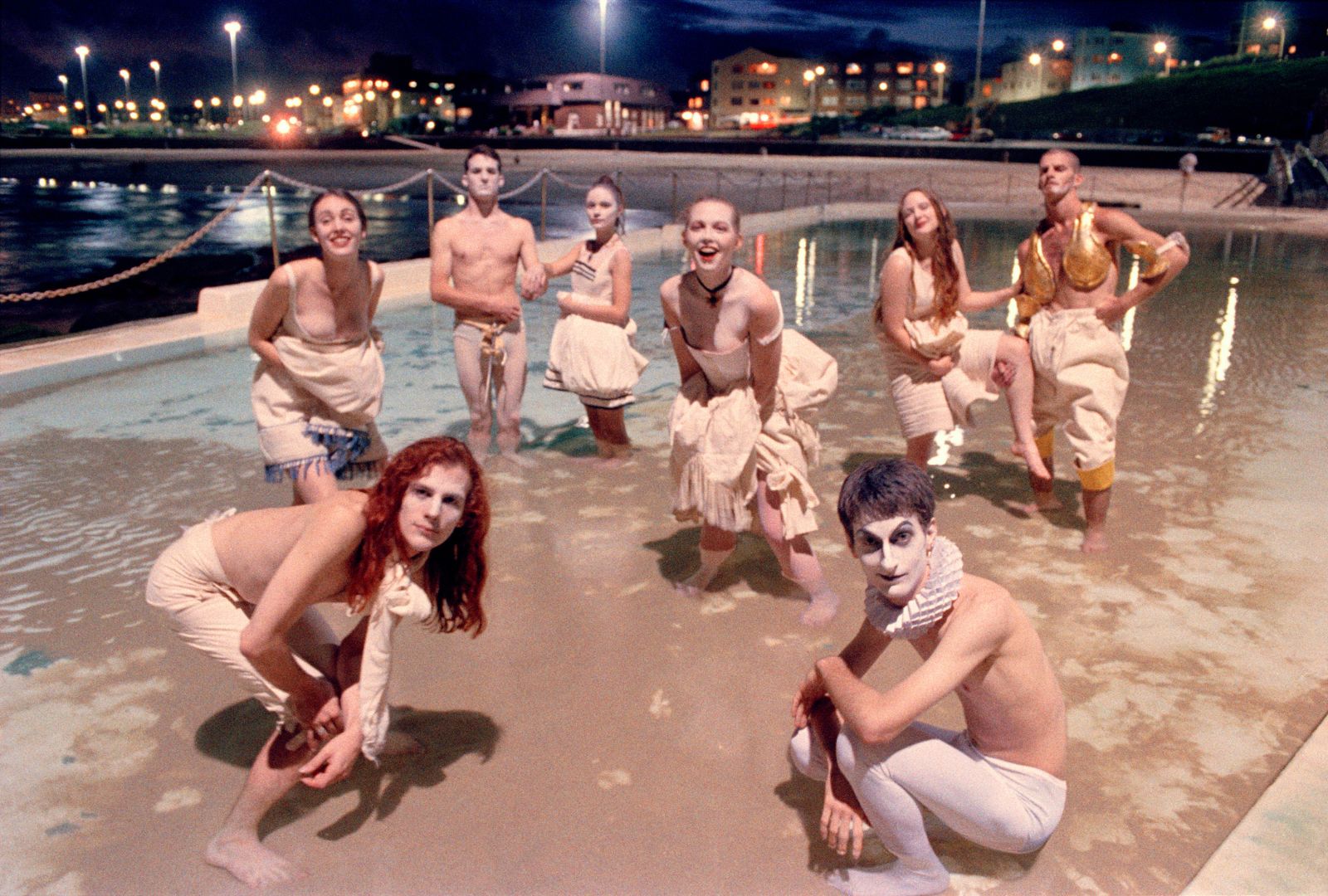
There is a photo of you and your cohort in eccentric, Jacobean style clothing, standing in a rock pool in Sydney in 1992. Can you tell us what’s happening here?
One of my favorite projects when I was at NIDA was one that my classmates and I dubbed “The Calico Project”. Each of us were assigned a period, and were tasked to research, design and manufacture a costume from that period for ourselves, made entirely out of calico (raw unbleached cotton). I learnt so much from that project! A costume designer has to really understand construction, pattern making, draping, and fit if they are to work with costume makers and run a workroom, so The Calico Project was the start of that journey for me. We all poured out hearts into it, sharing our frustrations and small triumphs, staying up all night for days on end until it was time to dress ourselves up in our creations and parade ourselves in front of the other NIDA students. To capture our glory forever, we decided to pile into a van with a photographer and head for the pool at Bondi for an impromptu photoshoot.
You have an extensive portfolio that includes 300, Watchmen, Justice League, Aladdin, and so many more. What makes you decide to say ‘yes’ or apply for a production?
I like to choose projects that have something intriguing about them, something that I haven’t done before – it might be a new genre, a different period, or a different director or actor that stimulates my imagination. I think personal creative growth often happens when you’re outside of your comfort zone, so long as the context is a supportive one. If I read a script and think to myself , “How am I going to pull that off?” it usually means that I should do the job!
What’s next for you?
I’m designing the costumes for a Netflix series, produced by Peter Morgan who created The Crown. It’s a dark, complex story that spans 3 continents and 4 decades of the 20th century. It’s an epic beast of a project where I get to travel all around the world, work with some incredible actors and create some very memorable, gritty characters. I’m a very grateful Costume Designer.