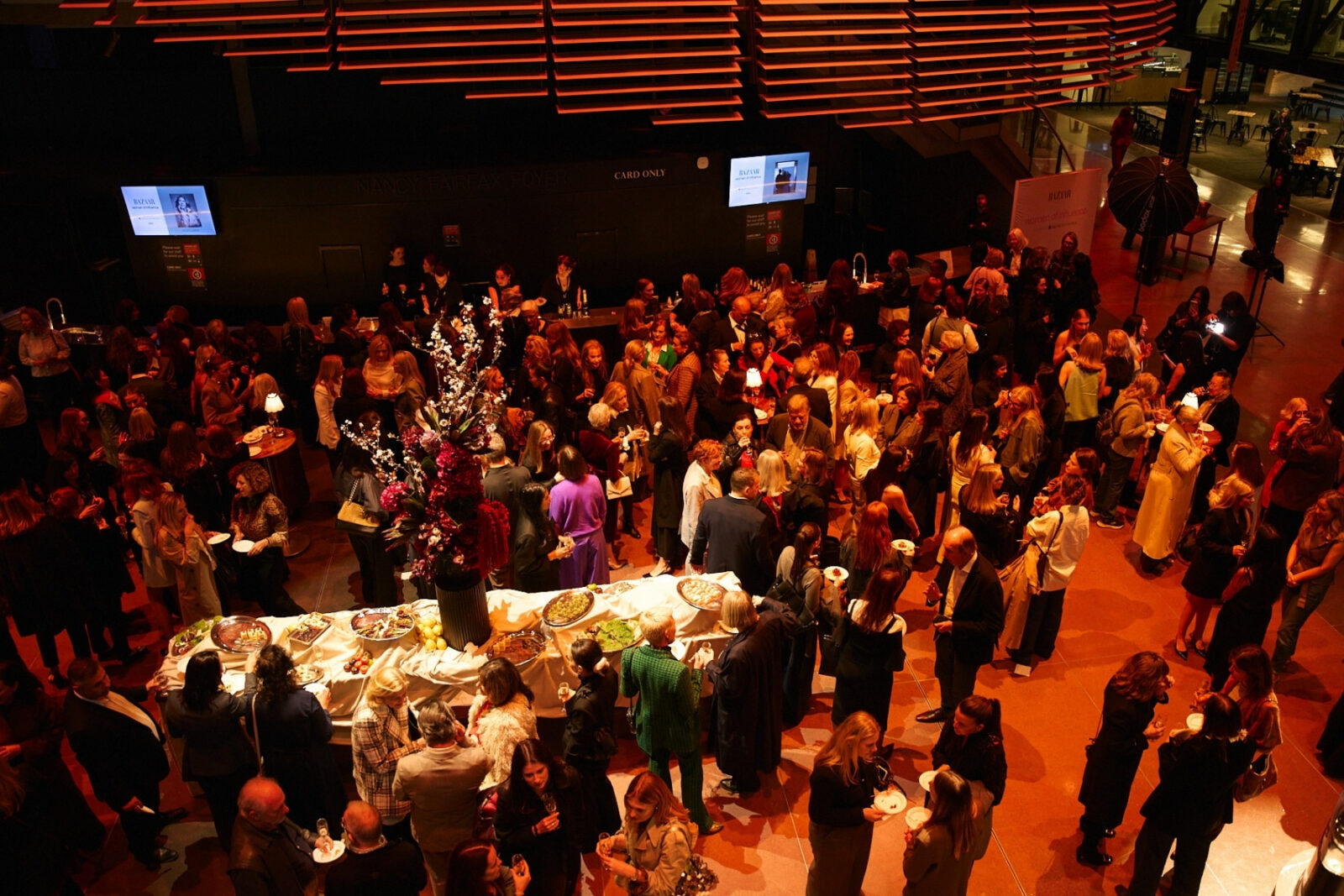
Guests filled NIDA’s Playhouse Theatre recently for a special event hosted by Harper’s Bazaar, welcomed by Liz Hughes for an evening in the company of three of NIDA’s most acclaimed alumni: playwright Suzie Miller, actor Heather Mitchell AM, and actor, writer and director Sheridan Harbridge, in conversation with Nicole Aberdee.
Before the main conversation began, Anna Huston, a tutor with NIDA Corporate Training, took to the stage to unpack the craft of persuasion itself. Her formula was simple: trust, plus emotion, plus logic, equals persuasion. She named three “credibility killers” that undermine even the strongest ideas — filler words, a racing pace, and an upward inflection that signals uncertainty rather than conviction — and challenged the room to notice these habits in their own conversations, then try to shed them.
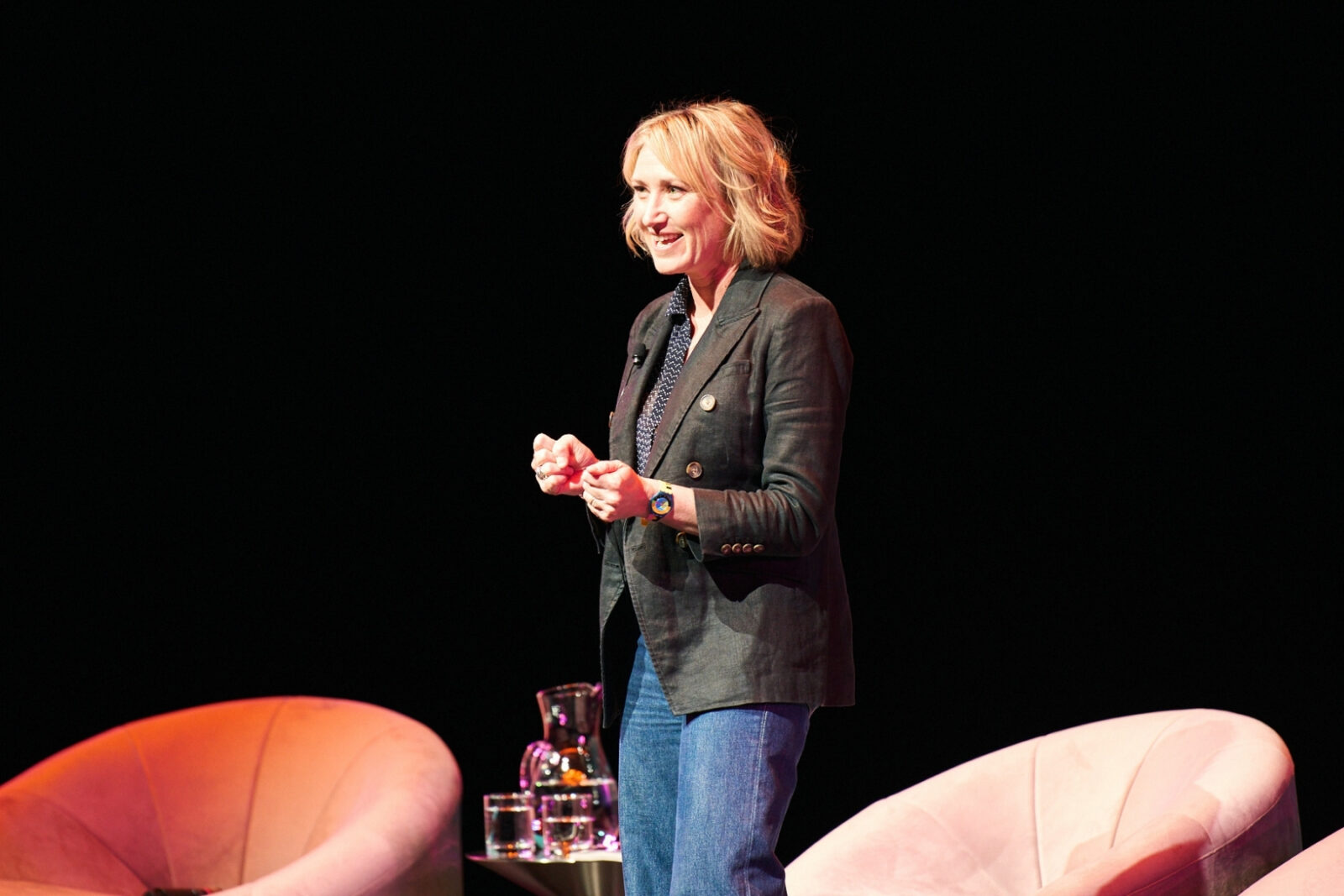
Harper’s Bazaar Australia publisher Maureen Jordan opened the main event with a tribute to suffragette leader Emmeline Pankhurst and her belief in creating change through “deeds, not words.” Jordan’s message was direct: “It’s never been more important for women to stand together and fight for equality and to end gender-based violence.”
That belief in art as action ran through everything that followed.
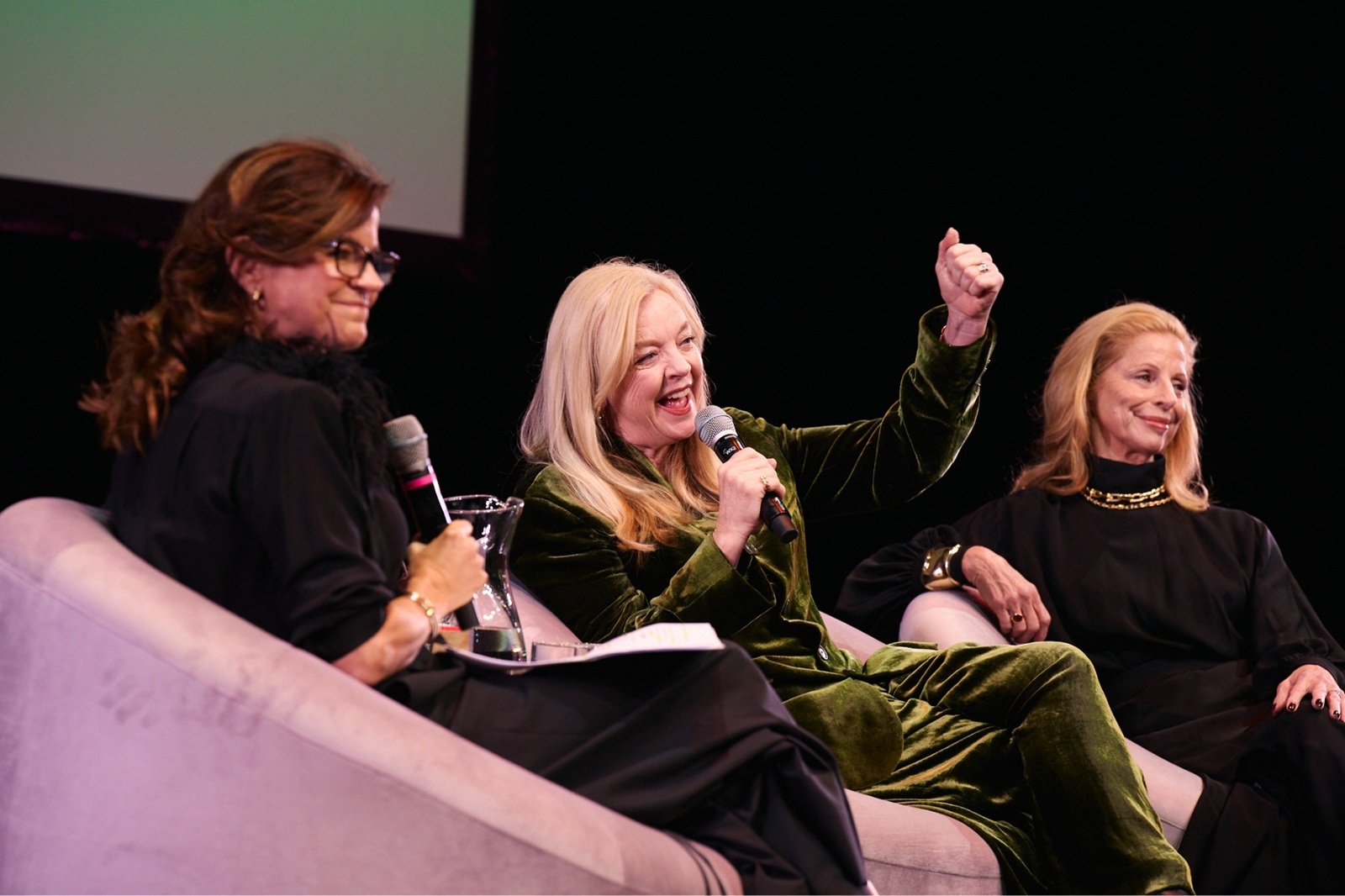
Suzie Miller, the author of more than 20 plays, a former human rights lawyer who studied Dramatic Writing with us, described the degree as the true starting point of her writing career. Her years in the courtroom, witnessing human rights abuses, ultimately led her to look for a bigger stage. “Human rights are at the centre of everything I think and write about,” she told the audience, challenging the room to reframe how they see justice: “This system has failed this human being, rather than this human being has failed the community.”
As a lawyer, she said: “I can tell a story a day to a judge, or I can turn these stories into something that can reach many more people.” That belief has been proven many times over, her play Prima Facie has now been produced in more than 50 countries. After its London premiere, Suzie received a call the very next day from a judge at the Old Bailey, who told her the experience of watching the play had prompted a change to the directions read to juries in cases involving sexual violence.
Art can change the world. Art does change the world.
Sheridan Harbridge, who played the Australian production of Prima Facie, recalled first reading the script at an ice hockey game in Los Angeles. She described it as an act of brinkswomanship — a play that asks its lead to sit inside a character’s darkest moment for an extended, unrelenting stretch: “Will the audience cope?” She remembers asking herself: “How can I hold the room for this long, with material this challenging?”

To prepare, Sheridan sat through real trials at Sydney’s Downing Centre, determined that the production would land as what she called an “open, brazen challenge” to how audiences think about female victims of sexual violence.
Heather Mitchell AM, the acclaimed actor and producer behind the recent production of Dalliance, and one of Australian theatre’s most respected voices closed the conversation with a piece of hard-won wisdom: “You can fight gently. You don’t have to have a loud voice, but you can fight with a clear voice.”
Her advice to the next generation of performers was equally direct:” Be careful who you get advice from,” she said. “Your instincts are usually pretty good, gather the information that works for you, and be selective.” On the inevitable setbacks of a life in the arts, she was candid, “It’s disappointment from feelings of rejection, which happens a lot — of missing out on things, of things not working the way you would hope. It’s an industry where things are not linear.” And to young artists wondering whether their voice matters yet, her message was one of encouragement, “We are excited by younger people, inspired by young people … so don’t think your ideas are not worthwhile. They are.”
From a masterclass in persuasion to a masterclass in courage, the evening was a reminder of what NIDA has always believed: that the stories we tell, and the craft we bring to telling them, have the power to shift minds, change systems, and move the world forward.