
Alfred Kouris (Acting, 2021) doesn’t sit still for long and since graduating his work has taken him across the country and the world. Moving between stages, cities and international events, Alfred has found and created opportunities for himself everywhere from the Old Fitz Theatre to the Olympic Games. We spoke with him about staying open, backing yourself and finding your people wherever you land.
Can you tell us about what you’ve been doing since graduating NIDA?
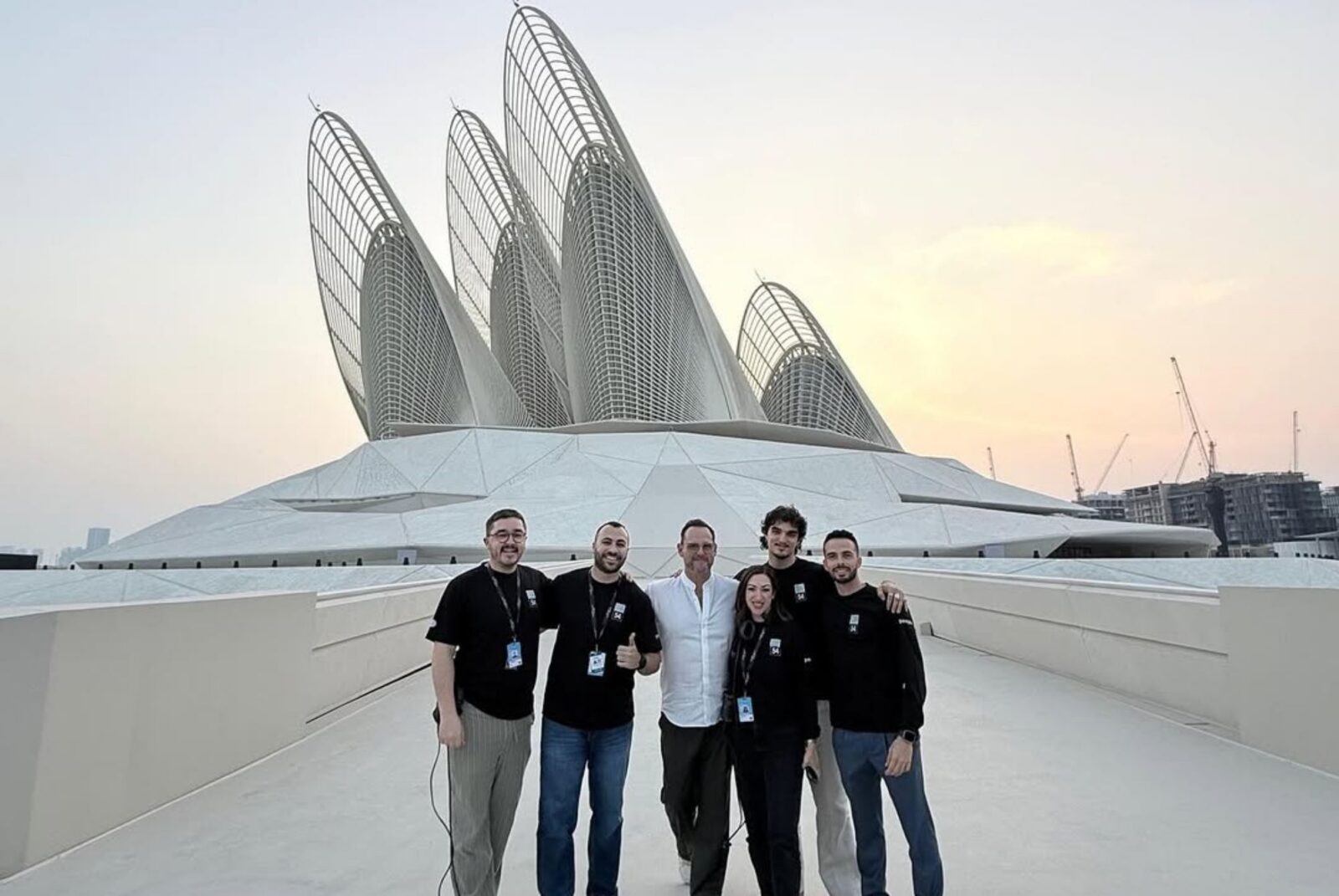
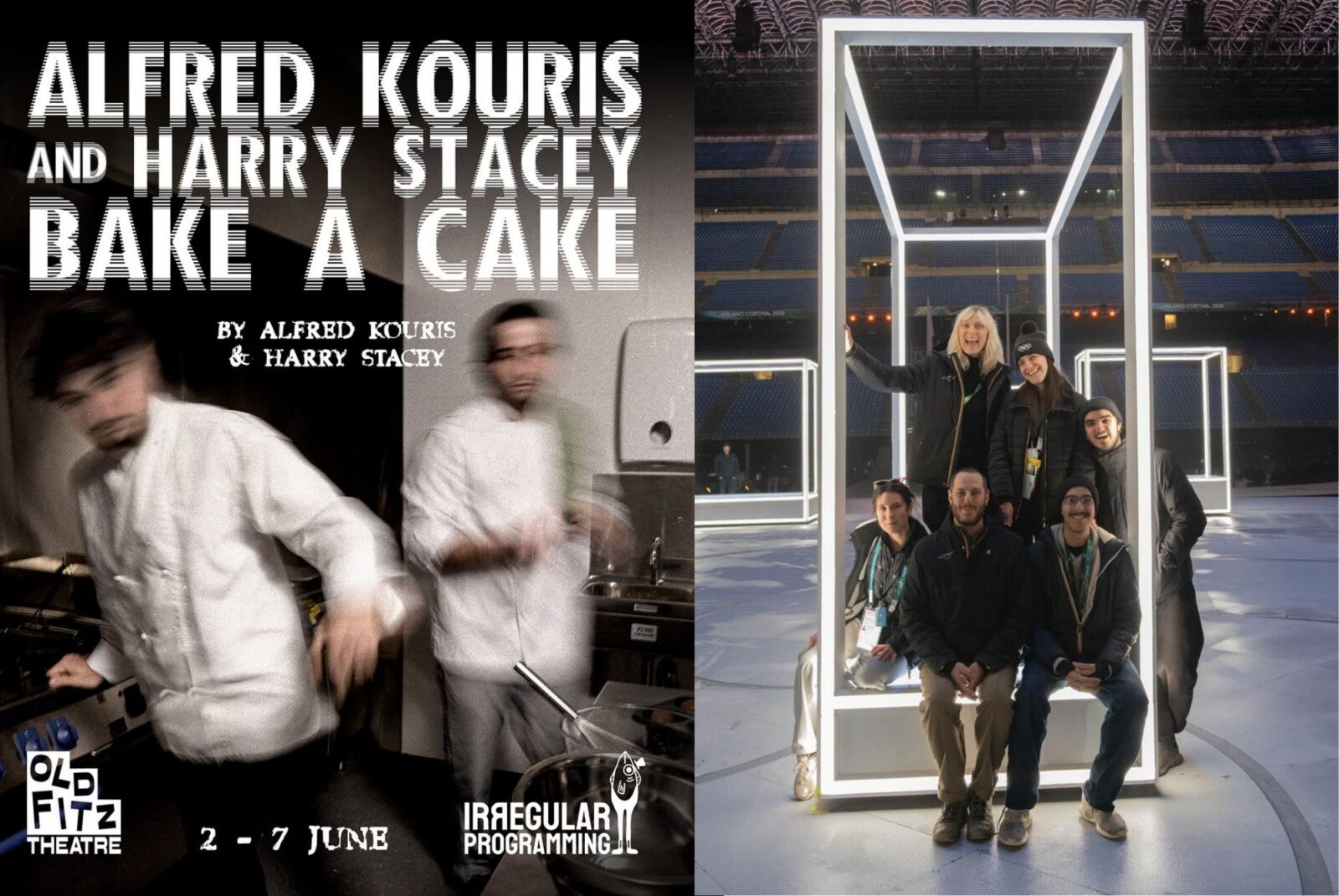
After graduating I followed the advice I’d heard countless times: I spent my first year in Sydney, immersing myself in the independent scene. I performed in Brisbane with a director from NIDA, in a production of The Wind in the Willows with the Australian Shakespeare Company, and at Melbourne Fringe. Then, in 2023, an incredible opportunity arose: our Head of Movement recommended me for a Director’s Associate role on a major ceremony in Dubai. I was lucky enough to be offered the position and for three months I was immersed in the ceremonial world and surrounded by the most incredible theatre, film, opera and television artists.
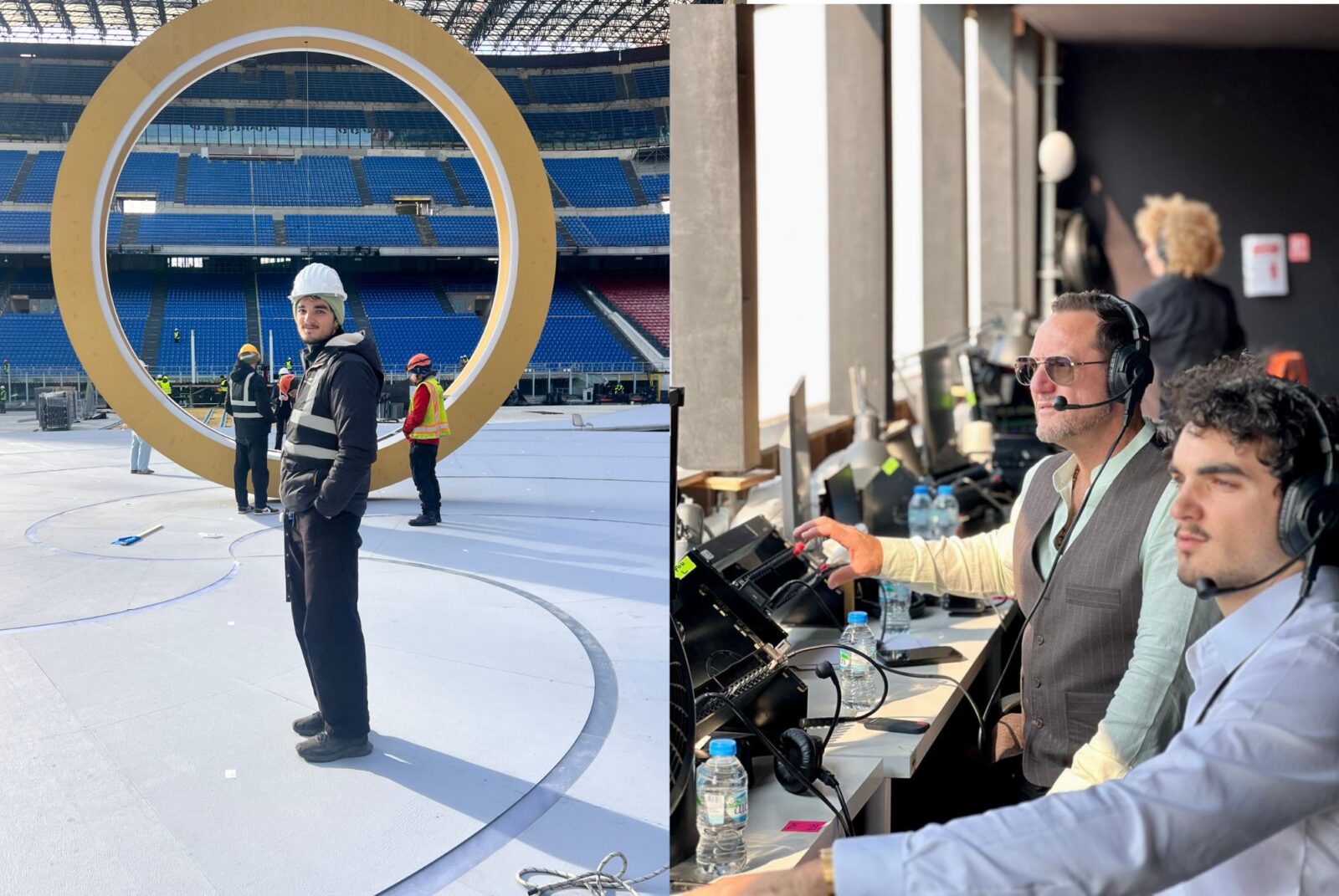
That first glimpse into the ceremonial world completely changed my perspective. Before then, I had no idea of the human effort, that goes into these events. Since then, I’ve been fortunate to work as a creative nomad: bouncing between Dubai, Abu Dhabi, India, and most recently, the Winter Olympics in Milan, all while still submitting auditions for Australian work.
It’s been surreal, and honestly, it’s a direction I never expected coming out of the Acting BFA, but one I’ve fully embraced as my life.
How has your training and experience helped you to undertake such diverse roles?
One of the most transformative pieces of advice I received came from a teacher in my second year. He told me, “Alfred, stop thinking of yourself as just an actor – think of yourself as an artist.”
My training at NIDA was crucial in enabling that; it wasn’t just an acting course, it was a holistic education. We explored traditional Indian dance, yoga, film-making, and devised our own work with all of the other disciplines.
I was always encouraged to experiment and dig deeper, and most importantly, it gave me the confidence to say, “I’ve never done this before, but I know I can figure it out.”
Every project begins in that way. Being surrounded by others who continually take action gave me the courage to follow through with my ideas.
What have you learned from international events that Australia could do better and what do you appreciate about Australian creative industries?
My experience has been somewhat reversed from what I expected. I thought the international events industry would be brutal, but I’ve found it surprisingly similar to the collaborative spirit I’ve seen in Australia.
I remember standing next to one of the world’s top live broadcast directors in Dubai whilst he was reviewing the show edit: he’s directed The Super Bowl, The Oscars, The Grammys…everything…and as I passed on technical notes from the Show Director, he paused, looked at me, and asked, “Alfred, what do you think?”.
In that moment, I realised that the most accomplished creatives often also move through the world with the most humility and collaborative spirit, staying open to ideas from everyone.
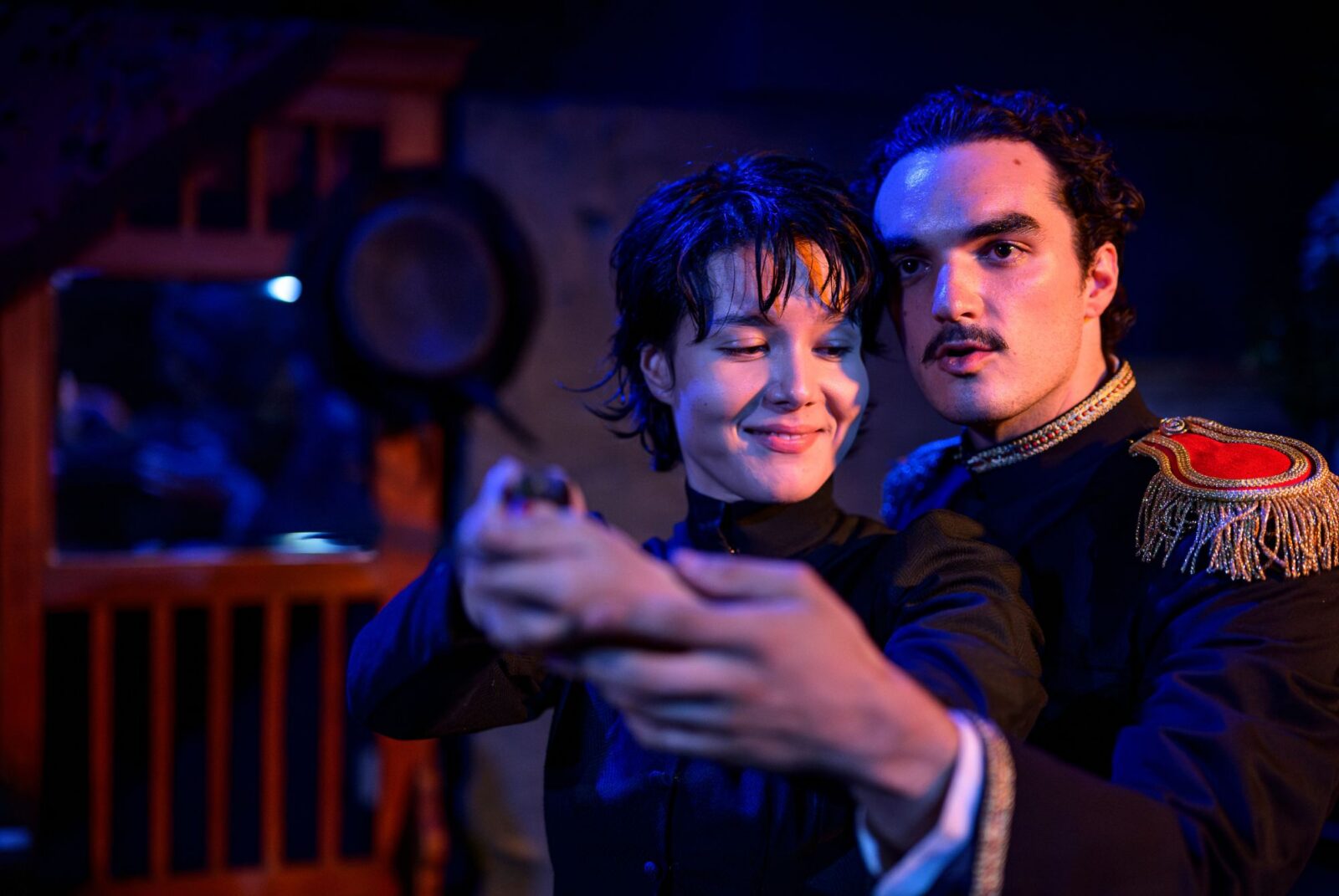
I felt that same spirit at the Olympics in Milan, and it’s exactly what I feel working on Three Sisters at The Old Fitz.
Here in Australia, that sense of ensemble, I believe, is something we do really well, and is such a vital part of the way we create work. It’s an attitude and spirit I do my best to embody wherever I work.
Any hard truths you would share with aspiring actors and performers?
You are a freelancer, and your work will fluctuate.
So, you must create opportunities for yourself and build relationships with the people who surround you, because you are all striving together, and these are the people you will work with in years time. It’s not enough to be a good actor, you have to be a great collaborator and a wonderful friend. Now more than ever, people want to work with people, and this is a long and winding road you cannot trek alone.
If you look around, you will realise that we are all just itching to be courageous and make magic happen, often all it takes is for someone to say, “Do you want to make this thing with me?”.
Be that person – and be open to who you can be in that role, because even if it’s not ‘acting’, it’s all grist for the mill. It all adds to your artistry.
If you could be cast in any role across stage or screen, who would it be and why?
I’ve been writing something about my grandfather, and I would love to step into his shoes. I have absolutely no idea how I would approach it, but the Greek diaspora stories fascinate me, particularly the mass migration in the 50s, and the idea of loving, and being torn, between two countries. Him and my dad are probably the two most fascinating characters I have ever met, true or fiction.
Maybe in a few years.
Three Sisters is an ensemble piece, how has working closely with fellow alumni in the cast influenced your performance?
We’re working ‘across generations’ – Matt graduated in 2018, I did in 2021, Maddy in 2023 and Ren just last year. Being almost entirely alumni (Matthew Alexander (Acting, 2019), Madeline Li (Acting, 2023) Toby Carey (Acting, 2023), Tessa Olsson (Acting, 2023), Teodora Matovic (Acting, 2023), Lập Nguyễn (Acting, 2023) Faisal Hamza (Acting, 2024), Ren Watson (Acting,2025).) gives us a kind of shorthand, an implicit understanding, and strong base to work off, because to succeed in an ensemble driven play like this, I have learnt that these people must become your family.
In our warm up, we huddle in a circle, stare into each-others eyes, and in our mind say “I love you, I trust you”. It’s simple, but if we don’t trust each-other, we are completely naked out there. When I am working closely with the other actors from that place, anything feels possible, because the answer is always found in them.
Clara, our director, is constantly reminding us of that, saying “Never play alone!”.
This, to me, is the same quality that I mentioned earlier, that I was happy to find overseas. I really believe the audience can feel it. If the ensemble isn’t connected, the illusion breaks. But when it is, something else happens entirely.
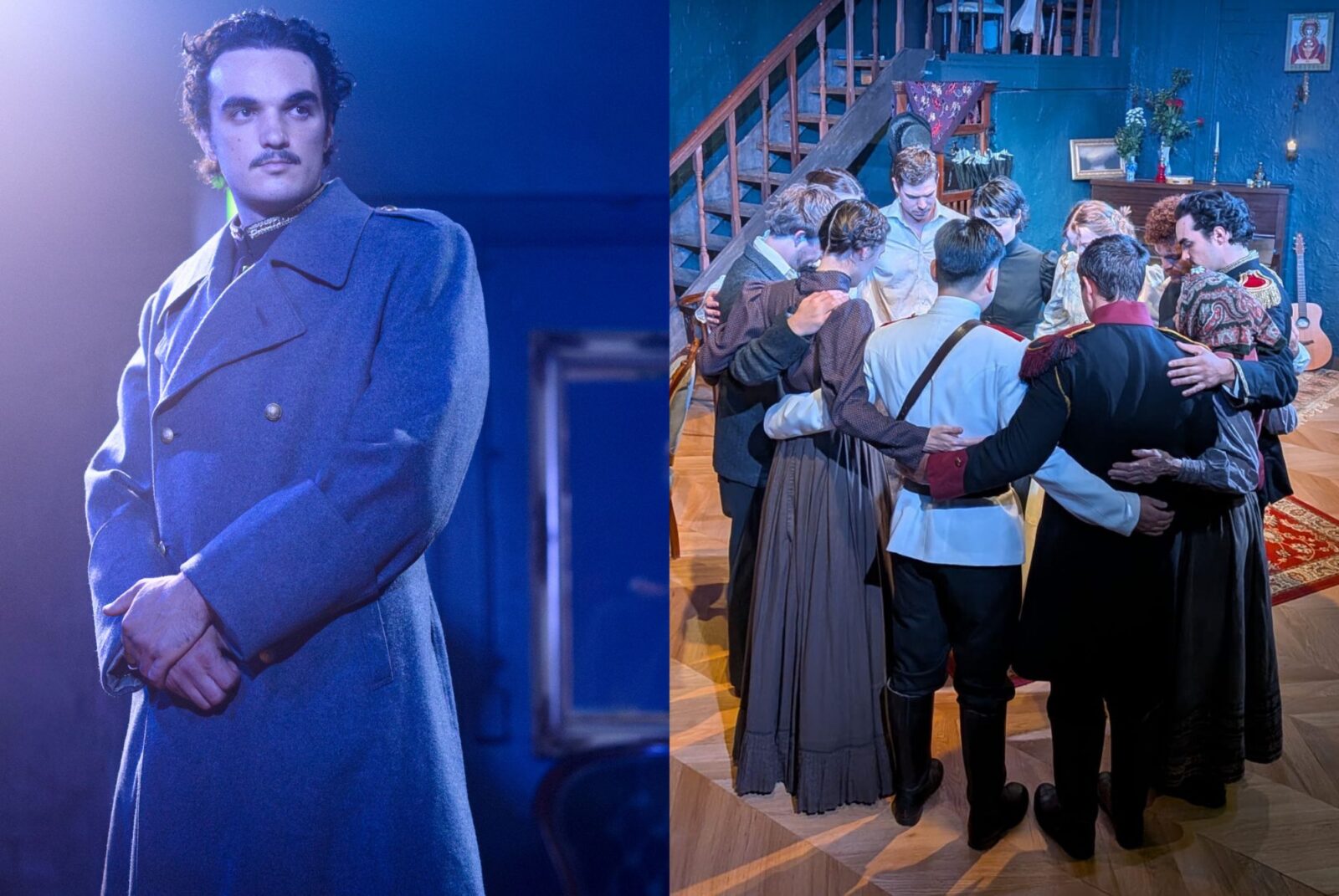
Every performance, I peek through the curtain and feel as if I’m watching the play again for the first time. They inspire and push me to continue to love my character, to fight for him, and to dive deeper into the world.
Why do you think Three Sisters continues to connect with audiences today?
Chekhov leaves so much space for actors to bring themselves into it, to fight for what they are seeking.
And I think that’s why people connect to it. You’re not really watching something distant. You’re watching a man fall in love, a doctor who can’t save his patients, a woman who feels like she’s lost herself and is stuck in a town that doesn’t understand her.
People talk about tea, about the weather, about things that feel small, while everything underneath is huge.
And I think that’s just…life. Three Sisters nails it on the head. To paraphrase the play: we work, we suffer, and we keep searching for something to believe in, to hold onto, so we can keep going. That is inherently human, and as true today as it was then.
What inspired Alfred Kouris and Harry Stacey Bake a Cake and how did you get it from idea to stage?
I was in Abu Dhabi for work when Harry and I jumped on a Zoom call and said, “Let’s make something.” We’d both been thinking about doing a Fringe show…I’d just been to Edinburgh Fringe and was struck by the creative energy there, and Harry was devising a show in America at the time. When we saw that the Old Fitz was taking submissions, we decided to use that as an incubator. A deadline, a space, and a reason to actually do the thing.
We started by asking ourselves what would we want to see on stage? Harry told me about a show he saw in the US which began with a printer on stage, and the audience got this strange satisfaction from watching it actually print. Something pedestrian, treated with complete seriousness in an imagined space.
That stuck with us. We became interested in making something that was genuinely happening, something durational, where you could watch change occur in real time. I’ve always been drawn to that kind of work.
So we landed on a very simple premise: two men baking a cake. It’s absurd, but it gave us a framework to explore things that aren’t: friendship, change, belief, trying, and failing. All those big ideas, told through a very particular, very real action happening in the room.
What can audiences expect from this two-hander?
They can expect to have fun, because we’ll be having fun. At its core, it’s just two people trying their best in a situation that keeps getting away from them. Maybe it’s not so Chekovian, but there’s something quite human in that, too.
We really want people to leave thinking “…okay…?” and then taking a bite and saying “hey that’s pretty good!”.
Can you give us a brief overview of what Linus is and what inspired the creation of it?
I feel like it’s my child. Linus is a rehearsal app for actors that helps you learn lines and self-tape on your own.
The idea came out of a very practical problem….I was travelling a lot for work and getting auditions through at all hours, sometimes with barely any time to prepare, and often there was just no one around to read with me. I needed a way to learn lines quickly and get a self-tape done without relying on someone else, especially for those quick turnaround TVC auditions.
When I got back to Australia, I was talking to a friend and fellow NIDA graduate, Callen, and we realised we’d both been dealing with the same thing, and were both trying to build the solution. We couldn’t keep asking our housemates or mum to help with tapes.
As actors, you’re constantly juggling a lot, and coordinating with someone else just isn’t always realistic, especially when they are constantly doing you a favour.
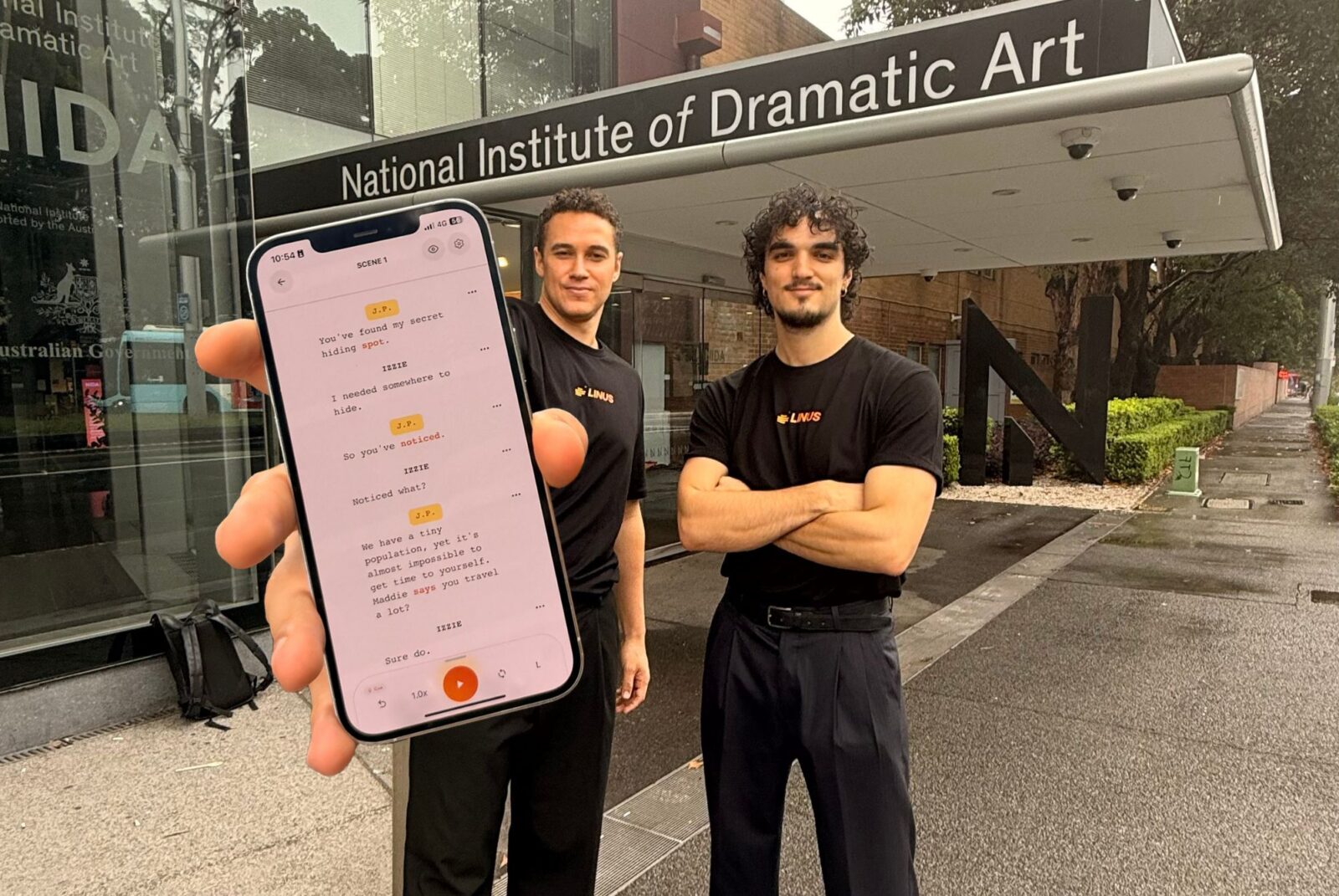
There was nothing out there built specifically for the way actors work now, and with different rehearsal techniques embedded that we had learnt at NIDA.
So, we started asking around. We spoke to a lot of actors about what they actually needed, pulled together a small team (by small I mean the two of us), and built it.
It’s now used in over 40 countries, can help actors in 38 different languages, and last month actors filmed over 3,000 self tapes with it. Cool!
Three Sisters is on stage at the Old Fitz Theatre until 9 May. Book Tickets.
Alfred Kouris and Harry Stacey Bake a Cake is on stage at the Old Fitz Theatre from 2 – 7 June. Book Tickets.
Learn about Linus here.