
2025 was another remarkable year for NIDA Green who continue to meet our environmental challenges head on. Guided by the NIDA Green Plan’s focus areas (Curriculum, Productions, Buildings and Operations, Leadership and Teams), we further embedded practical environmental action across teaching, campus life, and production practice. This year, we exceeded major targets, strengthened sector influence, and continued to build a more engaged and eco-conscious community.
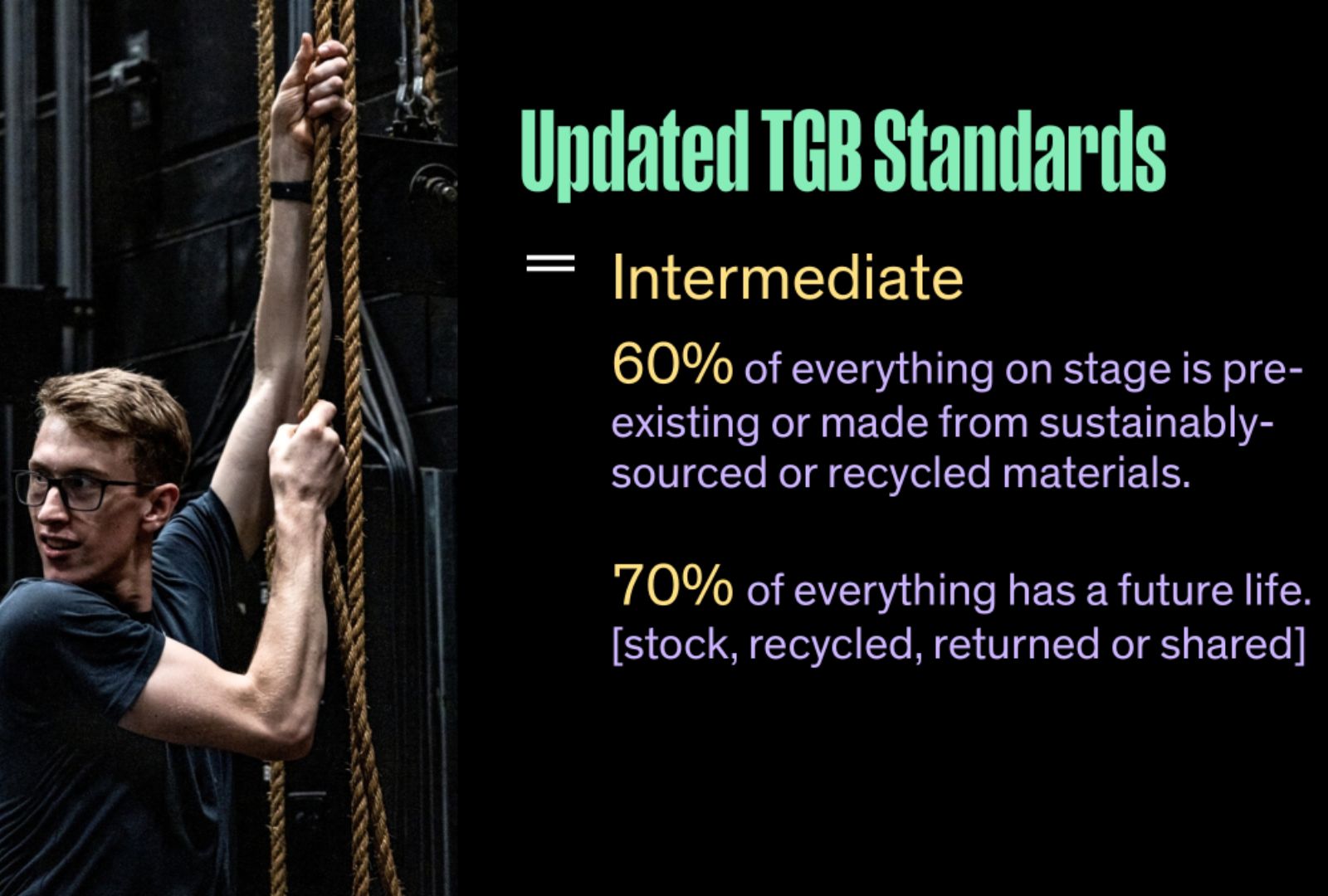
The implementation of the Theatre Green Book [TGB] has been a key step for NIDA since 2022, serving as a fundamental tool for applying circular practice in the way students use and recycle materials. In 2025, NIDA Green set an ambitious target for 25% of all NIDA’s student productions to achieve the Intermediate Standard outlined by the TGB. We are proud to report that this target was exceeded and, using the Waste Tracker, a bespoke data-capture tool developed by a graduate student, 50% of all productions successfully met the Intermediate Standard.

This achievement spanned the entire circular process, from the ‘in’ (focusing on sustainable sourcing and reworking materials from previous shows) to the ‘out’ (prioritising rehoming through platforms like Bump Out Sydney, Facebook Marketplace, charity shops, and creating future NIDA stock). NIDA productions serve as a key learning opportunity, and by using TGB as an internationally recognised lens to assess overall production sustainability, our students have engaged with the many layers of complexity that arise from industry staging requirements. Operas and musicals with larger sets and casts, often pose more complex challenges when meeting TGB standards, but in 2025, both Orpheus in the Underworld (Spring) and NINE (Winter) achieved Baseline standard on the ‘in’ and Intermediate on the ‘out’.
The success of NIDA production hitting intermediate targets, can be linked to our designers engaging with the TGB principles prior to developing their concepts. This has ensured that the sustainable use of materials is considered from the very beginning, making environmental care foundational to many creative decisions.
As the first Australian arts institution to officially adopt TGB, NIDA is excited to see the national movement grow. Theatre Green Book Australia’s partnership with Arts On Tour has supported some of NSW’s leading performance companies to come together as The Green Circle, including Bangarra, Belvoir, Sydney Dance Company, Monkey Baa, Griffin and Bell Shakespeare, to embed sustainable production standards. Our graduates will enter an industry already speaking a shared language around sustainability.
Sustainable creative practices are embedded as assessable outcomes in over 60% of NIDA’s diverse teaching curriculum, ensuring our students develop eco-friendly principles alongside their artistic and technical training. Students are encouraged to think creatively about ways to minimise their environmental impact both in individual projects, group work and main stage productions. These are vital skills that they will take into industry.
Outside of the classroom, but still on campus, NIDA Green has hosted events throughout the year that brought our community together to strengthen staff-student relationships while engaging with sustainable living initiatives proposed by NIDA Green Team members.
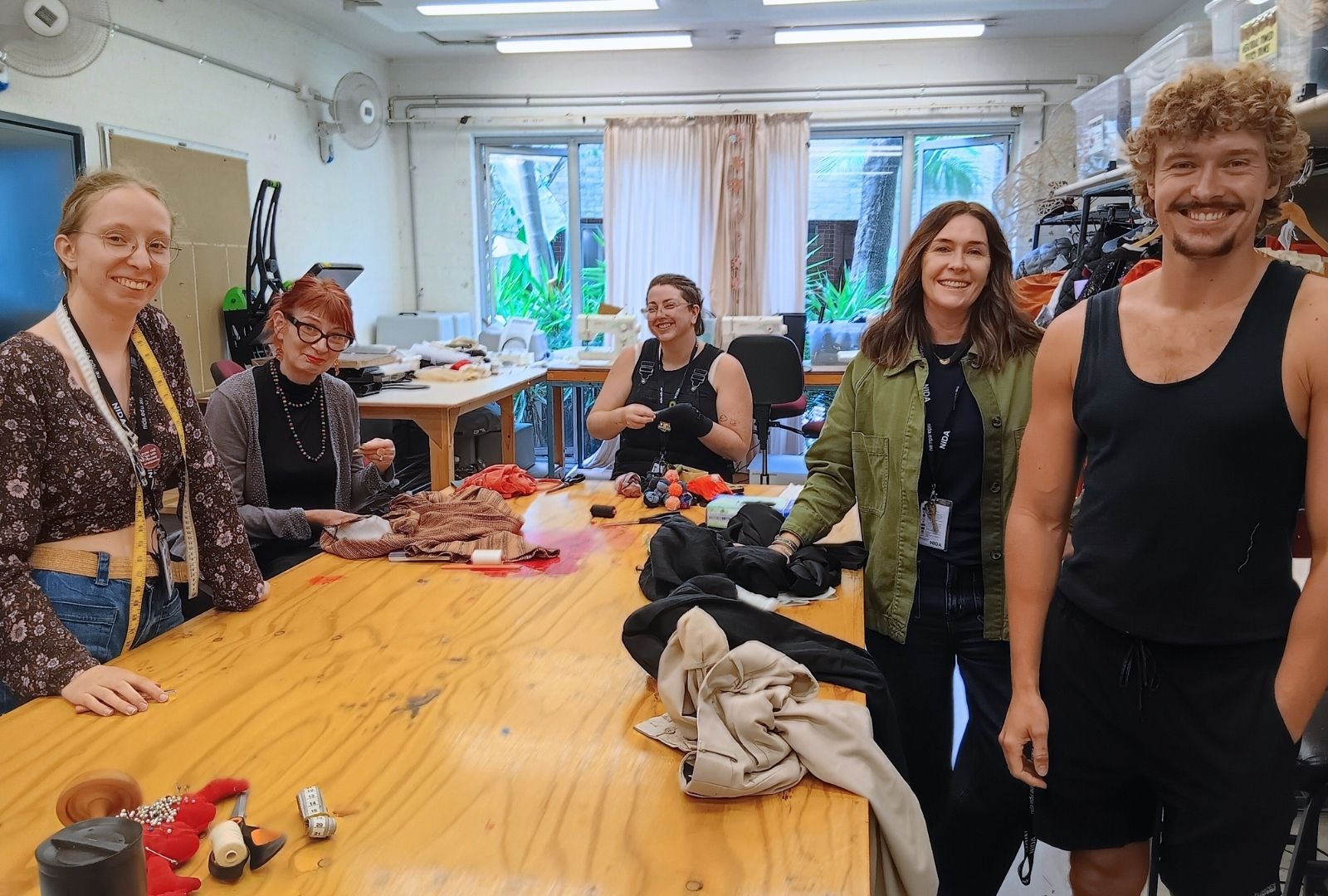
Mending Mondays has established itself as a beloved monthly tradition at NIDA, led again by Costume student Karamea Gostt, who taught simple repair techniques to extend the life of clothing and reduce textile waste. These sessions offered both skill-building and a moment to slow down and reconnect with our belongings.
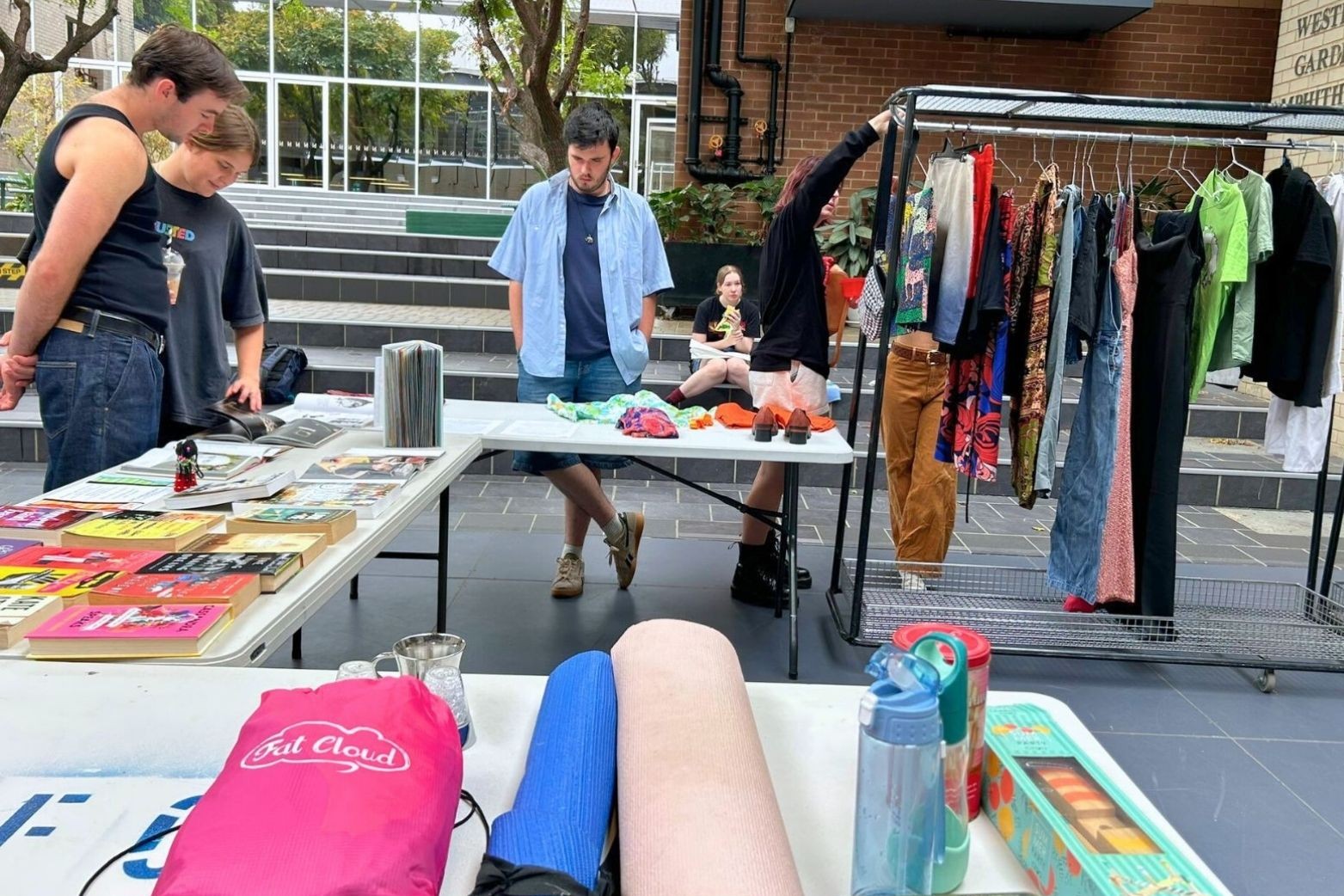
Now in its second year, the NIDA Clothes and Book Swap brought our community together to donate and exchange items. The NIDA Green Team transformed the atrium into a treasure trove of pre-loved goods which staff and students were invited to take home for free. As well as championing waste reduction, this event brings a positive atmosphere to our campus and its return is highly anticipated in 2026.
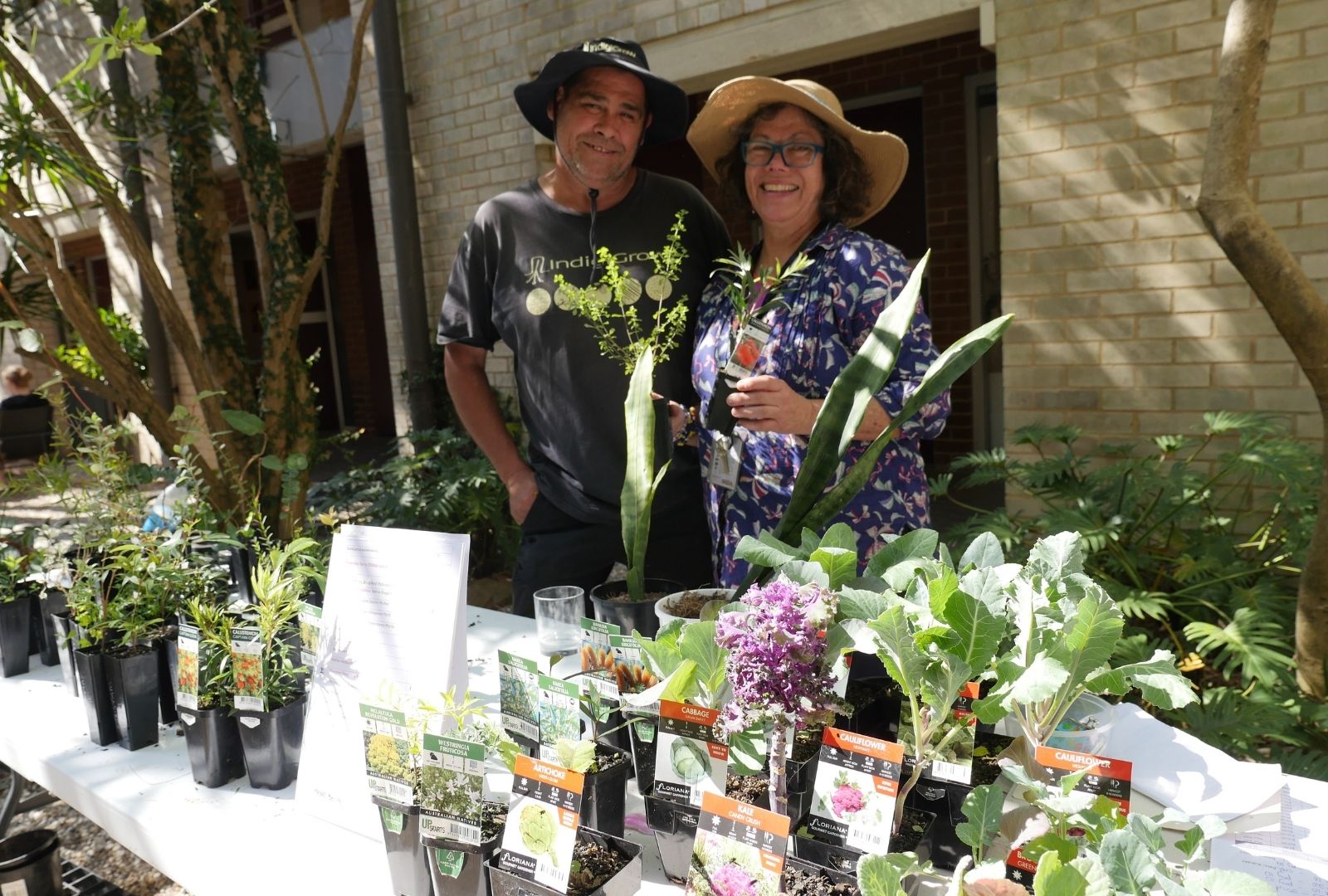
Another fixture on the Spring events calendar is the NIDA Plant Sale and Seed Swap. We are especially grateful for our continuing partnership with IndigiGrow who provide popular native tube stock for the sale and share their knowledge about how to care for each plant. The Spring Seed Swap is an important opportunity to observe our deep connection to the earth, as well as reflect on food scarcity as it effects people in our wider community. The event successfully encouraged participants to support local biodiversity, helping to make our gardens greener and more resilient.
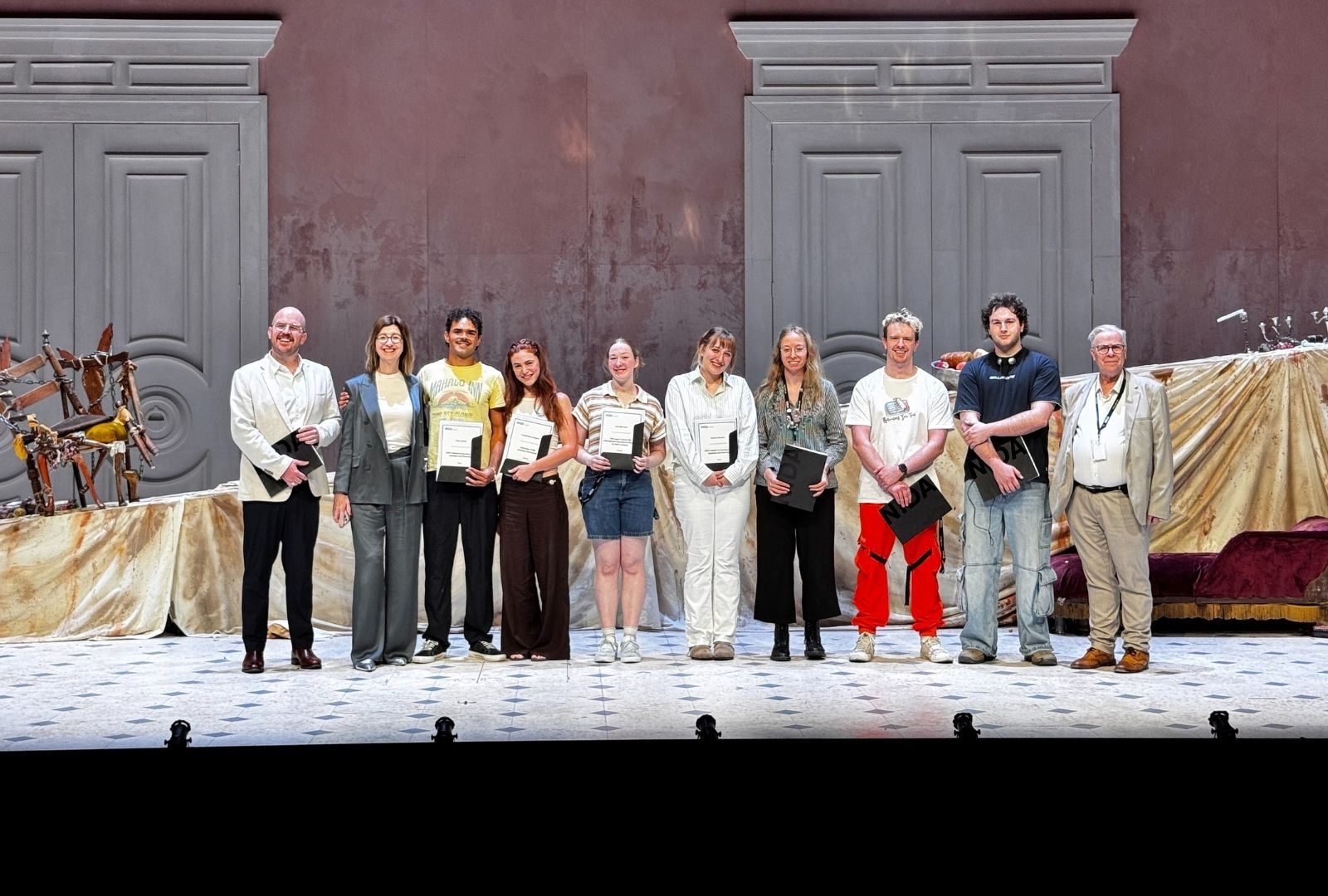
Reflecting the flourishing eco-conscious practices across NIDA, this year’s CEO Award for Excellence in Sustainability (The NIDA Green Award) celebrated a wider cohort of dedicated greenies. The 2025 Award was presented to Oliver Gregg (Props & Effects), Karamea Gostt (Costume) and Darcy Duncan (Technical Theatre and Stage Management), with a Highly Commended awarded to Chaii Ki Chapman (Technical Theatre and Stage Management). It is a testament to the influence of peer-led initiatives that Karamea, Darcy, and Chaii Ki were all active members of the NIDA Green Team in 2024 and 2025. Their recognition underscores NIDA’s ongoing commitment to fostering sustainable pathways and celebrating the students leading the charge in lowering our industry’s environmental footprint.
From an operational point of view, NIDA Green has been using key recommendations from the carbon footprint audit that was delivered in late 2024, looking for a range of ways to further reduce our reliance on fossil fuels and lower the buildings’ energy consumption. Nearly the entire campus has moved to LED lights over the last 2 years, which has a direct impact on reducing our pull from the grid. Our solar panels continue to deliver 30% of energy needs and the recent triple glazing of the southern side of the building will keep the rooms cooler in summer and warmer in winter. Water fountains will also be installed over the summer break, improving hydration access and reducing reliance on single-use plastic bottles. NIDA is actively building a science-based targets [SBTI] aligned pathway toward becoming a Net Zero organisation by 2050, with determination to reduce our Scope 1 and 2 emissions by 95% by 2035.
Sharing knowledge remains a core part of NIDA Green’s mission. NIDA Sustainability Manager Imogen Ross delivered several industry-facing talks and webinars this year. Her online presentation for Arts On Tour’s Greening Production-Making series shared NIDA’s approaches to low-impact materials and the bespoke Waste Tracker tool used to assess TGB targets.
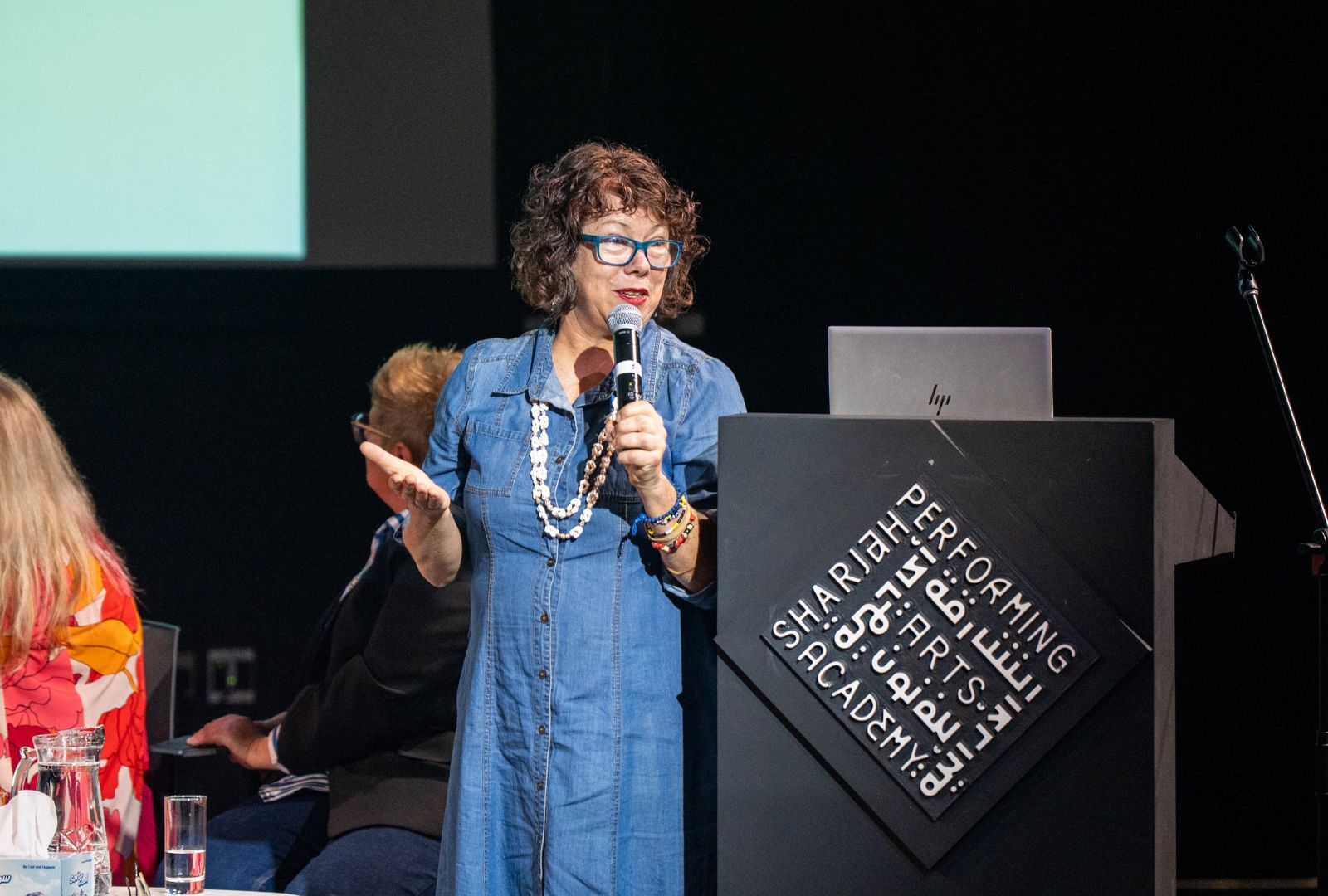
In October, Imogen represented NIDA at the launch of the Theatre Green Book into Arabic at World Stage Design 2025 in Sharjah, UAE, highlighting the critical importance of environmentally responsible theatre-making, with a special focus on the role of the higher education sector. Sharing key insights, real-world case studies, and practical strategies, Imogen and peers discussed the importance of creating culturally specific Green Books that give meaning and relevance to users around the world. She later joined international colleagues at the Theatre Green Book’s Global Challenge Symposium at London’s National Theatre, strengthening NIDA’s global networks and building deeper conversations with other performance organisations and academies.
NIDA also hosted the NSW Department of Education’s VET Teachers’ Immersion Program, engaging teachers from more than 30 schools for two full days. Their overwhelmingly positive feedback to the NIDA Green session ensures NIDA’s sustainability practices will now influence over 900 young people studying their Certificate III in Live Production and Technical Services across NSW, a powerful contribution to the future of sustainable theatre-making.