
About the show
It’s summer 1967. Three families head away to the coast. One of them is running out of time.
As a school production of A Midsummer Night’s Dream closes the year, three families escape to the coast, each carrying something they can’t quite name. When a storm breaks, the holiday shifts course: class tensions surface, private griefs collide, and small acts of kindness begin to chart a path toward the light. For this special 40th anniversary production of Australia’s most produced play, Rachael Maza brings a First Nations perspective to Away for the first time – exploring belonging, healing, and the enduring memory of land and sea.
Beloved, funny, devastating, and newly alive. The anniversary production not to be missed.
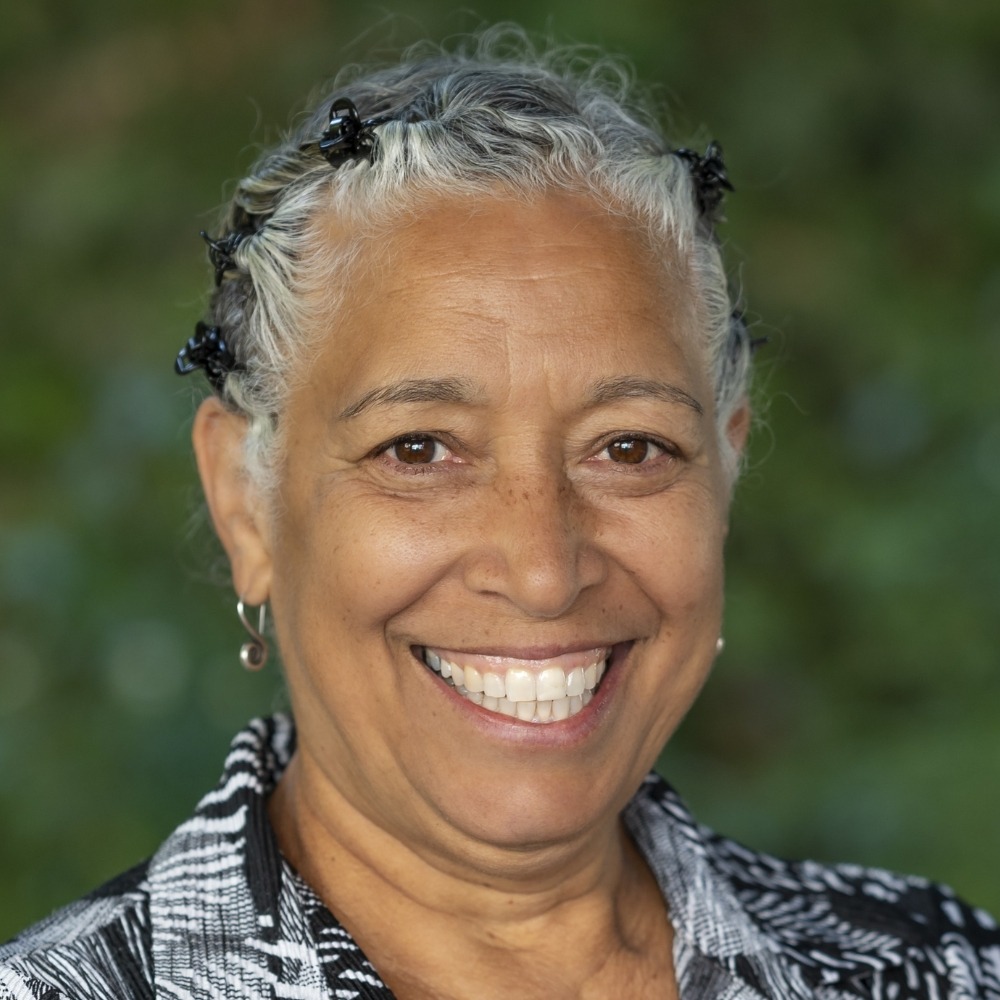
Rachael Maza AM is an Yidinji and Meriam woman and was Artistic Director of ILBIJERRI Theatre Company for 18 years until 2025. Her directing credits span landmark works for stage and screen, including Jack Charles V The Crown, Which Way Home and Big Name, No Blankets. A Member of the Order of Australia, she is the recipient of the Australia Council Award for Theatre, a Sydney Theatre Award, Green Room Award, and an Honorary Doctorate of Performing Arts from Edith Cowan University. She is Co-Chair of Creative Australia’s First Nations Board.
AWAY by Michael Gow is unquestionably one of our great Australian classics – a play that resonates as deeply now as it did when it first premiered almost forty years ago.
Set in the late 1960s, it arrives at a moment when Australia was once again asking itself: Who are we? And what do we stand for?
Gow’s play speaks to the aspirations of a young nation – its dreams and disappointments, its search for identity and meaning, its fragility and its humanity.
As a director, I am interested in the many stories that make up this country. The story begins with the First Peoples of this land, whose cultures, knowledge and connection to Country stretch back at least 80,000 years. Then came colonisation by the British, followed by generation after generation of migration from across the world.
Australia is the sum of all these stories.
And yet, there has always been a tension between the Australia we imagine ourselves to be and the Australia we actually are. Perhaps that is why the question of what it means to be “Australian” continues to surface – who belongs, whose stories are heard, and whose version of Australia gets taught in schools.
As a descendant of the First Peoples of this land – my mobs are the Yidinji of Far North Queensland and the Komet clan of Mer in the Torres Strait – I am particularly excited by the opportunity to bring my experience and perspective to this beautifully written, iconic Australian work.
I am interested in the play’s exploration of identity, belonging and the Great Australian Dream – and in what these ideas might reveal when we look at them from where we stand today, in 2026.
We meet three aspiring Australian families at the end of the school year, each about to embark on a summer holiday. It is an Australia of sunshine, opportunity and possibility – the Australia of the ‘lucky country’, promising prosperity and happiness to those prepared to work for it.
But outside the play, Australia is changing.
It is the late 1960s. The world is in upheaval: flower power, rock and roll, drugs, protest, anti-war and anti-conscription movements. The 1967 Referendum marks a profound moment in the nation’s history. Australia is questioning its place in the world – its relationship with America, its involvement in the Vietnam War, and the presence of Pine Gap.
Within AWAY, the loss of one of our young men to a distant and deeply contested war hangs over the story.
More than half a century later, we continue to ask questions about war, power, belonging and what we are prepared to sacrifice in the name of a nation.
Gow’s deliberate references to Shakespeare have been a delightful provocation for our creative team – particularly the fairies.
We have had great fun drawing on the traditional fairies of European folklore while also looking towards the stories, spirits and cultural traditions of this country.
The Storm, too, echoes Shakespeare. It is a reminder of the extraordinary power of nature – a force that can dwarf all our human ambitions, structures and pretences.
For Indigenous cultures, the understanding that human beings are part of something much greater than ourselves is ancient. Country is not simply a landscape or a place we inhabit. Country is living. It is relationship, responsibility, belonging and continuity.
We are born from Country. We return to Country. And between those two points, we are its custodians.
Country is ever present in AWAY.
Three families set out on their own version of the “Great Australian” summer holiday: sunshine, suncream, sand and the beach.
The play begins with a school performance in which Country is contained and transformed into something romanticised, theatrical and childlike — a representation of the land rather than an encounter with it.
But then comes the Storm.
The structures we have built — physical, emotional and imagined — are overturned. The boundaries between people begin to collapse. The things we thought defined us are stripped away.
And what remains is Country.
Not the postcard.
Not the myth.
Not the carefully constructed idea of Australia.
But this place itself.
Beautiful. Powerful. Unforgiving. Generous.
A Country that was here long before us, and will remain long after us.
Perhaps that is the journey of AWAY.
We begin by asking who we think we are.
And, by the end, we are reminded of where we come from.
– Rachael Maza AM
To be advised.
Subject to change during the development of a production.
The Company
Principal Cast (in order of appearance)
Tom/Rick: Kai Johnson
Roy/MC: Bradley Bulger
Meg/Leonie: Kiara de Vine
Gwen: Jennifer Roache
Jim: Braydon James
Harry: Giani Fenech
Vic/Miss Latrobe: Zara Giacobello
Coral: Ooen-s’tae Johnson
Hotel Guests and Campers: The Company
Director: Rachael Maza AM*
Costume Designer: Adithi Iyer
Lighting Designer: Shevon McCormack-Edwards
Set & Props Designer: Joey McKenzie
Sound Designer: Max Bradley
Fight Choreographer: Troy Honeysett*
Intimacy Consultant: Chloe Dallimore*
Voice Coach: Angela Sullen*
Assistant Director: Elyse Armstrong
Assistant Director: Emily Hinchey
Production Manager: Bella Muslado
Stage Manager: Aiden Carter
Assistant Stage Manager: Caitlin Kramer
Assistant Stage Manager: Edwina Vassallo
Construction Manager: Jamie Sellar
Costume Supervisor: Jackson Lorrigan
Properties Supervisor: Hayley McGregor
Head Electrician: Indiana Jones
Technical Coordinator & Head Mechanist: Harry Deacon
Technical Crew Coordinator: Grace Wilson
Costume Maker: Cara Haley
Costume Maker & Costume Assistant/Dresser: Ashley Phillips
Set Design Assistant: Charli Waterland
Costume Design Assistant: Danny Lee
Props Assistant: Ruby June McRobert
Set Leading Hand: Will Lenehan
Floor Electrician & Board Operator: Emilie Martin
Set Assistant: Marisela Woo Ruiz
Set Assistant: Jayden Naimo
Set Assistant: Bella Djokic
Set Assistant: Finn Trimnell-Richard
Floor Electrician/Board Operator: Emilie Martin
Key
*Guest Artist
** NIDA Staff