
Genevieve Hegney (Acting, 1999) is a master of comedy with a career that defies easy categorisation. With a resume that includes 10 years of Bell Shakespeare productions and playing Cindy from The Rocket Club on Home and Away in between catering gigs, directing theatre, coaching actors and writing sold-out comedy productions, Genevieve’s versatile talent is grounded by real heart. In this candid conversation, Genevieve reflects on the myths of “arriving” in the Australian arts industry, the creative freedom that came from writing her own work with collaborator Catherine Moore and the extraordinary success of their sold-out theatre hit Fly Girl.
You’ve been called a ‘comedy icon’, but you’ve also acted in dramas and thrillers. Is there a genre you particularly enjoy working in?
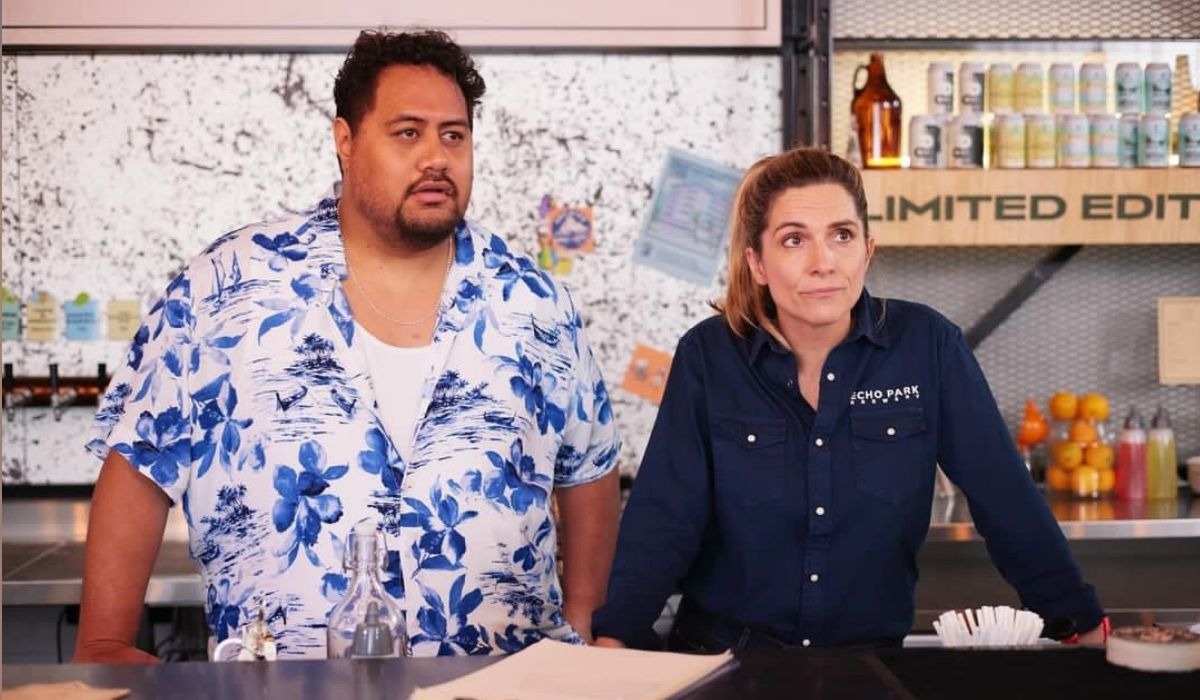
The truth is I just like working on good things and, at this point in my life, I like having fun. When I got out of NIDA, I thought that I should be a ‘dramatic actress’ and that was somehow the pinnacle. I think that’s because you never really see a comedy actor win at the Oscars. Even at the AACTA Awards, all the comedy actors are put in the same category. So, when I was nominated for Colin From Accounts (playing the supporting role of Chaira) I was up against Patrick Brammall (who was a lead). Whereas in the ‘Drama’ category there’s ‘Leading Man,’ ‘Leading Woman’, ‘Supporting Woman’ and ‘Supporting Man’.
So, in the beginning of my career I did about 10 years of Bell Shakespeare and I played a lot of tragic figures. My dream was to play Lady Macbeth and, now that I’m more age appropriate for he part, it seems like a nightmare.
Having said that, recently I did a tiny bit on All Her Fault that Sarah Snook (Acting, 2008) was the lead in, and even though it was small it was deeply enjoyable because I got to work with Michael Pena and play a character who was trying to get their special needs kid into a school, and there was real heart in it. And that was fun because it was great writing, and a lovely character and I was working with a great actor. But without a doubt, when I’m shooting Colin from Accounts (with mates) or rehearsing and performing Fly Girl (with my work wife Cath Moore) and laughing every day, there’s just nothing quite like that.
Can you pinpoint a role or production that fundamentally shifted your trajectory as an artist?
I think in Australia there’s this truism which is that you never really arrive. You can get something great and everyone’s like, “Oh my God, now it’s going to happen,” but with a small industry that’s not necessarily the case unless you’re the luckiest of the luckiest. If you’re a Hugo Weaving or a Claudia Karvan who are excellent in their age groups and been around long enough, we all know every time that they’re going to hand in a great performance, maybe those people arrive. But it’s not like the USA star system where they won’t then do a smaller role. So, Hugo will do The Matrix, but he will also pick an Australian film that will support someone else’s career and then he’ll go off and be the lead in a play.
For the 98% of us mere mortals, you play a great role and it doesn’t seem to shift things much because there’s just not enough work to support more than a few ‘actors’ in any one age group. Unless you’re very young, and then you might get a lead here which catapults you overseas.
But in terms of a job that changed how I view myself it was one of my first jobs out of NIDA; Much Ado About Nothing at Bell Shakespeare. That changed everything, because after that I did Shakespeare for years and that was my dream as a kid; Go to NIDA and be in Bell Shakespeare. What that did was make me realise, “I can do this thing called acting and earn money from it.” But it didn’t mean I wouldn’t have to go back to catering or do other things in between.
Another moment that changed the trajectory of my career was when Mark Kilmurray at the Ensemble Theatre in 2017 said to my friend Catherine Moore and I, “Why don’t you change the idea you’ve thought of for this TV show called Unqualified and write it as a play?” That changed everything in a way that I could never have predicted, because we wrote this TV idea we had with 20 characters into a two-woman show, and that did incredibly well in a way that we didn’t think it would. At the time in the TV landscape the general feeling was, “No one really wants to see a comedy show with a couple of ladies in it.” Especially if they don’t have profile.
The play sold out. And it wasn’t just women who enjoyed it, men came. And kids came. And then we were asked to write the second show because it was such a hit. And after Unqualified 2: Still Unqualified Mark asked us to write Fly Girl.
Writing has changed my and my friend Cath’s lives because we were no longer just waiting for someone to offer us an audition. It gave us control over our own creativity and that puts you in a different headspace for everything else.
Congratulations on the success of your sold-out theatre show Fly Girl. Can you tell us about the reception of this play?
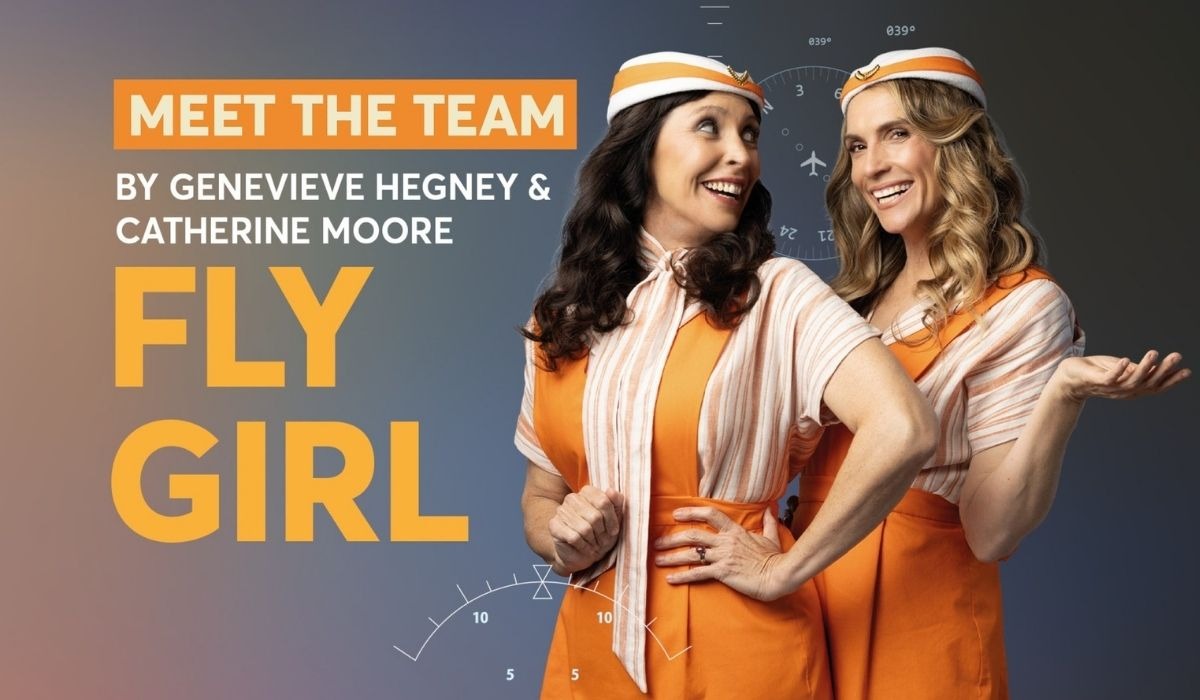
It did really well in a way we couldn’t have anticipated. It really did sell out. People couldn’t get tickets, and that was unbelievable. It’s the most incredible true story that has taken 50 years to be told. It was 1980 when Deb Lawrie became the first Australian female commercial airline pilot. It took her 18 months fighting Reg Ansett to get there and another 50 for the wider Australian public to know what she did.
We had the most extraordinary reaction. We thought people would like it, but we didn’t anticipate the level of love. We were always so touched at the end of the show when there were 75-year-old men weeping. We had a school show with 16-year-old boys who absolutely loved it. This boy came up to me, after the show said, “I was supposed to work with my dad concreting today and my teacher said, ‘I think you should come see this play instead’ and this is one of the best things I’ve ever seen.”
And then he said, “I’ve always wanted to be a pilot but I never thought I could, but watching your play makes me think maybe I could.”
I think what made it so accessible to so many people was that Cath and write in this tone which broadly speaking is comedy with heart. We want to open people up with laughter and in that space, people are more open to empathising with a character’s story. I also think that right now people are looking to art to give them hope and this is a hopeful story.
It will come back to the Ensemble in 2027, and we are waiting to see what other theatre companies might want to programme it. We’ve also just signed a deal with Easy Tiger, (Colin from Accounts, Saving Mr. Banks, The Twelve) for the screen rights.
And we are so excited because it’s not just a story about this moment in Australian women’s history that should be told it’s also just a really exciting, inspiring and touching story. It’s full of all the things that you’d want in a Hollywood movie: It’s a David and Goliath fight, one woman against the odds and it’s Australian.
As a writer and performer, how did you strike a balance between humour and seriousness in a show that tackles heavy themes like discrimination?
Catherine and I have been writing together for years now, and our tone as has been developing over that time. It’s how Cath and I see the world. Catherine Moore was a Western Australian, like me. She got into VCA and I got into NIDA, and we ended up graduating with the same agent, Lisa Mann. We started hanging out and we realised we’re pretty different, but we see the world in the same way, which is through a prism of comedy. It doesn’t matter how dark the day is, we use humour to deal with what’s happening.
One day we were catering at a bogan wedding in Raby, and we’re both bogans so we know bogans. It was a biker wedding and the bride was marrying a guy who was not the father of any of her children including the three-month-old she was holding. It was this hilarious day where nobody knew what wasabi was, and I was yelling at this guy, “That’s hot, that’s hot!” And he grabbed a massive glob of it and just ate it anyway then proceeded to start crying. And I’d just done a six-month stint on Home and Away as Cindy the ex-pole-dance who ran the Rocket Club and the bride recognised me, so I had to sign the back of the wedding certificate as Cindy from the Rocket Club.
As Cath and I sat afterwards, eating fish and chips in the car, we were like, “That was kind of humiliating.” And we just started to laugh and decided to take the humiliation and turn it into art. And we had this idea for a show called Unqualified; about these women who are constantly doing things they’re unqualified to do to earn money because as jobbing actors that’s what you end up doing.
By chance, as we started writing, we were cast on a show called Spirited playing Claudia Karvan’s mean best friends. At the end of the day she said to us, “You guys need to write a show.” And when Claudia Karvan suggests you do something – you do it. And we have been working together and honing our style ever since.
With Fly Girl, because the core story was very serious, we had to make sure we found the right balance, which was slightly different from our other plays. However even in the seriousness we wanted to make sure that characters had a sense of humour. We didn’t want the audience to get bogged down in the frustration and futility of the fight. So even when it was hardest for Deb we always had this B story device of the air hostesses who you could ‘cut’ back to – allowing the audience to laugh.
It’s so exciting that Fly Girl will be developed into a film – Will you perform in the Movie?
Not in any of the parts I played in the stage version! Because we were limited at the Ensemble Theatre to five actors – four of us had to play about 40 characters and none of the ones I played could I convincingly play on screen. In the cast we had a very talented 24 year old woman, Cleo Meinck, playing Deb and wonderful actor Alex Kirwan (also 24 and Cleo’s real-life partner) playing her husband (amongst other roles). However, the rest of the 30 odd parts were played by Cath Moore, Emma Palmer (Acting, 2007) and me. I played Reg Ansett who was in his late 60’s, a 30-year-old air hostess and a journalist who was in her late 20’s plus a number of other men – so I don’t imagine any of those characterisations will work for the screen.
By and large, in the screen version, there’s not much space for women who aren’t in the mid to late 20’s because A) there weren’t any women in the aviation industry as commercial airline pilots and B) if they were air hostesses, Reg would fire them by 30 for being ‘old boilers’.
When the scripts finished if there are roles that fit Cath and I we may well end up on screen. However, we are so excited to write Fly Girl in this form and are also executive producers on it, which will be great because I’ve always had an interest in producing, so I can’t wait to move into that next phase of my career.
Are there any lessons from your NIDA training that you still draw upon or mentors that continue to influence your work?
I was so thrilled to get into NIDA but it was hard to come from WA, knowing no-one and nothing about Sydney and very little about the world of the arts. It was rigorous and all-encompassing which I loved but it was also at times lonely. NIDA asked so much of you and I was living on very little money with no family in town. So, what I learned was survival and I toughened up. I didn’t get an easy ride; I didn’t get handed many leads. I made lots of great friends, but also, there were people that were tricky to be with day in day out. It really taught you that the industry was not going to be easy, but if you fought hard enough it was going to bring fruitful rewards.
I look back at my years and I had some amazing teachers like gorgeous Bill Pepper and Jennifer Hagan (Acting, 1963), Oh and Lyn Pearce (our incredible Imrpov teacher) was such an inspiration, and she recently recruited me to do Celebrity Improv – and I ended up on the winning team!
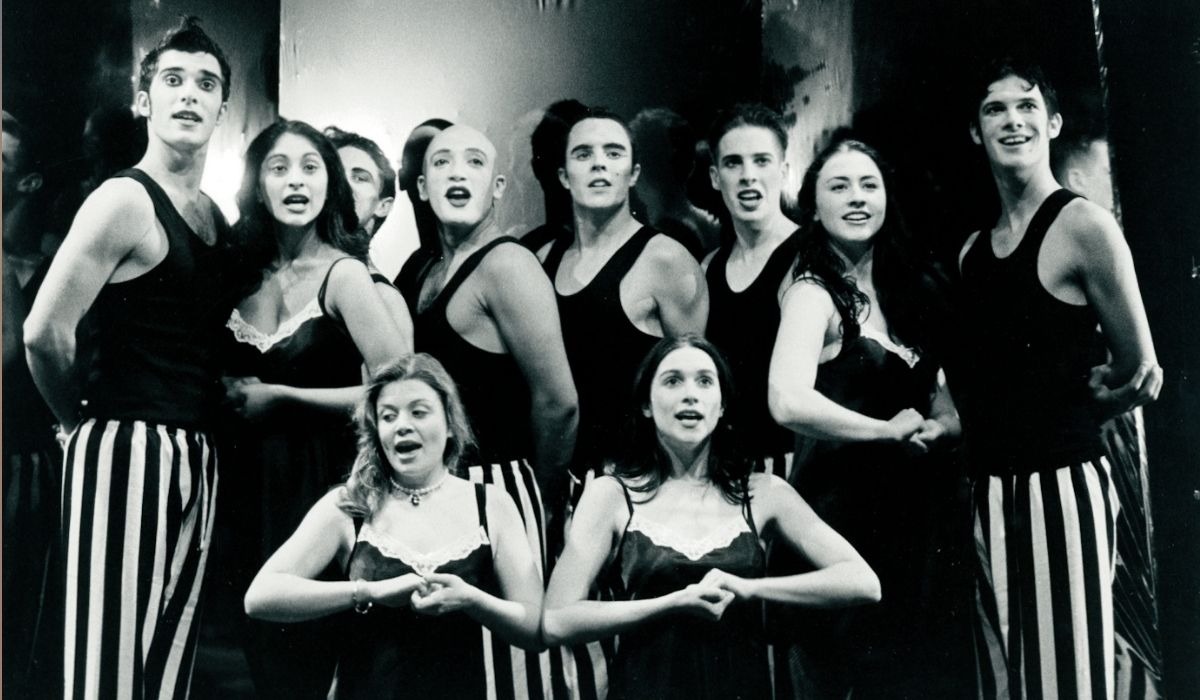
And I met some amazing people. Actress Caroline Brazier (Acting 1998) Peter Knowles (Acting1998), (an ad producer now) and Fiona Crombie (Design, 1998), who is an amazing production designer who is nominated for Best Production Design for Hamnet at the Oscars this year, are still good mates. Damon Gameau was in my year (Acting, 1999) made That Sugar Film and I don’t see him a lot, but he still inspires me.
And then just the other day, Joanne Priest (Acting, 1998) who I haven’t seen for 20 years turned up to see Fly Girl. As did Morgan O’Neill (Acting 1998) and Paul Laden (Acting 1998) which was such a nice surprise. In a way, the people you went through NIDA with become your yardstick for what’s possible. It’s less that I have mentors from the time and more that I have all these people that I’m still connected to and inspired by.
NIDA also taught me that this is what I wanted to do with my life because as you do those 40-hour weeks; doing two hours of voice training a day and then movement class and singing lessons and improv and then you have to do a play at night you either think to yourself, “This is mental,” or, “I definitely want to join this circus.”
I had to find my own way and so once I left, I didn’t have an expectation that everything was going to come easily, and I think that’s important. It never comes easily.
Also, I am grateful for all those technical things you learn. Having done voice every day for 3 years can’t be underestimated as 30 years later, I am still able to get back into my voice warmups for 4 – 6 weeks and do a theatre run.
What advice would you give to emerging artists about building a sustainable, long-term career in the arts?
I’ve heard the advice, “Don’t make your passion your job” and I think there’s something in that. If you are relying solely on your ‘passion’ to eat in an industry with 92% unemployment, that’s probably not a great idea because it can really kill your passion.
But I’d add to that and say if you have more than one passion don’t be afraid to follow them all. Because certainly in Australia it is very hard (if not impossible) to afford to live doing just ‘one’ artistic thing.
I think I’m lucky to have a lot of passions – most within the arts and I was able to survive in this industry because of that.
After graduation NIDA in 1999, in my downtime, I started teaching at NIDA Open and thought, if everything goes wrong and I could only ever teach, I would be happy doing that. I love the craft of acting; I love watching actors and helping them to become better actors.
I directed a theatre show called Whale Music at Darlinghurst Theatre when I was 29 and I loved that experience, but I never felt the need to do it again because I realised I was more interested in performance than any other aspect of the mise-en-scene. So, I moved further into Acting Coaching which I have been doing alongside my acting and writing for twenty years. I have been the Head Acting Coach on Home and Away for over a decade and I love that job.
Although I was lucky enough to work a lot (by Australian actor standards) I think it’s even luckier that I was forced to discover my other passions.
Because I wasn’t getting the opportunities I wanted as an actor I was forced to lean more into writing and I found I have this incredible love for that. Playwriting, coaching and voice over afford me the luxury of saying ‘yes’ or ‘no’ to acting as if it is a ‘passion’ rather than just a ‘job’ because I have enough money to live.
I also think it is probably dangerous to say “I want to be this kind of artist and it’s all I will do”. You have to pay rent as well. So, I always ask my students is there anything else you love? Do you like yoga or flower arranging or baking? Whatever else you love, try and find a way to make money in that so you can support yourself until you get an opportunity to do the art. You will wait your life away if that’s all you allow yourself to want to do.
And life is long. An acting career is a marathon not a sprint.
Looking back at my age you realise that some of the people you knew who were “lucky” enough to get their big American break (that made them a lot of money) often come back to Australia because at some point they realised they don’t want to raise children in the US. Or their luck has run dry, or they miss their family and the Aussie culture.
They come back having done big things and maybe they have enough money in the bank, but they don’t have any other skills or they come back and don’t get the opportunities they got overseas and they’re of an age where they shouldn’t be as insecure as they are, but they’re stuck in an almost childlike state of, “I hope someone picks me.”
All the things that seem lucky when you’re young, once you get to 50, you look at so many of those things and think, “Actually, maybe that wasn’t so great.”
My husband was an excellent actor, and he worked quite a lot in theatre and bits and pieces of film and TV but he always felt like he has no control and he didn’t get to work as much as he wanted. So, he transitioned to directing. And his first short film Julian (which is at re-screening at Flickerfest this year actually) went incredibly well and then we made a short film together that won us an AWGIE and now he directs world class television, like The Great and Colin from Accounts, and Outlander: Blood of My Blood. He’s unbelievably good. But if he had just been satisfied with the opportunities he was getting as an actor, he may never have made the leap to be a director.
The two of us have managed to carve out an excellent life in the arts, but it wasn’t through being stagnant. We have worked hard at our craft and pivoted when we needed too, and we also know that there is more to life than just what we ‘do’.
What’s next for you?
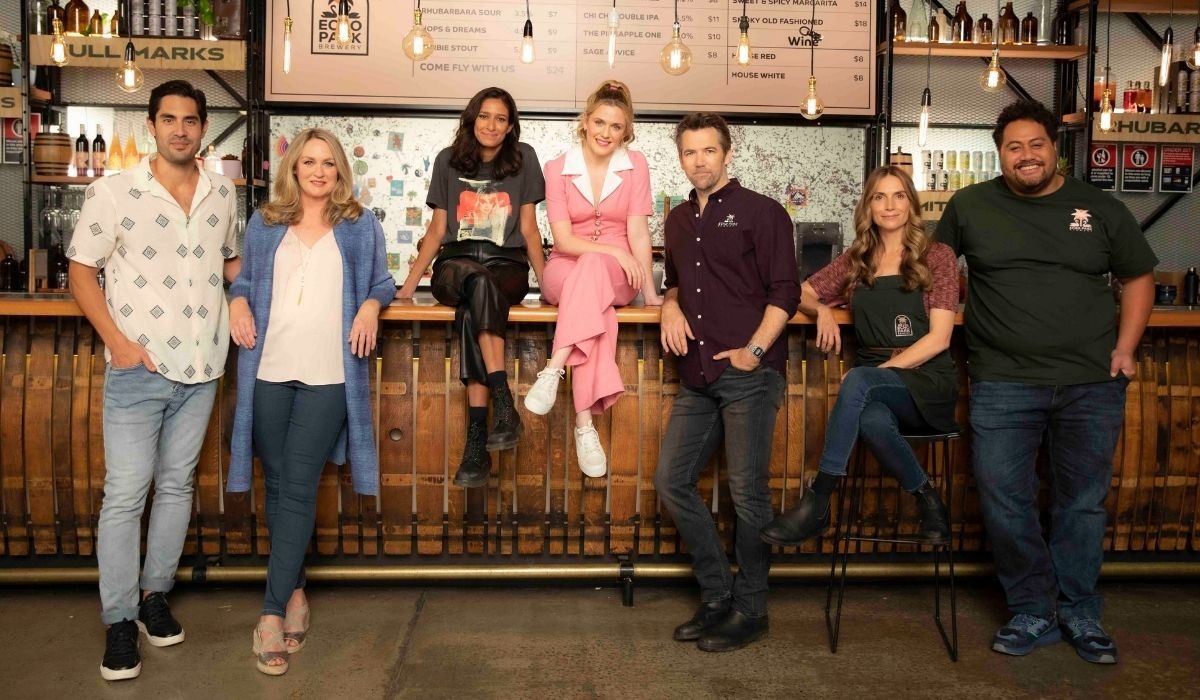
The third season of Colin from Accounts is shooting February – April, so I’ll be back with that gang and I can’t wait. Then I’ll be focussing on writing the movie version of Fly Girl and, come 2027, it looks like we’ll be doing a remount of Fly Girl the play. The hope is that it will remount here in Sydney and then tour to some other capital cities. I’ll be very tired because it’s a marathon of a play but I feel very excited and very fortunate to be able to tell Deb Lawrie’s story again.